THE CONTINENTAL NEWS
Jobs, rights and everyday government. Today’s India edition puts policy claims beside the evidence, with reporting from cities, science, sport and culture.
In the Spotlight
Can a protest cost you a government job? What UP’s new rules actually say


A government job can determine a family’s future. Uttar Pradesh’s revised recruitment-screening policy has therefore raised questions that deserve a more precise answer than the slogans circulating online. Reports say the rules bar members of organisations advocating violent changes to the existing order. The state’s clarification also says that political ideology and peaceful criticism are separate from such activity.
The Indian Express reports that the guidelines were issued by Principal Secretary M Devaraj and apply across specified government services and public institutions. Participation in the relevant violent activities after the age of 21 and within the preceding three years can trigger a presumption of continuing involvement, subject to evidence of changed conduct.
The New Indian Express reports a 30-day deadline for verification and an opportunity for applicants to respond to an adverse report. It also records the government’s clarification that an FIR or pending investigation alone does not automatically disqualify someone. Particular offences and procedural stages have separate provisions, so applicants should not treat a general news summary as a ruling on an individual case.
Opposition parties question the potential effect on dissent. The government says ideology is not the test. The immediate accountability question is whether the distinction survives implementation. Decisions need evidence, clear reasons and a meaningful hearing. Neither a peaceful protest nor an allegation should be casually relabelled to fit a political argument.
Opposition prepares a Delhi weekend of protest over electoral rolls


The INDIA bloc postponed its political event targeting Chief Election Commissioner Gyanesh Kumar from October 30 to October 31 because of rain, The Wire reports. A rally at Ramlila Maidan is planned for November 1. The event described by organisers as a public impeachment is a political exercise, not a completed constitutional removal proceeding.
Rahul Gandhi alleged that people were being stopped from reaching Delhi. That remains an attributed opposition allegation in this account. The Wire also reports CJP support for the November 1 programme. A future crowd total cannot be established before the event, and this edition does not adopt the attendance numbers circulating on X.
Amit Shah proposes a parliamentary confrontation over the voter-roll dispute


Amit Shah challenged Rahul Gandhi and Akhilesh Yadav to debate electoral-roll issues in a special parliamentary session, according to NDTV’s report published shortly after midnight on October 31. Speaking at a BJP meeting in Lucknow, he defended the party’s willingness to discuss the dispute and criticised the opposition’s protest strategy.
The remarks are a political offer, not confirmation that a session has been formally summoned. The next substantive development would be an agreed parliamentary process with an agenda and an opportunity to examine evidence. Allegations about electoral administration require records and responses, whichever venue politicians choose.
Nation, Science & Diplomacy
ISRO’s NVS-03 mission gives India’s regional navigation system a fresh boost


ISRO says GSLV-F18 placed NVS-03 into its intended geosynchronous transfer orbit. The mission is the twentieth flight of GSLV and carries the third satellite in the next-generation navigation series. ISRO lists an indigenous atomic clock alongside procured clocks and an L1 signal in addition to the existing L5 and S-band signals.
Akashvani reports the launch from Sriharikota on the night of October 30. Successful placement in transfer orbit should be distinguished from every subsequent commissioning step. The public significance lies in improving the continuity and availability of India’s regional positioning and timing services, rather than assuming that one launch settles every operational question.
Jaishankar puts civilian shipping and diplomacy before the G20


India has urged greater reliance on diplomacy and protection for seafarers as conflicts disrupt international trade. PTI’s report of S. Jaishankar’s remarks at the G20 foreign ministers’ meeting in Atlanta says he called for freedom of navigation and an end to attacks within international law, including UNCLOS.
The intervention places the costs borne by importing economies and civilian crews within the diplomatic debate. It is a statement of India’s position, not evidence that the belligerents have accepted a settlement. The practical test will be whether the discussion produces safer passage and commitments that can be implemented.
Modi’s Gujarat programme combines new projects with claims about farm support
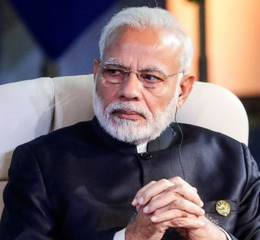

The Prime Minister’s Office says Narendra Modi inaugurated, dedicated and laid foundation stones for projects collectively worth more than ₹14,000 crore in Banaskantha on October 30. The announcement spans agriculture, livestock and infrastructure. These categories should remain distinct: a foundation stone does not mean a project is already operating.
Modi argued that government support had protected farmers from international input-cost pressures. Those are the Prime Minister’s claims, reported in the official account. A fuller assessment requires project-level completion records, spending and evidence of benefits reaching intended households. The size of an announced package is a starting point for scrutiny, rather than the complete measure of its delivery.
Economy & Everyday Life
India’s poverty decline is substantial. Secure livelihoods remain a separate challenge.


Reporting on the World Bank’s October Poverty and Equity Brief puts India’s extreme-poverty rate at 2.6 per cent in 2023, compared with 27.1 per cent in 2011. The extreme-poverty threshold is $3 a day in 2021 purchasing-power-parity terms. It is not a daily cash amount converted at today’s exchange rate.
A different measure, the $4.20 lower-middle-income poverty line, fell from 57.7 per cent to 16.1 per cent. The reported estimate of 496 million people moving above a threshold belongs to this $4.20 measure. It should not be casually attached to the extreme-poverty statistic.
The improvement deserves recognition alongside the report’s cautions on wages, inequality and geographical concentration. Crossing a statistical threshold does not establish that a household can comfortably meet every medical, housing or education expense. The figures describe a documented period, not a live count of poverty in October 2026.
A six-month banking review will test the gap between reform plans and customer experience


The Finance Ministry has constituted a High Level Committee on Banking for Viksit Bharat, chaired by former Central Vigilance Commissioner Suresh N Patel. Its tenure is six months. The terms include regulatory and legal frameworks, capital needs, lending arrangements, digital innovation and safeguards against cyber risks.
The committee’s formation does not itself change an account holder’s entitlements or a borrower’s loan terms. It begins a recommendation process. The public-interest test is whether eventual proposals improve access, competition, resilience and the handling of customer problems. Those outcomes will need to be assessed after recommendations are published and decisions are taken.
Cities & Regions
Delhi’s November vehicle curbs make tomorrow’s journey a planning question


Delhi Traffic Police has announced vehicle-entry restrictions under the revised GRAP framework from November 1, PTI reports. Eligible BS-VI, CNG, electric and exempted vehicles remain subject to the applicable rules. Emission category, registration, vehicle use and a valid pollution certificate matter.
The Centre’s September account of the winter plan specifically identified outside-Delhi vehicles below BS-VI, with CNG and EV exceptions. The latest advisory also addresses non-compliant buses and through-trucks. Motorists and operators should check the current official advisory for their category before setting out. A shorthand statement that every vehicle is banned would misrepresent the policy.
Four deaths at a shoe factory put workplace fire safety back under scrutiny
Four people died and two were injured in a fire at a shoe factory in Mangolpuri Industrial Area Phase-I on October 30, police said, according to The Indian Express. Six people were found unconscious and taken to hospital. The report said the cause had not yet been established.
That uncertainty must remain part of the account. It would be premature to accuse an owner or identify a specific safety violation without evidence. The investigation should establish the sequence of events, escape arrangements and applicable compliance records. The immediate priorities are the injured, identification of those who died and verified information for their families.
Mumbai campaigners want pollution-monitor readings placed in public view


Awaaz Foundation has asked the BMC to make construction-site air-monitor information publicly accessible, according to an October 30 report by UrbanAcres citing The Times of India. Its request includes live readings, calibration information, equipment faults and enforcement records.
The distinction is between installing a monitor and enabling residents to examine what it records. A public dashboard would need clear dates, functioning equipment and an explanation of how readings lead to action. The request does not establish that such a platform has already been delivered or that every construction site is violating the rules. It sets a concrete transparency question for the civic body.
Bengaluru’s 43-ward drive promises repairs residents can check street by street


The Greater Bengaluru Authority has selected 43 wards across five city corporations for a month-long Ward One campaign beginning November 1. The Indian Express reports that the work will cover potholes, sanitation, waste, streetlights and other local infrastructure, with departments coordinating and residents participating.
The announcement creates an opportunity for visible follow-up. Identified defects should be matched with locations, responsible agencies and completion records. A campaign’s launch is not proof that the repairs have already happened. Residents will be able to judge its value by the condition of the streets and services after the teams have moved on.
Six delayed Metro stations leave the last stretch of the journey unresolved


Six stations on Chennai Metro’s Arcot Road stretch are facing further delay, The Daily Jagran reports, citing The Hindu. The account identifies unfinished concourses, entrances and systems work despite substantial progress on platforms. Labour shortages and engineering difficulties were cited by the operator.
The report discusses a March 2027 target while also recording concern that completion could take longer. That is an expectation, not a guaranteed opening date. For commuters, the distinction between a train passing through an area and a usable nearby station is important. Updated authorisation and opening arrangements should be checked with CMRL.
Jammu’s Darbar returns with a larger test of public access


Offices moving from Srinagar are scheduled to reopen in Jammu on November 2. The winter session should make it easier for residents to identify the right department, receive written acknowledgements and follow decisions on their representations.
Our standalone analysis argues for published hearing hours and realistic response dates. These are editorial proposals, rather than a claim that a common grievance timetable has already been announced. The return matters most when an ordinary applicant can obtain a clear answer.
Accountability
Rajasthan permits a probe into alleged property deals and favours to a resort company


Rajasthan has cleared an investigation involving an IAS officer and alleged benefits to a resort company, The Indian Express reports. The Anti-Corruption Bureau’s preliminary account concerns forty properties allegedly bought in the officer’s and family members’ names below market value, alongside suspected concessions to the company.
These are allegations under investigation, not judicial findings. Approval to investigate does not establish guilt. The report says the officer did not respond to its requests for comment. The relevant questions concern the transaction records, the official decisions and the opportunity for those accused to answer the evidence.
Culture & Controversies
Rijiju’s attack on Shah brings the argument over dissent into the film world


Kiren Rijiju criticised Naseeruddin Shah after the actor publicly supported Jamia Millia Islamia students seeking restoration of their union. The Economic Times reports that the minister used the description “dangerous urban dimagi naxal” in his response. Shah had adopted the expression himself while criticising the government’s approach to education.
The description is political rhetoric, not a criminal finding. The substantive issues concern student representation, education policy and the evidence behind competing claims. A well-known actor’s intervention can enlarge a debate; the reaction should not obscure what the students are actually seeking.
Sport
Pakistan’s four-wicket Sixes win belongs to a different cricketing contest
Pakistan beat India by four wickets in the Hong Kong Sixes on October 30. Radio Pakistan’s account says India made 88 and Pakistan reached the target in 3.5 overs with two wickets down. This is the specialist six-a-side competition, not a T20 international between the full national teams.
The result deserves accurate reporting without turning it into a verdict on every format of either country’s cricket. Match length, playing conditions and squads matter. Political congratulations and social-media sarcasm can draw attention, but the score should remain attached to the competition in which it was made.
New Zealand punish India in Auckland while the series stays with the visitors

New Zealand defeated India by 87 runs in the fourth T20 international at Auckland on October 30. Glenn Phillips scored 107 from 49 balls and Michael Bracewell 65 from 25 as the hosts reached 259 for seven. India finished on 172 for nine, with Jacob Duffy taking four for 23, PTI reports.
India lead the series 3–1 after winning the first three matches. The defeat calls for an examination of bowling execution and the response to an accelerating partnership. It does not reverse the result of the series already secured. This match is separate from the Hong Kong Sixes fixture covered alongside it.
Letters from the Periphery
No applicant should have to hide a lawful political opinion
A young person applying for a government job should be judged by the requirements of the post and the evidence relevant to eligibility. The applicant should not have to wonder whether a peaceful speech, a lawful protest or a disagreement with a minister will be treated as a mark against the family’s future. That uncertainty can discourage participation long before anyone receives a rejection letter. It is why the argument over Uttar Pradesh’s recruitment-screening rules deserves careful public attention.
The government’s clarification matters. Reporting on the revised policy says political ideology alone is not a ground for disqualification and distinguishes peaceful expression from activity aimed at violent change. Any criticism of the rules must acknowledge that distinction. Removing it from a headline may increase alarm, but it leaves readers with a less accurate understanding of what the state has said. An argument for democratic rights should begin with the relevant facts, including those that complicate an attractive political accusation.
Acknowledging the clarification does not end the examination. The important question is how officials will apply the distinction when an individual’s application reaches them. A broad label can carry consequences beyond the evidence supporting it. Authorities need to identify the relevant conduct and explain why it meets the stated standard. Membership, association, a photograph and an act of violence are different matters. A fair process must resist the temptation to treat one as automatic proof of another.
The opportunity to answer an adverse report therefore needs to be meaningful. An applicant cannot respond properly to a conclusion without enough information about its basis. A hearing should allow the person to correct an error, supply a missing record and challenge an unsupported inference. Giving someone a date on which to appear is only the beginning. The decision that follows needs reasons that can be understood and examined through the appropriate review process.
There are legitimate public concerns on the other side. Governments employ people in positions of trust and must assess serious misconduct under the applicable rules. Citizens have an interest in protecting public institutions against violence, corruption and examination fraud. That responsibility does not require a test of affection for the party currently in office. Clear standards and dependable procedures make scrutiny more effective because they direct attention to evidence rather than an applicant’s presumed political sympathies.
Political parties should accept the same principle when they hold power. A rule defended by one government may later be administered by its opponents. The safeguard should not depend on which organisation expects to benefit from the immediate decision. Those criticising the Uttar Pradesh policy should explain the standard they would apply themselves. Those defending it should be willing to demonstrate how an applicant who lawfully campaigns against them would receive an impartial assessment.
The cost of uncertainty is particularly serious in recruitment. Families may spend years paying for preparation, travel and accommodation while a candidate competes for limited vacancies. An avoidable delay or a poorly explained adverse finding can impose further expense. This is a general feature of the problem, not a claim about an applicant interviewed for this article. It strengthens the case for timely verification and a record that makes the responsible authority identifiable.
Public reporting should follow the implementation rather than stop at the first argument. How many adverse recommendations are issued? How many are changed after a hearing? What kinds of errors recur? Aggregated information could reveal whether the safeguards work without publishing applicants’ private records. Such scrutiny would also protect officials against broad accusations unsupported by evidence. Accountability requires a way to examine both an allegation of unfairness and the administration’s explanation of its decision.
The wider political discussion about dissent needs similar precision. Criticising a policy, demanding an election and advocating violence cannot responsibly be collapsed into the same category. Public figures should explain which conduct they condemn and why. When the language becomes too broad, people cannot tell whether they are hearing a criticism of a particular act or a warning against participation itself. Ministers and opposition leaders alike have a responsibility to keep that distinction clear.
Universities and workplaces also need room for disagreement that does not become harassment or violence. The standard should protect discussion while addressing specific harmful conduct through fair procedures. A society gains little when people feel compelled to repeat approved opinions in order to avoid suspicion. Equally, a person defending free expression should not excuse an actual threat merely because it comes from a sympathetic political group. The principle becomes credible when it is applied consistently.
The immediate demand is therefore practical. Publish understandable standards, apply them to evidence, give applicants a genuine opportunity to respond and explain the resulting decisions. The government says ideology alone is not the test. Its administration should make that assurance visible in each relevant case. A lawful political opinion belongs to the citizen. Eligibility for public employment must be decided through a fair process that does not require the citizen to surrender it.
Books & Today in History
The Race Never Ends examines the Indian habit of postponing a life

Nikhil Maheshwari’s memoir follows a familiar sequence of expectations, from examination results to professional achievement and financial security. The question it raises is how a person decides when the next target has taken enough time from the present.
Published on October 20 by The Good Earth Publishers, The Race Never Ends connects corporate life with ideas about responsibility learnt much earlier. The publisher’s description presents an account of work, family and the difficulty of deciding what deserves attention. This introduction is based on that description and does not claim a new manuscript review.
The current ordering page lists the paperback at ₹610 against an MRP of ₹895, with standard India delivery included subject to serviceability. International buyers should check delivery arrangements with the publisher before paying.
Patel’s anniversary is also a reminder that nation-building includes municipal work


October 31 marks Sardar Vallabhbhai Patel’s birth anniversary. The Legislative Department observed a pledge ceremony on October 30 ahead of the 151st anniversary, PIB reports. The occasion recalls his role in India’s integration.
An Indian Express historical account also examines his work in Ahmedabad’s municipality, including sanitation, planning and public services. That local record offers a useful way to engage with the anniversary. Remembering a national leader can include examining how public institutions serve a neighbourhood, rather than confining the discussion to ceremonial recognition.