THE CONTINENTAL NEWS
Ration dealers warn that a face-only system could shut out elderly and sick families
A proposed change in ration authentication has become a question of access for families who depend on a household member unable to travel. At a Jammu press conference on October 29, the Fair Price Shop Dealers Association opposed what it described as mandatory Aadhaar-based face authentication from November.
Association president Ajay Gupta and working president Sanjay Abrol said the department’s communication would replace thumb-impression and OTP options and restrict collection to the head of the family. They argued that elderly and seriously ill household heads could face difficulty collecting their entitlement. Those details represent the association’s account of the instruction, reported by Daily Excelsior.
Continue reading
The dealers asked for face authentication to operate alongside existing methods. Their objections also included the income available to ration-shop operators. The two concerns require separate examination. A distribution system must remain usable by eligible households, while the viability of outlets concerns the people expected to operate it.
The immediate public question is what fallback arrangement will protect a beneficiary who cannot complete the new process. A clear departmental explanation of exemptions, representation and grievance handling would help residents understand the change before implementation. The dealers’ warning is a challenge to the proposed procedure, rather than evidence that every difficulty they anticipate has already occurred.
Daily Excelsior · press conference and attributed policy objections
Jammu in Focus
CITY LIFE · POLITICS · SERVICESJammu reports 65 drug-free panchayats and puts schools at the centre of its next push
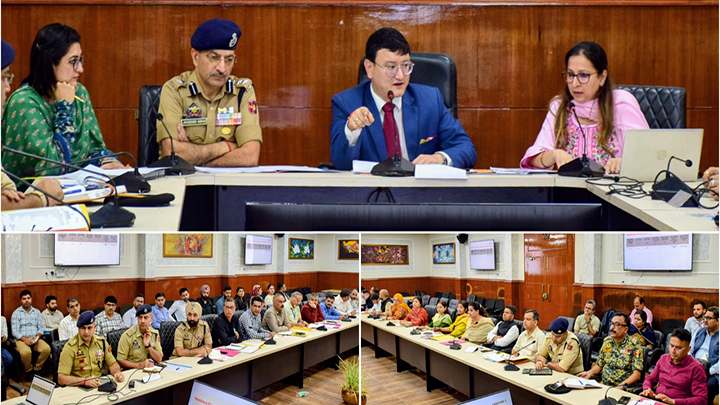
Jammu’s administration reported that 65 panchayats had been declared drug free and 915 Nasha Nigrani Samitis formed across twenty blocks at an NCORD review on October 30. Deputy Commissioner Minga Sherpa chaired the meeting, attended by SSP Joginder Singh and district officers, according to JK News Today.
The review linked enforcement with counselling and rehabilitation. The Education Department was asked to train teachers to guide students, while the employment and counselling centre was directed to support recovered people interested in setting up businesses. The administration also called for stronger inspection of chemist shops.
Continue reading
These are reported administrative achievements and directions. They do not establish independently that substance abuse has disappeared from the designated panchayats. The useful follow-up is whether local committees remain active, counselling is accessible and people completing treatment receive sustained support. The meeting provides a set of commitments against which future delivery can be assessed.
JK News Today · district review, October 30
Chowdhary turns BJP criticism into an argument over Jammu’s development
Deputy Chief Minister Surinder Chowdhary has framed criticism from the BJP as a reaction to his work for Jammu. A Daily Excelsior video report published on October 30 records him arguing that his commitment to the region is what troubles the party.
That is Chowdhary’s political contention. The short report does not provide a detailed BJP response or establish the substance of every dispute behind it. For Jammu’s voters, the more useful comparison will concern decisions, expenditure and completed work. Claims to represent the region deserve examination through those records, whichever party makes them.
Daily Excelsior · video report, October 30
Mission Youth charge brings another youth portfolio under Vivek Agarwal
Vivek Agarwal has been assigned additional charge as Chief Executive Officer of Mission Youth, according to a government order reported on October 29. He is also Director Employment and holds additional responsibility for Mission YUVA.
The reported order keeps the new assignment in force until further directions. Bringing connected responsibilities together may help coordination, but the appointment itself does not demonstrate an improvement in services. Applicants will judge the arrangement through clearer information, functioning support and decisions on their pending requests.
Daily Excelsior · original reporting
Jammu’s workers need quicker provident-fund decisions as EPFO reviews its service record
Timely settlement of claims and more responsive pension services were central themes at an EPFO Regional Office programme in Jammu on October 29. Daily Excelsior reported the participation of Sat Sharma, Regional Provident Fund Commissioner Sumeet Singh and representatives of industry and workers.
Tarun Singla of the Bari Brahmana Industries Association and Virender Jain of the Gangyal Industries Association were among those involved. The meeting brought a public institution together with private-sector employers and employee representatives around social-security delivery.
Continue reading
Staff members were recognised for their work. The report does not provide a district-wide measure of pending claims, so the event should not be read as proof that every service difficulty has been resolved. Its practical importance lies in the commitment to faster decisions and accessible grievance handling for workers and pensioners.
Daily Excelsior · original reporting
Police arrest car owner after alleged attempt to break through a Lamberi checkpoint
Police have arrested a vehicle owner after an alleged attempt to flee a security checkpoint on the Jammu–Rajouri highway, officials said in reporting published on October 30. The incident occurred during the night of October 27–28 in the Lamberi area of Nowshera.
The account says the vehicle damaged barricades before being traced and seized. An FIR was registered and a special team investigated the incident. Arrest and registration of a case do not establish guilt. The allegation and the role of the person arrested remain matters for the investigation and the judicial process.
Daily Excelsior · original reporting
Letters from the Periphery
B. S. DARA · THE CITY COLUMNJammu’s housing uncertainty needs a public deadline

Buying a home should bring a family some certainty about its future. In parts of Jammu, the next generation may inherit the same unanswered questions that confronted the buyer. The legal position of a colony remains unclear, departments refer residents elsewhere, and an investment intended to provide security becomes a continuing source of anxiety. A growing city needs rules that people can understand and decisions that responsible authorities are prepared to explain.
Daily Excelsior’s October 27 report describes a regularisation issue left unresolved nearly twelve years after High Court directions. It says a scheme required judicial examination before regularisation could proceed. These are reported proceedings, and the complete case record must govern any decision. The public question is nevertheless straightforward. What has been prepared, what remains legally possible, and which authority will give residents a clear account of the next step?
Continue reading
The administration should publish that account without making families assemble it through repeated visits to different offices. A colony’s position may depend on ownership records, land use, environmental restrictions and earlier proceedings. Those differences require careful examination. They also require a process that tells residents which documents matter and how their submissions will be considered. Uncertainty becomes harder to justify when even the route to an answer remains difficult to discover.
There can be no sensible promise that every settlement will be regularised. Public land, flood channels and unsafe locations raise obligations that extend beyond the people occupying a particular plot. The interests of neighbouring residents and future generations also deserve protection. Political leaders should resist offering blanket assurances that an official cannot lawfully deliver. They should instead insist on published categories, stated reasons and a fair opportunity to challenge an incorrect assessment.
Equally, describing a whole neighbourhood as unauthorised does not explain the circumstances of every household within it. Some buyers may have relied on documents they believed were sufficient. Others may face disputes about the seller’s authority, permissions or the extent of a plot. Each situation needs evidence. A fair system distinguishes individual responsibility from the wider failure to guide urban expansion and provide dependable information before transactions take place.
Jammu’s elected representatives should ask for an administrative timetable that can be checked in public. The first deadline should concern publication of the present position. Later stages should identify responsibility for surveys, scrutiny of records, consultation and any necessary approach to the court. If a deadline cannot be met, the responsible office should explain the obstacle and provide a revised date. A timetable becomes useful when delay has an identifiable owner.
Residents also need an accessible way to follow their cases. A reference number, a checklist of missing documents and a written explanation of the stage reached would reduce repeated travel and uncertainty. Information should remain available in person for people unable to manage a digital portal. An online system is an improvement only when it makes a decision easier to obtain and understand. Uploading an application must begin a traceable process.
Safety requires attention while longer questions are examined. Drainage, emergency access and the condition of nearby public infrastructure cannot be discussed responsibly through competing departmental assumptions. The competent authorities should state which protective measures are permitted pending a final decision and coordinate their responsibilities. Such measures must respect applicable orders. The purpose is to prevent an unresolved file from allowing an avoidable danger to spread to residents beyond the disputed property.
The same transparency should apply to charges and proposed expenditure. Families need to know the basis of any payment sought and what accepting it would actually establish. They should receive a proper receipt and a written account of the service involved. Where a proposal remains subject to approval, that condition must be clear. Public confidence suffers when an official payment is mistaken for a guarantee that the institution was never authorised to give.
Future buyers deserve better protection too. Planning and revenue authorities should make approved layouts, permitted uses and relevant restrictions easier to verify. Public notices need language that an ordinary buyer can follow. Sellers and developers should face scrutiny where required permissions are misrepresented. Prevention is less expensive than asking another generation of families to resolve disputed transactions after roads, buildings and everyday expectations have already become established.
Public hearings could help separate questions shared by a neighbourhood from disputes requiring individual examination. Their records should be available afterwards, including the issues raised and the department assigned to answer each one. Residents would then have something more useful than another verbal assurance. They could compare the response with their documents, seek clarification and hold an elected representative to a specific commitment made before the affected community.
For Jammu, the immediate demand is a lawful decision process with visible responsibility. It should protect public assets, examine individual circumstances and stop treating indefinite waiting as an acceptable outcome. The city’s institutions need to say what they can do, what they cannot do and when the next answer will arrive. A family may not receive the decision it wants. It is still entitled to a clear, reasoned response from the authority responsible for its case.
Across Jammu & Kashmir
GOVERNMENT · POLICE · PUBLIC CONCERNSHydropower-charge ruling creates a difficult revenue question for J&K
The High Court of Jammu and Kashmir and Ladakh has struck down provisions imposing water-usage charges on the petitioners’ hydropower projects, Daily Excelsior reported on October 30. The report says the bench treated the disputed charge, in substance, as a tax on electricity generation rather than a fee for a specific service.
The government had defended the levy as regulatory. The reported ruling therefore raises questions about both the legal basis of the charge and the revenue arrangements around hydropower. Its financial consequences should be assessed from the judgment and the affected accounts. It does not establish a change in household electricity tariffs, and this report makes no such claim.
Daily Excelsior · report of High Court ruling
Ten arrests in Shopian financing case as investigators follow digital payments

Police say they have uncovered a network suspected of raising and transferring money for militant activity and arrested ten people in a Shopian case. Officials quoted in October 30 reporting said analysis of online transactions helped them trace financial links, including alleged connections with individuals in different jails.
Investigators alleged that funds were directed towards Lashkar-e-Taiba and The Resistance Front and used for logistical support. These are allegations attributed to officials. The arrests are not convictions, and the account does not establish the guilt of everyone whose transactions are examined. Police said further investigation into the wider network was continuing.
Daily Excelsior / agencies · police account, October 30
Sakina Itoo asks for ambulance passage and less disruption during convoy movements
Health and Social Welfare Minister Sakina Masood Itoo has asked authorities to reduce hardship caused by convoy restrictions on the Srinagar–Anantnag–Kulgam–Qazigund highway. Reporting published on October 30 quotes her describing ambulances waiting and students losing time during stoppages.
She appealed for practical traffic management that maintains security while allowing emergency movement and reducing inconvenience. Her account is a ministerial statement, rather than a survey establishing the length of every delay. It raises a specific service question: how consistently are emergency vehicles and people with urgent needs able to pass when normal traffic is held?
Daily Excelsior / KNO · minister’s public statement
Mehbooba’s Pahalgam warning puts construction scrutiny back in the debate
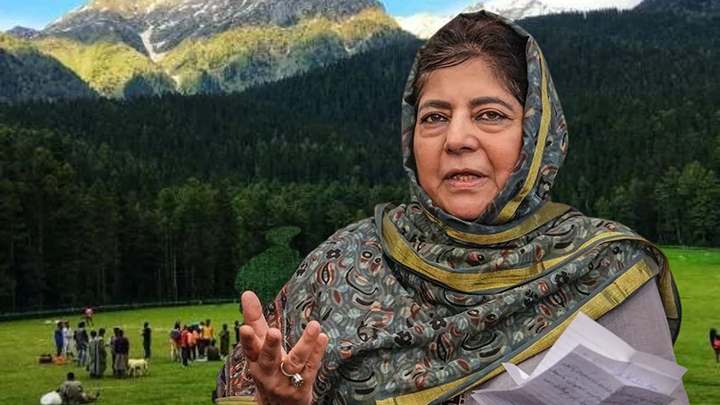
Mehbooba Mufti has criticised construction in Pahalgam and warned of possible harm to its fragile environment. JK News Today published her statement on October 29, including her appeal for judicial intervention.
Her allegations of reckless development and patronage are political claims. The statement does not supply a project-by-project finding that every development lacks permission. Meaningful scrutiny would require the relevant approvals, environmental conditions and inspection records. Those records can establish responsibility more reliably than treating either a warning or a denial as the complete account.
JK News Today · Mufti’s statement, October 29
Sagar retains National Conference general secretary responsibility
National Conference president Farooq Abdullah has directed that Ali Mohammad Sagar continue as the party’s general secretary until further orders, according to an order reported on October 30. Sagar is a senior party figure and a long-serving legislator from Khanyar.
The announcement concerns his organisational position within the National Conference. It should be distinguished from the allocation of portfolios within the government. Retention of the party role confirms continuity in that responsibility without, by itself, announcing a wider organisational reshuffle.
Daily Excelsior / JKNS · party order, October 30
Unity Day programmes prepared across J&K with schools and citizens invited to take part
Authorities have prepared unity runs, pledge ceremonies and related programmes for Rashtriya Ekta Diwas on October 31. Lieutenant Governor Manoj Sinha reviewed arrangements at a meeting on October 29, according to reporting published the following day.
The directions called for participation by schoolchildren, young people, security personnel and the wider public. District headquarters, police stations and prisons were included in the preparations. This is a report of arrangements announced ahead of the observance. It does not claim that every planned programme has already taken place or provide unverified attendance figures.
Daily Excelsior · original reporting
Schools, Institutions & Sport
ACHIEVEMENT & OPPORTUNITYTwo Jammu students selected for a Parliament programme on Patel’s anniversary
Anshika Gandhi of the University of Jammu’s Law School and Narayan Choudhary of its Design Your Degree programme have been selected for the Lok Sabha Secretariat’s Know Your Leader initiative. The programme is scheduled at Parliament on October 31 to mark Sardar Vallabhbhai Patel’s birth anniversary.
Vice-Chancellor Umesh Rai congratulated them, according to an October 30 report. Their selection gives the university a presence at a national programme concerned with public institutions and leadership. The next useful step would be to share what they learn with fellow students. This report confirms their selection and the scheduled event, rather than claiming that their visit has already concluded.
Daily Excelsior · original reporting
Five golds lead J&K’s 22-medal return in Wushu and Taekwondo
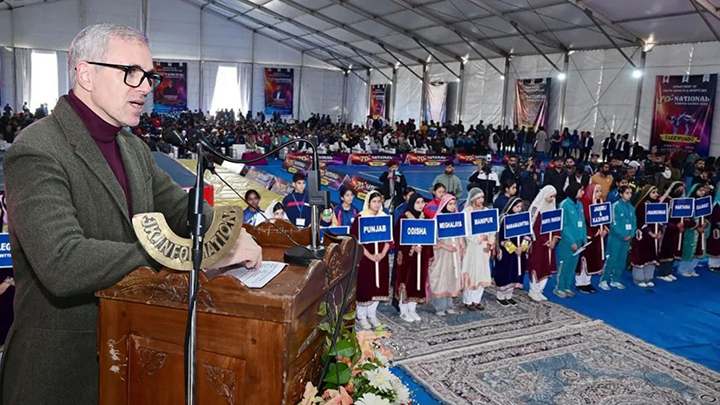
Jammu and Kashmir’s school teams won twenty two medals and the overall team trophies in Wushu and Taekwondo at the National School Games hosted in Ganderbal. Reporting dated October 28 records fourteen medals in Taekwondo, including four gold, and eight in Wushu, including one gold.
The combined return also included five silver and twelve bronze medals. The Taekwondo competition ran from October 22 to 26, while Wushu took place from October 15 to 19. Those dates matter. The results are a recent achievement being highlighted in this edition, rather than medals won on October 31.
Continue reading
The performance recognises work by athletes, coaches, schools and the Youth Services and Sports Department. Keeping those gains will depend on regular competition, training access and support for pupils balancing study with preparation. A trophy provides a strong result to celebrate and a reason to sustain the system behind it.
JK News Today · results and official congratulations, October 28
Nagrota cadets run stalls, perform music and make room for celebration
Sainik School Nagrota’s annual mela brought games, food stalls, music and prize draws to the Maj Somnath Sharma PVC Stadium. Principal Captain Shibu Devasia inaugurated the event, which was reported on October 30.
Cadets managed game stalls, while the school band performed. The event gave pupils responsibilities outside their regular academic and training schedules. Organising a stall requires preparation and cooperation, and performing before a gathering gives students a different kind of confidence. The report describes a school celebration already held, rather than an invitation to an event still open for attendance.
Daily Excelsior · original reporting
AIC-IIIM starts a month of leather training with enterprise support promised
A month-long leather-technology programme opened at AIC-IIIM in Srinagar on October 30 with around fourteen participants. The initiative brings the AIC-IIIM Bioinnovation Foundation together with Kashmir Government Polytechnic College.
CSIR-IIIM Jammu director Zabeer Ahmed inaugurated the programme. Reporting describes practical exposure to processing, product development and manufacturing, alongside support for trainees interested in establishing small enterprises. Principal Shafquat Ara and AIC-IIIM chief executive Shahid Jibran also participated.
Continue reading
The launch is an institutional commitment to connect training with earning opportunities. Its eventual success should be assessed through completion, skills gained and viable ventures, rather than the inauguration alone. No new businesses or jobs are counted here before those outcomes are recorded.
Daily Excelsior · original reporting
Culture & Local Talent
JAMMU · CHENAB VALLEYBakshi Nagar actor Varun Verma wins his first major streaming opportunity
Varun Verma has secured a role in the forthcoming series Duniya Ki Thain Thain for Amazon MX Player, Daily Excelsior reported on October 30. The actor from Jammu’s Bakshi Nagar will play Sahil, the son of a political figure portrayed by Govind Pandey.
The report describes nearly three years of auditions and work in Mumbai before the opportunity arrived. Verma credited his family’s support and spoke about wanting to represent Jammu on a wider platform. The role is a professional development, rather than proof of an audience response to a series that has yet to be assessed here.
Continue reading
For aspiring performers in the region, the relevance lies in the persistence behind the credit. Local talent needs training, auditions and access to working opportunities. Verma’s selection supplies a concrete example of that progression. The available report does not give a confirmed release date, and none is added to this account.
Daily Excelsior · original reporting
Bhaderwah’s Malcha closes the Nag festival season as shepherds return
The Malcha observance has brought Bhaderwah’s six-month Nag festival season to its traditional close. Reporting published on October 30 describes gatherings in Thubba and the Chinta Valley, with prayers and rituals associated with the seasonal return of shepherds.
The account explains the festival through the movement of families whose work takes them into the hills during summer. Its place in local life extends beyond a single public gathering. It connects worship, livelihood and the annual rhythm of return.
The season’s conclusion was reported on October 29. The ceremonies belong to the communities maintaining them, and their meaning is best explained with that local context. The report does not announce a new tourism package or claim that every practice described represents all communities in the Chenab Valley.
Daily Excelsior · original reporting
Literary World
THE BOOKER PRIZE · BOOK IN TALKSSix Booker novels offer Jammu’s reading groups a conversation beyond the result
The Booker Prize’s next decision arrives on November 9, when the 2026 winner is due to be announced at Old Billingsgate in London. The six shortlisted novels give Jammu’s readers a useful choice before that announcement. Mary Beard chairs the panel, and the winning author will receive £50,000.
The shortlist comprises The End of Everything by M. John Harrison, The Disappearers by Marlon James, Black Bag by Luke Kennard, May We Feed the King by Rebecca Perry, The Things We Never Say by Elizabeth Strout and John of John by Douglas Stuart. These are confirmed shortlisted titles. There is no announced winner at the time of preparing this edition.
Continue reading
The Booker Foundation describes a selection extending across speculative fiction, contemporary realism, satire and historical fiction. Its account points to questions about families, belonging and the knowledge people have of one another. Those themes can travel readily into a reading group without requiring the members to share the same literary background.
For a city with schools, universities and aspiring writers, a prize shortlist can become a practical reading project. A library could select one title and invite discussion of its opening chapters. Students could compare how a scene establishes a character, then explain their own response with examples. Such an exercise produces something more useful than asking everyone to agree that a celebrated book must be excellent.
The prize result will settle the judges’ choice. Readers will continue to make their own judgements. An interesting discussion allows disagreement and asks participants to explain it. That approach would give the six books a worthwhile place in Jammu’s literary calendar, whether a group chooses the eventual winner or discovers a different favourite.
Nikhil Maheshwari’s memoir brings corporate ambition into the reading room

The Race Never Ends by Nikhil Maheshwari examines the questions that follow a decision to retire at forty after a senior career in finance. The publisher’s account traces his route from Ajmer through BITS Pilani to investment banking and a directorship at UBS.
The book is a flagship title from The Good Earth Publishers, an independent publishing house. TGEP confirms publication ahead of its October 20 commitment. Its current listing is ₹610, including delivery in India.
The author’s conversation with the publisher introduces the memoir’s concerns about work, family and the use of time. This is a book introduction based on that material, rather than a claim to have reviewed the complete manuscript. Readers can find ordering information and the interview on TGEP’s website.