THE CONTINENTAL NEWS
Read Beyond the Headlines

India’s election dispute reaches the streets. Who will restore trust?
Delhi and Mumbai saw fresh demonstrations on 4 October demanding Chief Election Commissioner Gyanesh Kumar’s resignation. Protesters allege voter-roll revisions favour the BJP; the Election Commission and the party reject that accusation. Police detained demonstrators in Delhi. The dispute now concerns both electoral confidence and the handling of public protest. Claims of systematic disenfranchisement require evidence that can be examined independently, rather than acceptance on the strength of either political side’s assurances.
Source / further readingIndia’s election institutions must answer the questions

A country can withstand an argument. It becomes weaker when its institutions cannot answer one. India’s election protests have brought that distinction into public view. Demonstrators are questioning voter-roll revisions and demanding the election chief’s resignation. The Election Commission and the BJP reject the allegation of partisan advantage. Citizens are entitled to hear the evidence behind both positions. Confidence in an election cannot be sustained by telling people that confidence is compulsory.
Read The PerspectiveIndia
NATIONAL DESK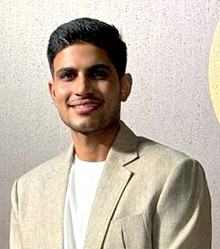
Indian cricket’s dominance needs a harder examination
A series win, spectacular batting and a record chase conceded: the West Indies contests offer a useful test of what dominance really means. Our sports desk examines the strength of India’s batting, the demands on its bowling and the preparation required for tournament cricket. Read the sports column

GST arrest powers face a rethink. Businesses await the actual decision
The Indian Express reported that removing arrest powers under the GST regime is under consideration, with discussion expected at the GST Council’s 7 October meeting. This is a reported proposal, not an enacted change. For businesses, the distinction matters: existing obligations continue until the relevant legal changes take effect. A credible reform should reduce arbitrary pressure while retaining proportionate action against deliberate fraud.
Source / further reading
RBI’s reassurance meets the household test
RBI governor Sanjay Malhotra has described India’s financial system as resilient through the West Asia crisis, while urging vigilance. The reassurance addresses financial stability. Household experience involves a further test: fuel bills, food costs, borrowing and job security. Both perspectives belong in the economic picture. Resilience is valuable, but readers should examine what it means for their own spending and livelihoods.
Source / further readingIndia · Markets, Property & Startups
BUSINESS & ECONOMYDalal Street enters Monday with oil and foreign flows in focus
The latest completed Indian trading session was Thursday, 1 October; markets were closed for Gandhi Jayanti and the weekend. Weekend market previews point to a recent losing run, foreign outflows and pressure from global yields. Monday’s opening has not happened at the time of preparation. Investors will watch the RBI policy discussion, quarterly results and energy developments. Those factors may influence trading, but they do not establish the direction of the next session.
Gold remains expensive. Check the quote before comparing it.
The Economic Times Delhi rate page showed ₹1,45,690 per 10 grams for 24-carat gold on 4 October. This is a dated city retail indication, not a Monday live MCX contract or a universal Indian transaction price. Different cities, purities and update times produce different quotations; jewellery bills can also include making charges and taxes. Global dollar and bond-yield movements remain part of the market context. A buyer should compare like-for-like purity and the complete bill.

Gurugram’s luxury sales tell one part of the housing story
DLF reported ₹1,985 crore of sales from 172 homes at its Aureva luxury retirement project in Gurugram, according to Financial Express on 4 October. That is a company sales announcement, not evidence that every Indian housing market is booming. ANAROCK’s seven-city third-quarter survey reported a 3% rise in sales; other surveys cover different cities and can show a different direction. For buyers, possession timelines, regulatory registration, maintenance costs and affordability matter alongside launch publicity.
Groww’s growth story moves beyond the funding headline
Groww provides a recent example of a startup-origin business building scale after listing. Economic Times reported June-quarter operating revenue of ₹1,501 crore, up 66%, and net profit of ₹735 crore. In September, Peak XV sold a ₹1,756 crore stake; that was an investor’s secondary sale, not fresh capital received by Groww. The figures show commercial momentum. The continuing test is whether customer service, responsible product design and resilience keep pace with expansion.
Pixxel’s $100 million raise takes Indian space ambition further
Bengaluru-based Pixxel announced a $100 million Series C on 7 September, co-led by Temasek and Seraphim, taking total funding to $195 million. Its work combines Earth-observation satellites with software that helps customers interpret the data. The company says it has deployed six Firefly satellites and plans further sensing and manufacturing expansion. Funding is an important achievement, but it is not the same as profit. Delivering dependable information and earning repeat customers will determine the next stage.
Global Affairs
INTERNATIONAL DESK
Yemen’s new offensive brings the Red Sea back into the danger zone
Yemen’s internationally recognised government announced a major operation against the Houthis on 4 October. Strikes were reported in Sanaa and Saada. The Houthis also claimed attacks on Saudi Aramco facilities, without presenting evidence in the cited report. A tanker was damaged by a projectile in the Strait of Hormuz; responsibility remained unclear. These are separate developments, but together they underline the risks to regional civilians and commercial shipping.
Source / further reading
Pakistan’s Saudi commitment needs clear limits
Pakistan’s security relationship with Saudi Arabia raises a consequential policy question: where does defence assistance end and participation in a wider conflict begin? Our existing analysis examines the risks of overstretch, regional escalation and competing security demands at home. It does not treat an unverified claim of 25,000 soldiers deployed to fight the Houthis as established fact. Read the detailed analysis for the distinction between reported plans and confirmed commitments.
Source / further reading
Germany brings new aid to Kyiv as the war presses closer
German Chancellor Friedrich Merz visited Kyiv on 4 October and announced further support for Ukraine. AP reported roughly €1 billion in military aid, including drones, long-range weapons and satellite technology. The visit came amid continuing Russian attacks. For Europe, the immediate issue is Ukraine’s defence; the longer question is how commitments on paper translate into equipment, energy repairs and protection through winter. Read the editorial.
Source / further reading
Mekelle changes hands. Civilians face another uncertain morning
Ethiopian government-allied forces re-entered Mekelle after the TPLF announced its withdrawal. AP reported disruption to flights and communications, alongside mounting concern over renewed fighting. Ethiopia has accused neighbours of supporting rebels; those accusations are denied. Control of the regional capital is a military development. Civilian safety, functioning services and renewed political dialogue remain the more important measures of whether the situation improves.
Source / further reading
Brazil votes on its future. The verdict is still to come
Brazil voted on 4 October in a presidential contest between Luiz Inácio Lula da Silva and Flávio Bolsonaro. The election combines arguments over living costs, security and the country’s international direction. A runoff is scheduled for 25 October if nobody secures more than half the valid vote. This edition does not project a winner or present preliminary expectations as a result. The official count will determine what comes next.
Source / further reading
Australia’s budget faces the energy squeeze
Treasurer Jim Chalmers has warned that global economic turmoil will require budget savings, while saying Australia is not expected to enter recession. The Guardian reported inflation at 4% in August and interest rates of 4.6%. The policy challenge is to contain prices without making households carry the full adjustment through weaker services or employment. The pressure is economic, but the choices about who bears it are political.
Source / further readingRussia’s war keeps Europe’s promises under examination
READ ARTICLE
Russia’s war in Ukraine is still forcing Europe to decide how much responsibility it is prepared to carry. German Chancellor Friedrich Merz’s visit to Kyiv on 4 October put that question into immediate view. Announcing support is important. Delivering equipment, keeping essential services functioning and sustaining a defensible political strategy are the measures that follow. Ukraine’s citizens have to live with the interval between a government’s promise and help actually arriving.
AP reported approximately €1 billion in new German military assistance, including drones, longer-range weapons and satellite technology. Reuters separately reported business agreements worth €6.6 billion. These figures describe different commitments and should not be added together as though they were one military-aid package. They show that the relationship involves immediate defence as well as future economic cooperation. Both will be judged by implementation rather than the size of the announcement alone.
The continuing Russian attacks give these commitments their urgency. A country cannot conduct ordinary economic life if households, transport and essential infrastructure remain exposed to repeated disruption. Repairs demand money and skilled workers. Protection requires equipment that works under sustained pressure. Businesses need enough predictability to retain staff, move goods and make decisions. The civilian cost therefore extends beyond the damage visible after any individual strike.
For Europe, the difficulty is maintaining support through competing domestic demands. Citizens face their own pressures on public spending and living costs. Governments must explain why assistance to Ukraine remains a security responsibility and how they will monitor its use. They should also explain their objectives. A policy that asks the public to support an extended commitment needs something more specific than declarations of solidarity after each new attack.
Drones and satellite technology matter because this war places a premium on information, detection and the ability to respond quickly. Yet no single technology settles the conflict. Training, maintenance, ammunition, coordination and replacement capacity determine whether equipment remains useful. The practical question is whether Ukraine can sustain an effective defence across time. A delivery announced in a capital must fit the requirements of the people expected to use it.
Diplomacy belongs in that calculation. Seeking a negotiated reduction in violence does not require treating invasion and resistance as equivalent. Nor should military assistance become a substitute for examining what terms could make a settlement credible. Ukraine must have a meaningful voice in decisions about its security. An arrangement that simply leaves it exposed to renewed coercion would offer little reassurance to its citizens or its neighbours.
Russia should face sustained scrutiny for the destruction and insecurity caused by its war. European governments should face scrutiny for the consistency and effectiveness of their response. Neither obligation disappears because the conflict has become familiar. Readers need reporting that distinguishes a confirmed delivery from a pledge, a military development from a claim and a proposal for peace from an enforceable agreement.
The immediate priority is civilian protection and the functioning of essential services. The longer responsibility is to make continued support coherent, accountable and politically durable. Merz’s visit is a significant diplomatic moment. Its value will emerge in what follows: equipment delivered, services restored, commitments honoured and a serious effort to achieve a peace that Ukraine can safely live with.
The coming weeks should therefore be assessed through practical outcomes, with civilian needs kept in view.
Sport
SPORTS DESKIndia takes the series. Hope delivers the final warning.
India won the West Indies ODI series 2–1, taking the first two games by eight wickets apiece. The final match on 3 October belonged to the visitors: Shai Hope’s unbeaten 162 carried West Indies to 352/5 against India’s 351/7, their highest successful ODI chase against India. India’s batting strength remains substantial, but captain Shubman Gill has identified death bowling and fielding as work still to be done. The five-match T20I series begins on 6 October in Lucknow.

Ronaldo’s departure leaves Portugal with a question it cannot avoid
Bruno Fernandes has rejected suggestions of divisions within Portugal’s squad following Cristiano Ronaldo’s departure from camp. Reuters reported that Ronaldo intended to explain his reasons later. His international future remains a subject of discussion, not a confirmed retirement. The football question is how a national team balances respect for an extraordinary career with decisions about its next match and next generation.
Source / further readingIndian dominance in world cricket: the strength and the unfinished work
READ ARTICLE
India’s strongest claim to cricketing dominance should survive an honest look at its weaknesses. The West Indies ODI series offered exactly that opportunity. India won 2–1, produced commanding batting and still conceded a record chase in the final match. A serious assessment can celebrate the series without treating the defeat as an inconvenience to be left out. The result gives selectors and coaches useful evidence about where strength is established and where improvement remains necessary.
The first two matches demonstrated the confidence of India’s batting. Both ended in eight-wicket victories. In Guwahati, Shubman Gill made an unbeaten 223 from 133 balls as India chased 406 with 39 balls remaining. Rohit Sharma contributed 101. The scale of the pursuit was remarkable, but so was its control. India did not merely reach a large target; it reached it with substantial resources still available.
The final ODI changed the emphasis. India made 351/7, but Shai Hope’s unbeaten 162 took West Indies to 352/5 with ten balls left. It was the visitors’ highest successful ODI chase against India. Hope deserves recognition for that innings. Reporting the match solely as an Indian failure would overlook the quality of the opponent’s performance. Competition remains the point of international cricket, however large one team’s following becomes.
Gill subsequently identified death bowling and fielding as areas requiring attention before the 2027 World Cup. Those are specific concerns, not a reason to dismiss the entire side. They are also important because tournament matches can turn on a small number of deliveries or chances. A powerful batting order cannot be expected to recover every avoidable run conceded or every opportunity missed in the field.
The wider argument about dominance needs similar precision. Batting depth, a strong domestic pathway and extensive professional opportunity can provide considerable advantages. They do not guarantee superiority in every format, condition or tournament. An ODI series is evidence about ODI performance against a particular opponent. It is not a reliable verdict on Test cricket, women’s cricket or every other international contest played under India’s name.
Preparation should therefore focus on repeatable performance rather than the reassurance of reputation. Bowlers need clear roles in difficult overs. Fielders need standards that remain firm when a match appears comfortable. Captains need options that can be trusted when an established plan stops working. These requirements are ordinary in description and demanding in execution. They cannot be postponed until the weeks immediately before a major competition.
Selection has to recognise the difference between providing opportunity and abandoning patience. A developing player may struggle while learning the demands of international cricket. The response should involve evidence: what skills are improving, which conditions expose a problem and what support is available? Constant changes can prevent a useful assessment. Automatic retention can conceal a persistent weakness. The decision requires judgement rather than a single reassuring slogan.
Scheduling and workload deserve attention too. A country with significant depth should use that advantage to prepare players properly, not assume that an available replacement makes fatigue irrelevant. The quality of training and recovery affects performance. So does continuity within a team. A stable combination has value when its members understand their responsibilities, but stability should serve a plan rather than protect a hierarchy.
For spectators, India’s appeal is easy to understand. Exceptional batting can make a demanding chase seem manageable. Yet the most valuable confidence is confidence supported by complete performance. Defending totals, controlling difficult phases and holding catches are part of the same achievement. A team that improves those areas can enter major matches with more than the hope that one celebrated batter will produce another extraordinary innings.
India has earned the right to be discussed among cricket’s strongest forces. The responsibility now is to keep that description demanding. Respect the West Indies victory, address the weaknesses Gill identified and prepare for conditions that may offer less comfort to the batters. Dominance becomes credible through the work that follows scrutiny. This series has supplied encouragement, a warning and a clear starting point for that work.
Coaches should also examine what each result reveals about decision making. Which bowling changes worked? Were field placements consistent with the plan? Did players recognise when conditions demanded a different approach? Such questions turn a scorecard into preparation. They allow success to be understood and failure to be corrected without exaggerating either. The best teams make this review part of ordinary daily work, giving players practical reasons for the next adjustment and a clear understanding of the standard expected of them.
Sachin Tendulkar: the record endures, and the work continues

READ ARTICLE
Sachin Tendulkar’s career remains a demanding standard for anyone discussing greatness in cricket. The numbers are extraordinary, but their significance comes from the length of time he kept producing them. A young batter entered international cricket in 1989. By his final Test in November 2013, he had played 200 Tests and accumulated achievements that continue to shape how the sport judges a complete batting career.
Born on 24 April 1973, Tendulkar made his international debut against Pakistan at sixteen. His first Test hundred followed against England in 1990. He eventually scored 51 Test centuries and 49 in ODIs, becoming the first player to reach one hundred international hundreds. The ICC records 15,921 Test runs, 18,426 ODI runs and an aggregate of 34,357 across international formats. These are career totals, not current-season figures.
The achievement was not restricted to one type of innings. Test cricket required time, judgement and the capacity to respond to changing conditions. One-day cricket demanded control over a different rhythm. Tendulkar’s record across both formats explains why his reputation extends beyond any single tournament or memorable shot. He gave successive Indian teams a batter whose performance could be assessed against the strongest standards of either game.
The 2011 World Cup provided a major team achievement late in his career. The ICC identifies him as India’s leading run-scorer in that tournament. He also became the first man to make a double century in an ODI. These milestones belong alongside the longer record rather than replacing it. His importance is easier to understand when exceptional individual moments are considered within more than two decades of international work.
Retirement changed his public role rather than removing him from public life. Recent activity can be followed through the Sachin Tendulkar Foundation, which he established with Anjali Tendulkar. Its work centres on health, education and sport for children. The foundation’s 2026 publications include an initiative involving clean energy at Guhir village in Palghar. That provides a documented view of his continuing work without guessing where he happens to be today.
The distinction matters in a celebrity profile. Publicly recorded projects are useful evidence of a former player’s present commitments. Unverified accounts of private movements are not. Readers can follow the foundation’s own updates for the details of its programmes, while recognising that organisational announcements describe the organisation’s work and should be assessed on that basis.
Tendulkar’s place in cricket is secure enough to allow a measured account. Admiration need not turn every appearance into a new historic event. His career already supplies the evidence: sustained performance, extraordinary accumulation and major achievements with India. His current public work adds another area to examine. The most respectful profile can acknowledge both, allowing the record to carry the weight rather than asking an invented story to make him interesting.
For younger readers, the statistics provide a starting point. Watching his archived innings offers another: the decisions between scoring shots, the adjustment to a bowler and the patience that made long innings possible in demanding conditions.
Scandals, Breakups & Relationships
RELATIONSHIPS & PUBLIC LIFE
Joanna Angel’s divorce moves into the spotlight
TMZ reports a sealed divorce case involving Joanna Angel and Small Hands. The report leaves substantial details unavailable.
Source / further reading
Jaime King closes a chapter in court
TMZ reports Jaime King’s divorce from Austin Sosa has been finalised, with the court retaining jurisdiction over spousal support.
Source / further readingHollywood & Bollywood
SCREEN & CULTURE
Kim Kardashian puts her own priorities first
TMZ reports Kim Kardashian discussed single life after her Kanye West split, highlighting her children and work.
Source / further readingDrishyam 3 draws crowds. Can the opening momentum last?
Ajay Devgn’s Drishyam 3 has made a strong opening after its 2 October release, according to the Times of India. The reported Saturday India collection was ₹53.50 crore. Early box-office estimates can be revised, and domestic collections should not be confused with worldwide gross. The next test is whether interest holds beyond the opening weekend.
Source / further readingMen & Women
PROFILES
Monica Bellucci and the right to remain visible
Beauty is part of Monica Bellucci’s public image, but it cannot account for an entire career. Our feature considers screen presence, longevity and the freedom of women in film to grow older without being treated as though their relevance has expired. Her screen career remains the focus of our profile.
Source / further reading
The pilot, the public gesture and the meaning of recognition
Sheikh Hamdan’s tribute to flydubai Captain Smit Machchhar gave public recognition to courage under extraordinary pressure. Our existing feature remembers the captain, crew and passengers whose actions helped bring the aircraft safely down. Recognition matters most when it acknowledges the people who acted, rather than turning an incident into a story about rank alone.
Source / further readingLifestyle, Culture & Books
LIFESTYLE · CULTURE · BOOKS
Venice offers an alternative to the constant rush
The Venice Biennale’s 2026 exhibition, In Minor Keys, runs until 22 November. For travellers planning a visit, the official programme is the starting point for venues, tickets and opening hours. The appeal is a chance to spend time with work that asks for attention. Check individual pavilion schedules before arranging a visit.
Source / further reading
Nikhil Maheshwari left banking at forty. What followed became a book
The Race Never Ends is scheduled for release on 20 October 2026. In the published conversation featured by The Continental News, Nikhil Maheshwari reflects on ambition, early retirement and the search for direction. Read the interview feature and explore the forthcoming memoir. The book is a flagship project of The Good Earth Publishers, with preorders open.
Source / further readingIndia’s election institutions must answer the questions

A country can withstand an argument. It becomes weaker when its institutions cannot answer one. India’s election protests have brought that distinction into public view. Demonstrators are questioning voter-roll revisions and demanding the election chief’s resignation. The Election Commission and the BJP reject the allegation of partisan advantage. Citizens are entitled to hear the evidence behind both positions. Confidence in an election cannot be sustained by telling people that confidence is compulsory.
The immediate requirement is a public explanation that can be checked. How were names identified for removal? What opportunities did affected voters have to respond? Were procedures applied consistently? What remedy is available when a valid voter is excluded? These questions are administrative in form but democratic in consequence. An eligible citizen who loses access to the ballot needs a workable correction process, not a speech about the importance of elections.
The protests reported on 4 October also raise questions about the management of dissent. Public authorities have responsibilities towards safety and access. Protesters have responsibilities towards others using the same streets. Restrictions and detention should be assessed against their stated purpose and the actual circumstances. The existence of disruption cannot settle every question about whether the response was necessary or proportionate.
Opposition groups must meet their own evidentiary burden. A large gathering does not establish electoral manipulation. A compelling accusation still needs records, identifiable discrepancies and a clear account of how the claimed harm occurred. Demands for accountability become stronger when they offer something more precise than a political conclusion. They become weaker when disputed claims are repeated as settled findings.
The government has a greater capacity to provide answers because it holds authority, records and administrative resources. That does not make every protest allegation correct. It does make a dismissive response inadequate. The most effective answer to a substantiated grievance is a remedy. The most effective answer to an unsupported allegation is evidence presented clearly enough for people outside the government to examine.
Modi’s government should recognise that institutional credibility belongs to the country beyond any administration’s tenure. An independent election authority needs both the capacity to make difficult decisions and the willingness to explain them. Its defence should rest on procedure and evidence. Political loyalty is a poor substitute for either.
There is an opportunity here to lower the temperature without lowering scrutiny. Publish the relevant process, enable corrections, respond to documented objections and explain enforcement decisions. Protesters should place their evidence before the public and identify what resolution would satisfy a legitimate grievance. A democracy does not need agreement on every claim. It needs institutions capable of handling disagreement without treating the questioner as the problem.
Thank the teacher. Then make the job possible.

On World Teachers’ Day, the easiest public statement is gratitude. The harder commitment is to make teaching a profession in which capable people can enter, remain and do their work properly. UNESCO’s global report projects a need for 44 million additional primary and secondary teachers by 2030. That figure should disturb governments more than a ceremonial photograph reassures them. Education promises depend on someone being present in the classroom, prepared and supported enough to teach.
The shortage is not simply a recruitment problem. Working conditions affect whether teachers stay. Training affects whether they are equipped for the classroom they enter. Administrative demands affect the time available for pupils. A country can announce new buildings and digital tools while leaving the profession responsible for learning under strain. The announcements are visible. The daily difficulty of teaching is less easily shown.
India’s ambitions require a serious conversation about that daily work. This is an argument about priorities rather than a claim that every school faces the same conditions. A rural school, a crowded urban classroom and a private institution can have very different resources. Their pupils still deserve teachers who can plan lessons, assess progress and respond to difficulties. Policy should begin with those tasks and ask what prevents them from being done well.
The international picture is equally demanding. UNESCO identifies substantial needs in sub-Saharan Africa, where additional teachers are central to extending access. Wealthier countries also face retention challenges. These circumstances differ, but a common mistake runs through them: governments speak of education as a national asset while allowing the work of teaching to become less attractive. That gap has consequences well beyond a single school year.
There is no shortage of excitement about technology. Used properly, it can help teachers prepare, find materials and reach learners. It cannot remove the need for judgement, attention and a relationship through which a pupil feels able to ask for help. Purchasing a platform is easier than building a profession. The first transaction should not become an excuse to postpone the second.
Parents often see the consequences before the policy discussion catches up. A child struggles with a subject. Feedback arrives late. Lessons are interrupted because staffing is stretched. Families with resources can buy extra support. Others cannot. The same pressure therefore widens inequality. Teacher support belongs in a debate about opportunity as well as a debate about employment.
A practical response should examine recruitment, preparation, workload, professional development and retention together. Filling posts matters, but so does helping the people in them improve. Listening to teachers is part of that process. They can explain which requirements consume time without helping pupils and where support would make the greatest difference. Their experience should inform decisions rather than arrive after those decisions have been made.
The 2026 observance marks sixty years since the ILO/UNESCO Recommendation concerning the Status of Teachers. An anniversary gives governments a chance to review what has been promised and what is still missing. The public should ask for specific commitments that can be followed over time. Celebration has a place. It becomes meaningful when the profession has reason to believe that the next working day will be better.
Today in History · 5 October
ARCHIVEOn 5 October 1966, the ILO/UNESCO Recommendation concerning the Status of Teachers was adopted. World Teachers’ Day commemorates that milestone. In 2026, its sixtieth anniversary offers a reminder that education depends on the rights, preparation and working conditions of the people who teach.
UNESCO · history and observanceSupport independent coverage
Help The Continental News continue its reporting, features and public debate.
SUPPORT THE CONTINENTAL NEWSInterviews, advertising, book launches, promotions, corrections and story proposals: contact@thecontinentalnews.net