Charlize Theron · Cinema · Glamour · Ageing
Charlize, Still Dangerous
Beauty, violence, ambition, motherhood, desire and three decades of Hollywood. Charlize Theron has spent her career proving that glamour is strongest when a woman is not imprisoned by it.

There is something faintly absurd about asking whether Charlize Theron is still beautiful. At fifty-one, she has long since passed the point at which beauty alone can explain her place in the culture. The face remains remarkable, certainly. The body is still disciplined. The blonde hair, long associated with Dior campaigns and red carpets, continues to give photographers exactly what they came for. But the greater attraction now lies elsewhere. Charlize Theron has acquired the authority of a woman who has been looked at for thirty years and is no longer impressed by the fact.
A recent social-media photograph of a blonde woman seated in a black dress beside a cocktail arrived with the old proverb, “the older the berry, the sweeter the juice.” Whether one admires the joke or finds it a little obvious, it captures something Hollywood itself once resisted acknowledging. Women can become more compelling with age. Desire does not have to belong exclusively to youth, and Theron has never behaved as though it does.
She was born in Benoni, South Africa, on 7 August 1975 and grew up on a farm outside Johannesburg. Her childhood is impossible to discuss without confronting the event that has followed her through every profile written about her since she became famous. Her father was an alcoholic and could be violent. One night in 1991, when Charlize was fifteen, he returned home intoxicated and threatened Theron and her mother. Her mother, Gerda, shot him. Authorities concluded that she had acted in self-defence.
For a teenage girl, it was an astonishing entrance into adulthood. Theron has never treated the episode as material for melodrama. When she has spoken about it publicly, she has usually described the wider damage of living with alcoholism and fear rather than dwelling on the shooting itself. There is perhaps something of that childhood in the adult woman's manner. Theron can be extremely warm in interviews, but she has never possessed the sugary eagerness to be liked that Hollywood once demanded from actresses. She can appear amused, impatient, blunt and entirely comfortable saying no.
Her first ambition was not acting. It was dance. She left South Africa as a teenager, worked as a model in Europe and later trained as a dancer in New York. A knee injury interrupted that plan and pushed her towards Los Angeles. What followed has become part of Hollywood folklore. Theron struggled, argued with a bank teller who refused to cash a cheque sent by her mother, and was noticed during the commotion by talent manager John Crosby.
The face certainly helped. But the face, at first, was also a problem. Hollywood knew immediately what to do with a beautiful blonde woman. It wanted her to be beautiful. Theron spent the early years of her career appearing in films such as 2 Days in the Valley, The Devil’s Advocate and The Cider House Rules, where her looks were impossible to ignore. She had presence, intelligence and a curious stillness before the camera, but there remained a danger that the industry would decide she was merely decorative.
Then came Monster. Theron produced the film and played Aileen Wuornos, the American serial killer. She gained weight, altered her appearance and stripped away almost every element of the glamour that Hollywood had been selling. The performance was not impressive merely because she looked different. It was impressive because she made Wuornos disturbing, damaged, violent and human without attempting to excuse her.

The Academy Award for Best Actress followed in 2004. After that, nobody sensible could dismiss Charlize Theron as a model who had wandered into movies.
The career that followed has been unusually broad. There was North Country, which earned another Academy Award nomination. There was Young Adult, in which she played a woman whose beauty had outlived her emotional maturity. There was Tully, where motherhood and exhaustion replaced glamour. There was Bombshell, with Theron transformed into Megyn Kelly. Then there was Mad Max: Fury Road.
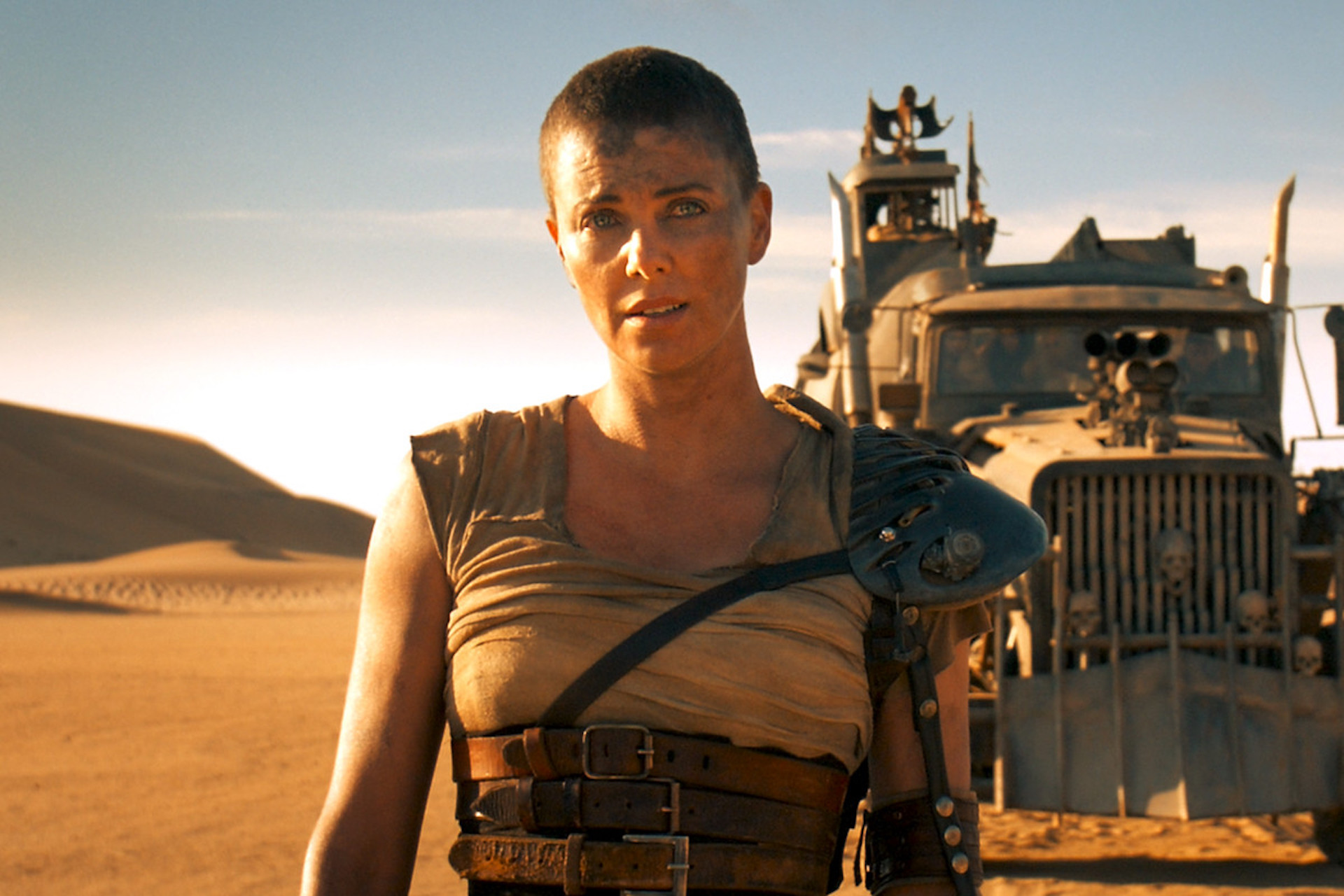
Imperator Furiosa changed her career again. Theron shaved her head, blackened her face, lost an arm on screen and drove through George Miller's desert apocalypse with more authority than almost anybody around her. Atomic Blonde later proved that the physicality had not been accidental. She trained heavily and performed action sequences with a brutality rarely expected from actresses who had first entered Hollywood as conventional beauties.
That quality remains central to her later career. In 2026 she spoke about putting herself through punishing physical work for Apex, including climbing, kayaking, jumping from cliffs and performing difficult stunts. She also joined Christopher Nolan's The Odyssey, playing Calypso. Nolan has described her as one of the great actresses of her generation.
Yet the extraordinary career is only half the reason Theron remains interesting. The other half is the woman Hollywood has never quite managed to domesticate. She has never married. That fact alone once generated endless commentary because beautiful actresses were traditionally expected to complete the celebrity narrative with a husband, children and a photograph of domestic happiness. Theron had serious relationships, but marriage never became the prize.
She dated Third Eye Blind singer Stephan Jenkins in the late 1990s. Then came actor Stuart Townsend, whom she met while making Trapped. They remained together for roughly nine years. For a time they seemed to possess the stability that celebrity couples are always presumed to want. They separated in 2010.
Then came Sean Penn. The relationship began around 2013 and became one of Theron's most intensely watched romances. They appeared together at major events. Engagement rumours circulated. Theron spoke warmly about him. By 2015, it was over. Later reports that she had “ghosted” Penn became part of celebrity folklore, although Theron herself disputed that caricature and said the relationship had simply ended.
After Penn, she largely removed her romantic life from the public stage. This is where Theron becomes especially interesting in comparison with many female celebrities of her generation. She did not immediately replace one public relationship with another. She adopted two children and built a family on her own terms.
Her daughters, Jackson and August, became the centre of her private life. Theron has spoken about motherhood with unusual practicality. She does not present herself as a saintly mother who abandoned ambition, nor as a career woman constantly apologising for working. She works. She raises her children. She admits that both are difficult.
In 2025 she also reminded the public that motherhood and sexual life are not contradictory things. During an unusually candid conversation about dating, she discussed being single by choice and spoke openly about having enjoyed a casual encounter with a younger man. The remarks attracted attention precisely because actresses in their fifties are still expected to discuss sexuality with either embarrassment or solemnity. Theron did neither.
There was humour in it, but also a larger point. She does not seem interested in pretending that desire expires.
This is one reason the phrase “the older the berry, the sweeter the juice” works better for Theron than it would for many stars. It is not simply about looking good in a short black dress. Her sexuality has become less dependent on approval. The younger Charlize Theron was astonishingly beautiful. The older Theron knows it is not enough.
Her Dior relationship, which began with the famous J’adore campaign in 2004, helped fix her in the public imagination as a particular kind of luxury woman. Gold light, bare shoulders, perfume, immaculate skin. For years she was almost inseparable from that image. Yet she has repeatedly chosen roles that destroy it. She becomes exhausted mothers, damaged journalists, killers, warriors and women whose faces are allowed to look tired.
That contradiction is probably the secret. Theron does not protect her beauty too carefully. She uses it when she wants it and abandons it when a role requires something else.
She has also been willing to argue publicly about money. Theron has spoken repeatedly about equal pay and the difference between her own position and that of actresses without enough power to demand parity. In a 2026 interview she acknowledged her privilege while arguing that many women working consistently in film remain unable to insist upon equal compensation.
There have been controversies. Her relationship with Sean Penn was dissected. Her comments about Afrikaans and South Africa have occasionally generated criticism. Her parenting has been discussed by strangers. Her children's privacy has been violated by public curiosity. Her sexuality has been converted into headlines.
Yet there has never been a great Charlize Theron public collapse. No years-long tabloid implosion. No desperate reinvention. No need to be rescued from herself. Even her career failures have tended to pass without becoming identity crises. She makes another film.
That steadiness becomes more impressive when one remembers the violence of her beginnings. A girl grows up in a house shadowed by alcohol and fear. Her mother kills her father in self-defence. She leaves South Africa, models in Europe, tries ballet in New York, injures her knee, arrives in Hollywood and becomes one of the most beautiful actresses in the world.
Then she spends thirty years proving that beauty is the least interesting thing about her.
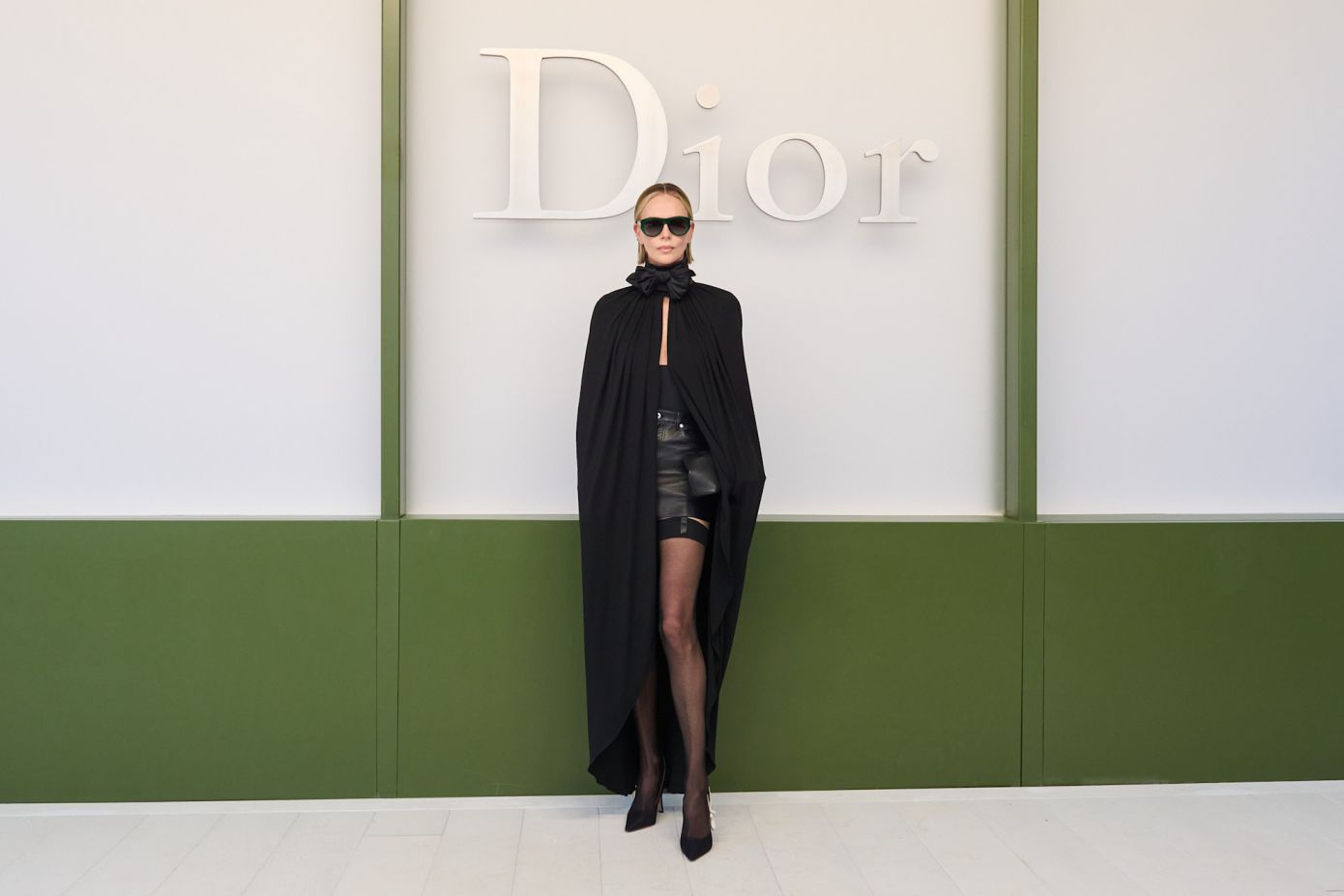
At fifty-one, Theron is still doing action films. She is still attending Dior shows. She is still photographed in clothes designed to make people stare. She is still willing to talk about sex without pretending the subject belongs to younger women.
But there is something else now. She looks less like a woman trying to remain desirable and more like a woman who has ceased to regard desirability as a question requiring an answer. That makes a difference.
Hollywood has spent generations teaching actresses to fear birthdays. Charlize Theron seems to have found the better arrangement. She simply keeps having them.