TCN Jammu Investigation · Public Health
Waiting for 9:30
A sick child, three hospital stops and a disturbing account of what a Jammu family says it found inside the city's public paediatric emergency system.

JAMMU: In the hours before sunrise, when a parent carries a sick child into a government hospital, the expectation is modest. Nobody expects ceremony. Nobody expects comfort. The parent expects a doctor, a bed if one is necessary, a reasonably clean place and an institution capable of deciding what must be done next.
A Jammu family says that what it encountered instead was a journey from one hospital to another, confused directions, exhausted junior doctors, patients waiting for senior physicians to arrive and wards whose condition seemed to contradict the elementary meaning of a hospital.
The account begins at Government Hospital Gandhi Nagar. According to the family, a man took his ailing son there in the early hours of the morning seeking medical attention. A male and a female junior doctor were on duty. The family says the doctors told them that they were not sufficiently senior to deal with the child's case and advised them to take him to the children's hospital.
That advice might have been understandable if the referral had been clear.
The father says he was directed towards Bakshi Nagar and consequently took the child to Government Medical College Jammu. Official Jammu district listings place Government Medical College at Bakshi Nagar. They list Government SMGS Hospital at Shalamar. For a family travelling through Jammu with a sick child before dawn, confusing the two destinations is not a trivial geographical error. It means another journey, another hospital entrance and more time passing while the person requiring treatment remains untreated.
Eventually, the family reached Government SMGS Hospital at Shalamar. What the father says he found there deserves examination by the hospital administration.
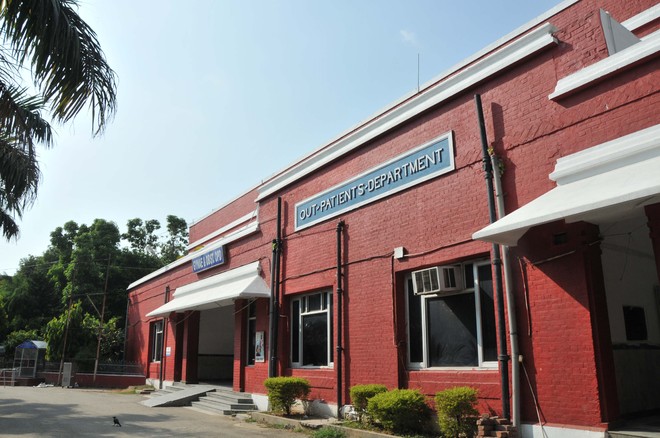
The father says roughly two dozen children and their relatives were waiting in the paediatric area. Junior doctors, again including a male and a female doctor, were attending the patients. But the recurring message, according to the family, was that experienced senior doctors would arrive at approximately 9.30 in the morning.
Parents were waiting. Some were pleading. One family, the witness says, repeatedly requested a bed for a child they believed required urgent medical attention. According to his account, the doctors became irritated and explained that the limited beds were already occupied. He recalls being told that several patients might have to share a bed, but that any such arrangement would depend upon what the senior doctor decided after arriving.
TCN has not independently verified that exchange and has not identified the doctors involved. The account is being reported as the testimony of a person who says he was present inside the hospital during those hours.
Yet the questions arising from it are larger than any argument between an anxious parent and an overworked resident doctor. What is the purpose of a paediatric emergency service during the night if significant decisions must routinely await the arrival of senior doctors in the morning? What authority is available to junior doctors when a child's condition appears to require admission? What escalation mechanism exists when beds are full? And who takes responsibility when a family is sent first to the wrong hospital?
The witness says the waiting was made more frustrating by the administrative routine unfolding in front of him. Doctors were filling patient record booklets and asking families a series of questions. At one point, according to the father, a doctor asked whether a child was good at studies.
There may have been a clinical or developmental reason for questions that appeared irrelevant to a worried parent. TCN cannot determine that from one account. What matters is that the family perceived the process as extraordinarily slow while sick children waited for attention.
The father went further and interpreted the paperwork as an attempt by the doctors to occupy the remaining hours of their shift before handing responsibility to the incoming senior team. There is no independent evidence presently available to TCN to establish such an intention, and it would be unfair to present the family's interpretation as fact.
The physical condition of the ward forms another part of the complaint. The family says some beds had stained sheets. Around other beds they saw discarded glucose bottles, used drip tubing and other waste. They describe portions of the floor as dirty and the general appearance of the area as disorderly.
These are matters that can be checked. They do not require months of paperwork. A hospital administrator can walk into the ward before sunrise. A sanitation register can be inspected. Duty rosters can be examined. Bed occupancy can be counted. The time at which senior paediatricians are physically present can be established. Referral procedures at Gandhi Nagar Hospital can be reviewed.
SMGS is not an obscure dispensary. It is a major government hospital at Shalamar serving Jammu and surrounding districts. Pressure on beds, staff and sanitation in a large public hospital can be severe. Pressure, however, cannot become an all-purpose explanation.
Doctors in government hospitals work under conditions that are often punishing. Junior residents can face long shifts, overcrowded wards, anxious families and shortages they did not create. Abusing young doctors for structural failures would be both inaccurate and unjust.
But the opposite error is equally dangerous. A public hospital cannot use overwork as an answer to every complaint about referral, supervision, sanitation and emergency care. Responsibility belongs to the system that places a junior doctor in front of frightened parents in the small hours and then, according to this family's account, leaves crucial decisions suspended until senior staff arrive.
A functioning institution should not depend on the personal endurance of whoever happens to be on night duty. It should have a chain of command. It should have an escalation procedure. It should have beds that are either available or transparently accounted for. It should have clean linen. It should know where its own children's hospital is.
The Jammu health authorities should establish what happens to a seriously ill child who arrives at Gandhi Nagar Hospital during the night. They should explain whether paediatric emergencies are supposed to be transferred directly to SMGS, who authorises such transfers and whether doctors are given clear written referral protocols.
The administration of SMGS should explain the level of senior paediatric cover available overnight and the procedure when paediatric beds are occupied. It should also inspect sanitation during the hours when senior administrators are least likely to be walking through the wards.
Because hospitals are easiest to admire at eleven in the morning. The real test comes at four. That is when the corridors are quieter, the senior offices are empty and a father carrying a sick child discovers whether the institution exists for him as completely in the darkness as it does after 9.30.