THE CONTINENTAL NEWS · INTERNATIONAL AFFAIRS DESK · WAR & SECURITY ANALYSIS
The Guns at Qeshm and the Gates of Iran
As rival accounts emerge of explosions near the Strait of Hormuz, Washington is extending its campaign from Iranian ports to overland supply routes. The new task force may tighten the pressure on Tehran. It also puts a question to Iran’s neighbours that no naval commander can answer for them. How much of their own commerce are they prepared to sacrifice for an American war?
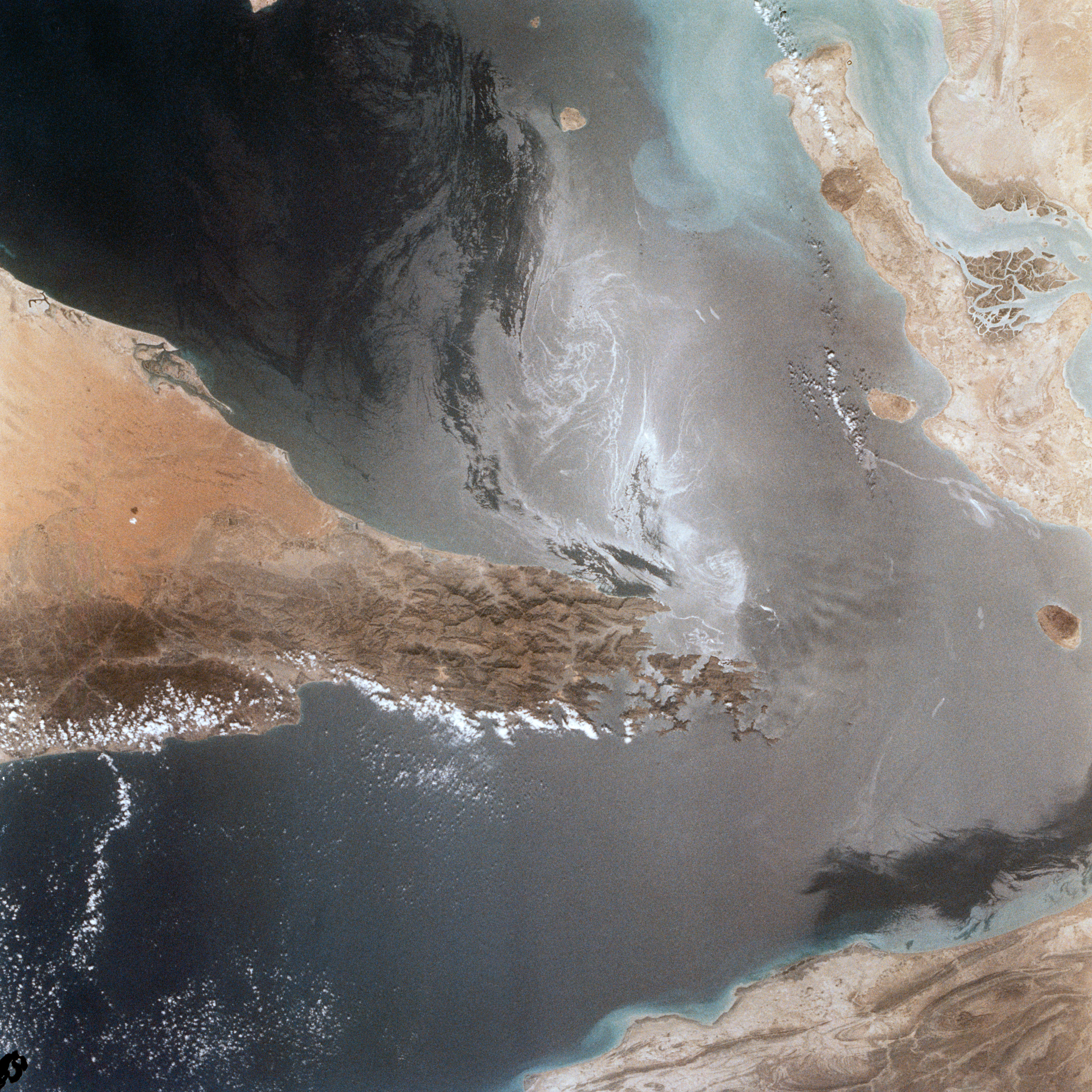
From the water, Qeshm presents a long, low shore. It is possible to look upon it and see little more than dry country meeting the sea. A naval officer sees the approaches to Hormuz. A merchant sees the passage by which his cargo must travel. An Iranian commander sees a piece of his own country from which a stronger power can be made to pay for every assumption it makes about command of the sea. On the weekend of 8 November, reports of explosions on the island and elsewhere along Iran’s southern coast set all three calculations in motion. The first difficulty was establishing what had exploded, and at whose hand. Al Jazeera · 8 November live coverage · Reuters · Hormuz developments


What happened at Qeshm
Al Jazeera’s live reporting carried accounts of blasts around Qeshm and southern coastal cities. Iran’s Tasnim news agency reported that two missiles struck the island. Iranian state television said officials had yet to confirm a missile strike and raised the possibility that some explosions were connected to Iranian military activity in the waterway. Washington had acknowledged a separate strike on Qeshm on 2 November, which it described as a limited defensive action. That earlier acknowledgement establishes what Washington said it did on 2 November. The weekend reports still require their own evidence. Al Jazeera · 8 November live coverage · Reuters · Hormuz developments
At sea the claims were more specific, though verification remained difficult. The US military said it disabled a commercial vessel in the Gulf of Oman that was attempting to pass through its blockade. Iran’s Revolutionary Guards said two tankers caught fire after striking mines in Hormuz. Reuters could not independently confirm the reported strikes. The distinction between Hormuz and the Gulf of Oman matters. A vessel can clear the narrow passage and still encounter military action beyond it. For a captain or an insurer, an official assurance about one stretch of water has limited value if another stretch of the same voyage remains exposed. Reuters · Hormuz developments
Washington carries the blockade inland
The clearest development of the weekend came from the United States itself. On 7 November, US Central Command announced Task Force Iron Gate, a Tampa-based effort to coordinate American agencies against the movement of advanced weapons, dual-use technology, sanctioned materials and revenue through Iran’s land borders and the Caspian Sea. It extends the logic of a naval blockade that Washington has maintained for months. If goods can enter by road, rail or a northern waterway, a fleet off the southern coast can impose only part of the pressure its government intends. Reuters · Task Force Iron Gate · Al Jazeera · Iron Gate
The difference is one of authority. At sea, Washington can order its own forces to intercept a ship. At a land crossing, another government must decide what its customs officers will allow through. The name Iron Gate suggests that Washington has a gate to shut. In practice, much of the work will depend on persuasion, intelligence and enforcement by governments that have their own reasons for keeping trade moving. A task force is an instrument for exerting pressure. Its announcement gives no measure of how many routes have actually been cut. Reuters · Task Force Iron Gate · Reuters · US request to Iraq
Iraq is the first public illustration. Iraqi Foreign Minister Fuad Hussein told Al Jazeera that the US Treasury had asked Baghdad to close all but two crossings with Iran, one of the proposed exceptions being in the Kurdistan region. He said such closures would be difficult and would affect Iraq’s economy. From Washington, a crossing may be a point on a supply map. From Baghdad, it is also a place where legitimate trade sustains businesses and livelihoods. The American request forces Iraq to weigh the cost of refusing Washington against the cost of doing what it asks. Reuters · US request to Iraq

How a war on Iran became a war around the Gulf
On 28 February 2026, the United States and Israel launched strikes on Iran after indirect diplomacy failed to produce a breakthrough. Tehran retaliated against Israel and across the Gulf. On 11 March the UN Security Council condemned Iranian attacks against all six Gulf Cooperation Council states and Jordan, determining that the attacks breached international law. The sequence bears repeating because it identifies separate decisions. Washington and Israel opened the offensive. Tehran chose to extend its retaliation to neighbouring countries. Those countries then had to defend their territory and keep their ports, airports and economies functioning through a war whose opening decision had been taken elsewhere. Reuters · Opening strikes · UN · Resolution 2817
The American blockade and Iranian pressure on shipping subsequently gave both sides a way to continue the contest while speaking of negotiation. An interim agreement in June came under strain within days. On 8 November, Trump said fresh attacks on Iran were highly unlikely if talks progressed. His words and the announcement of Iron Gate can be read together. Washington is leaving itself room to negotiate while seeking more means of coercion. Tehran has its own reason to maintain pressure around Hormuz. The cost of interrupting Gulf commerce gives governments far from the battlefield an interest in restraining Washington. Reuters · June interim agreement · Reuters · Hormuz developments · Reuters · Task Force Iron Gate
The peril lies in the interval between declaring an intention and persuading the other side of it. An interception Washington considers routine may be read in Tehran as preparation for a larger operation. An Iranian move meant to demonstrate the vulnerability of shipping may produce the casualties that make an American reply politically difficult to avoid. The existence of talks gives both governments a place to take a dispute. Their forces still have opportunities to create one faster than diplomats can resolve it.
Saudi Arabia and the other gate
The kingdom’s predicament is best understood by looking west. Saudi Arabia can move crude by pipeline to the Red Sea when Hormuz is dangerous. For shipments heading south towards the Indian Ocean and Asian markets, that route has a gate of its own. Bab el-Mandeb lies between Yemen and the Horn of Africa. Houthi advances towards the southern Red Sea and attacks on Saudi infrastructure have made that alternative more vulnerable. On 8 November, debris from an attempted attack damaged an Aramco office in Riyadh, according to the Saudi energy ministry. The Saudi-led coalition reported intercepting Houthi missiles, and the Houthis claimed responsibility. Reuters · The renewed Saudi front · Reuters · Riyadh attack
Iran’s backing has helped the Houthis acquire the means to strike at such distances. Their reasons for fighting Saudi Arabia also come from Yemen, where the kingdom intervened in 2015 and where the Houthis seek to preserve the authority they won by taking Sana’a. An agreement with Iran could ease the pressure at Hormuz while leaving Riyadh exposed to missiles from Yemen. A Saudi-Houthi understanding could ease the danger at Bab el-Mandeb while leaving Iran and the United States in confrontation. A shipowner, obliged to choose a route this week, has to allow for both possibilities. UN · Yemen conflict background · Council on Foreign Relations · Iranian support · Reuters · The renewed Saudi front


What a change in Jerusalem could alter
Benjamin Netanyahu’s election setback creates an opening for a change of policy. Israeli President Isaac Herzog has given Gadi Eisenkot the first opportunity to form a government, and the coalition is still to be assembled. A successor could reassess the pace of Israeli operations against Iran and give American diplomacy more room. A durable change in Gaza could also weaken the public argument the Houthis have used to justify attacks on shipping. Much depends on the government Eisenkot can form and the decisions it is prepared to take. Baghdad’s border policy, Saudi security and the settlement of Yemen will still be decided by governments and armed movements with interests of their own. AP · Israeli coalition talks · Council on Foreign Relations · Iranian support · Reuters · US request to Iraq
The first test of Iron Gate will come when a neighbouring government is asked to close a crossing on which its own people depend. The first test of diplomacy will come when a ship is hit, responsibility is disputed and a government with the means to retaliate must decide how long it can afford to wait. Qeshm brings those tests into view. A great power can send ships to a strait and ask an ally to close a road. Keeping a region at peace requires something harder to command. It requires the people who live there to see a future in the arrangement being made for them.