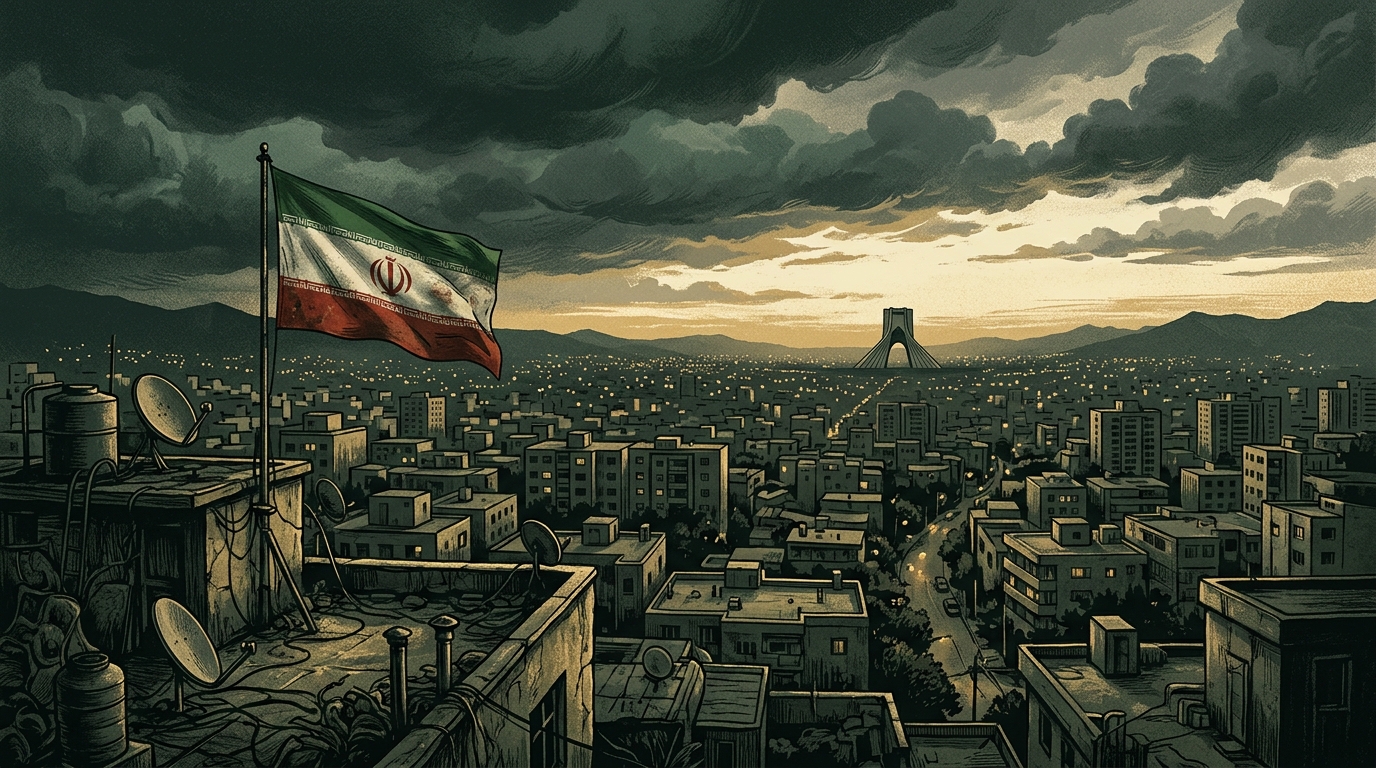
WASHINGTON / TEHRAN, 5 NOVEMBER 2026 — The ballot boxes have delivered a rebuke that American missiles could never prevent. Across the United States, voters have stripped President Donald Trump's Republican Party of control of Congress, delivering both the House of Representatives and the Senate to the Democrats. The verdict is domestic in its origins, but its consequences reach far beyond Washington. In Tehran, where eight months of war have left the country battered and its leadership profoundly distrustful of American intentions, the election has been greeted as evidence that the American public is beginning to turn against the conflict waged in its name.
There is an unmistakable irony in the spectacle. A president who returned to office promising American power has discovered that military superiority does not confer political immunity. Washington may command aircraft carriers, advanced missiles and an extraordinary military establishment, but American voters retain the power to question the costs of their employment. The battlefield can be controlled by generals. The ballot box cannot.
The Democrats' victory has exposed a truth that governments engaged in distant wars habitually discover too late. The public may applaud an opening strike, particularly when it is presented as swift, necessary and decisive. Sustaining that approval becomes considerably harder when the promised victory recedes, the objectives change and the economic consequences appear in everyday household expenditure.
For Tehran, this is an opportunity to claim vindication. For Washington, it ought to be an occasion for serious political reckoning.
Tehran's Victory Claim and the Limits of That Claim
Iranian parliament speaker Mohammad Bagher Qalibaf, a leading figure in negotiations with Washington, responded to the election with a declaration that Americans had said "NO TO WAR". He coupled that interpretation with a threatening warning against any American administration that might disregard the electorate's supposed wishes.
His statement was calculated for several audiences. It addressed Iranian citizens enduring the consequences of war. It spoke to a wider Middle East anxious about another round of attacks. Most importantly, it sought to transform an American domestic election into an argument against further military action.
The political calculation is understandable. Tehran cannot easily defeat the United States in a conventional military contest, but it can exploit America's divisions, the financial exhaustion of prolonged conflict and Washington's difficulty in defining what a satisfactory end to the war would actually mean.
Yet Iran's interpretation requires scrutiny. American voters did not cast ballots in a referendum on the Islamic Republic. They voted on their country's government, economic conditions, political leadership and the conduct of a war whose consequences have reached their homes. Disapproval of Trump's handling of Iran does not necessarily imply sympathy for Tehran.
Iran's Supreme Leader, Mojtaba Khamenei, has himself warned against expecting a change of American political parties to produce a fundamental change in Washington's attitude toward the Islamic Republic. His message stands in marked contrast to the triumphalism surrounding Tehran's interpretation of the vote.
This is the essential contradiction within Iran's response. Its officials are eager to present the American election as a rejection of war, while its highest leadership insists that American hostility transcends elections. Neither proposition can be treated as proof that peace is suddenly at hand.
The American Public Is Counting the Cost
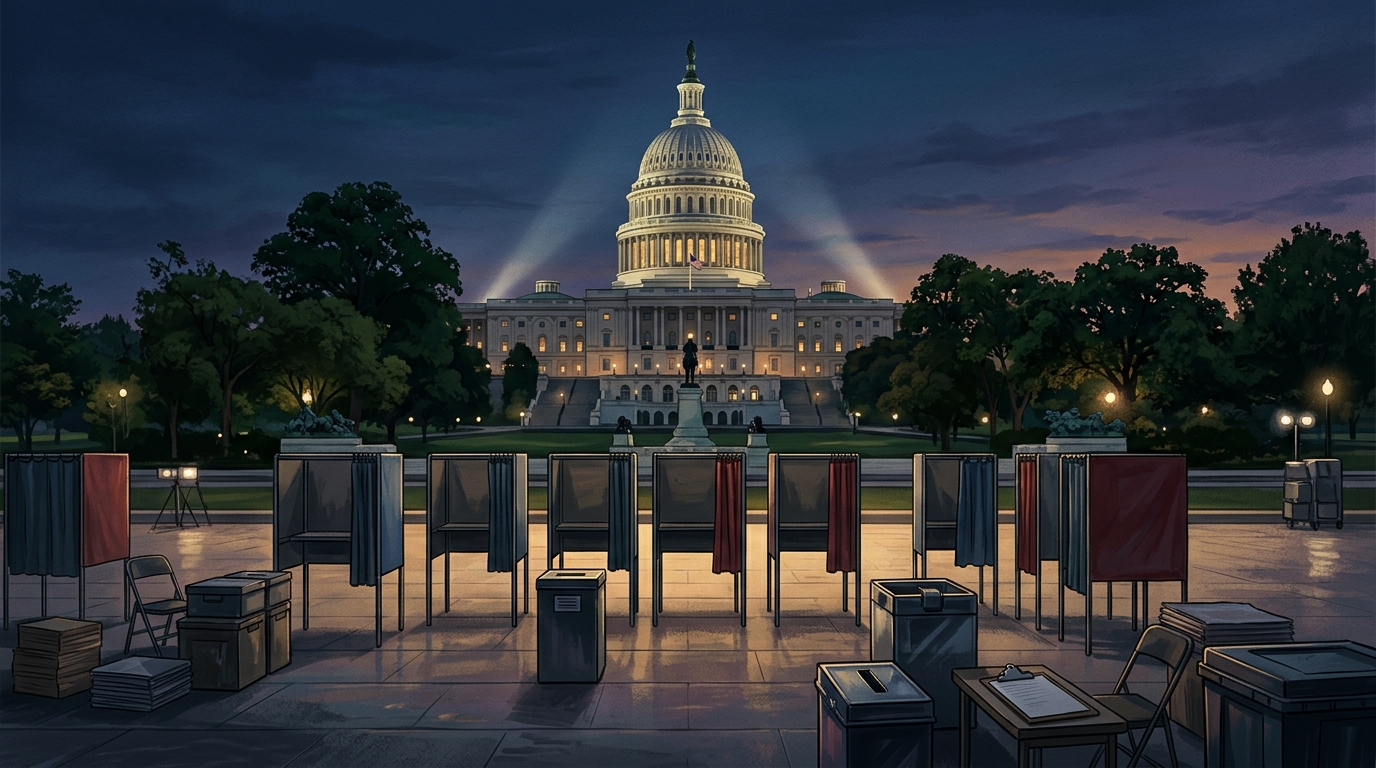
The severity of the Republican defeat is difficult to dismiss as an ordinary midterm correction. Democrats made gains in states that had long been considered dependable Republican territory. Voters in conservative strongholds demonstrated a willingness to punish the administration, and the Iran war became one of the most politically damaging elements of the Republican record.
But the election also demands a more honest reading than Tehran's preferred account allows. Preliminary ABC News voter data indicated that 34 per cent of House voters considered the Iran war crucial to their decision. A larger proportion, 49 per cent, attached that importance to the cost of living, while 55 per cent cited government corruption. The figures suggest a wider rejection of the administration's stewardship rather than a single-issue anti-war uprising.
There is nevertheless a connection between war and inflation that political leaders cannot conveniently separate. Military conflict affects energy supplies, maritime insurance, shipping routes, government expenditure and confidence in international markets. For ordinary households, the consequences arrive as higher costs and diminished purchasing power.
A government may insist that a war is being fought for national security. The citizen confronting another increase in essential expenses is entitled to ask what that security has accomplished.
Vice President JD Vance has himself attributed the Republican defeat principally to the Iran war. That admission is more politically damaging than any statement issued by Tehran. It suggests that the administration's own senior leadership recognises the central role the conflict has played in destroying its congressional majority.
Trump, however, has defended his decision to wage war and indicated that he would make the same choice again. His position reveals the divide that now confronts the administration. The president remains convinced of the necessity of the conflict, while the electoral foundations of his authority have been substantially weakened.
The Strait of Hormuz Remains a Hostage to the Conflict
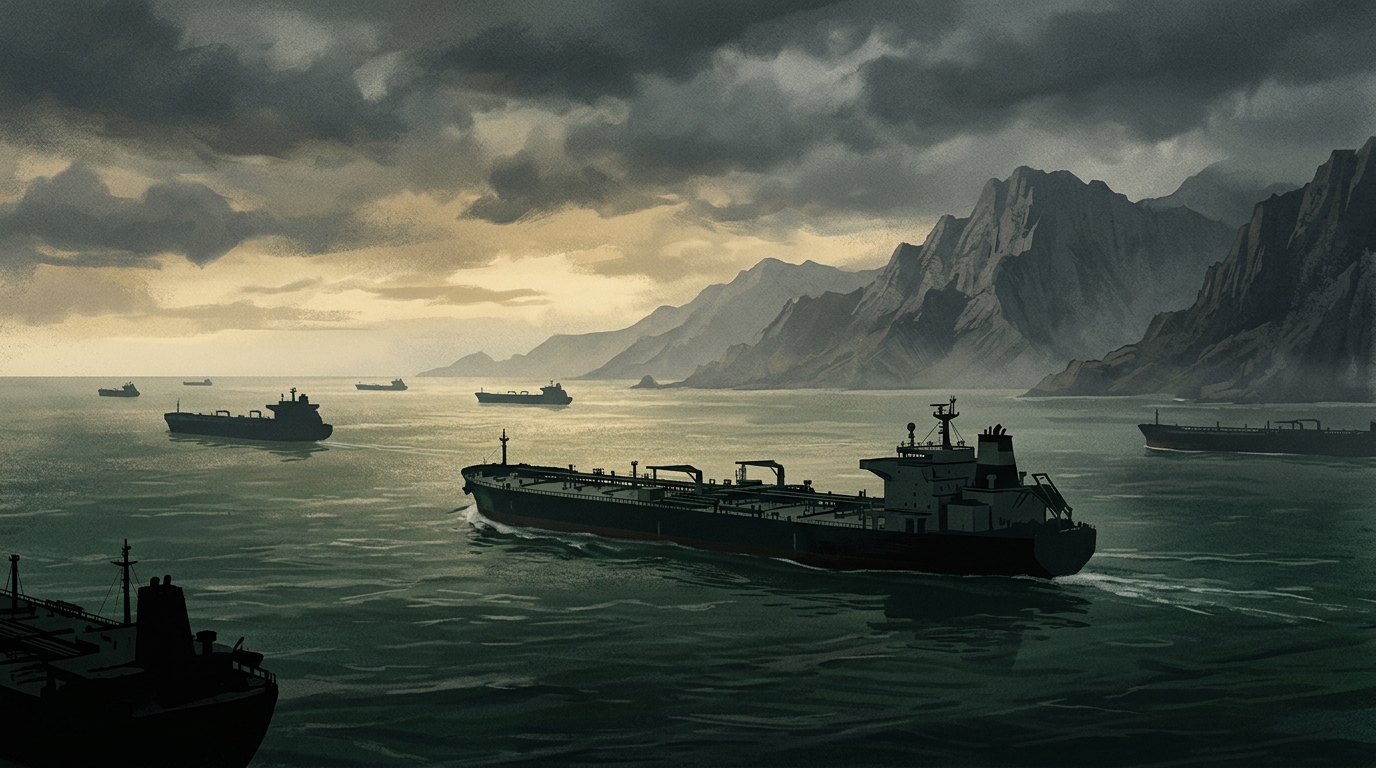
Beyond the political celebrations in Tehran and the recriminations in Washington, the war continues to exert its pressure upon the Gulf. The Strait of Hormuz remains a particularly dangerous point of confrontation, with restrictions on commercial navigation, American naval operations and Iranian military threats placing the security of international shipping in jeopardy.
Iran's Islamic Revolutionary Guard Corps reported on 4 November that four tankers had caught fire after striking naval mines while attempting to pass through a restricted section of the waterway. The circumstances of the incident require independent verification, but the report illustrates how readily a maritime confrontation can overwhelm diplomatic efforts.
Iran cannot claim an international mandate for peace while threatening commercial navigation. Washington cannot declare itself the guardian of regional stability while treating renewed military escalation as an acceptable substitute for a negotiated settlement.
For Gulf countries, the American election provides no immediate protection against further instability. Qatar, Saudi Arabia, the United Arab Emirates, Oman and their neighbours must live with the consequences of decisions made in Washington, Tehran and Tel Aviv.
Their cities, ports, airports, energy facilities and trading relationships are exposed to a conflict whose political origins lie largely beyond their borders. Their interest in preventing another escalation is therefore neither timid nor incidental. It is a fundamental matter of national security.
Doha's Diplomacy Deserves More Than Another Postponement
Qatar has continued to serve as a crucial intermediary between Washington and Tehran. Recent discussions have examined proposals intended to reopen Hormuz and establish steps toward ending the conflict. Negotiators have exchanged draft arrangements, although the positions of the two governments remain substantially apart.
These negotiations deserve serious attention. Diplomatic progress is rarely dramatic, particularly after months of bombardment, threats and political humiliation. Negotiators must resolve the practical questions that speeches delivered before cheering crowds invariably ignore. These include sanctions, naval restrictions, maritime access, security assurances and mechanisms for preventing renewed attacks.
Tehran may conclude that Trump's weakened domestic position gives Iran greater negotiating leverage. Washington may attempt to demonstrate that the election has not impaired American resolve. Israel may view prolonged negotiations as an opportunity for Iran to restore its military position.
Each calculation carries the possibility of another confrontation. The responsibility of diplomacy is to prevent those competing political interests from producing another round of military destruction.
Congress Must Recover Its Authority Over War
The election has altered the balance of political power in Washington, although the new congressional majorities will not formally assume office until January 2027. The implications for the Iran conflict could be considerable.
A Democratic Congress will possess greater capacity to scrutinise expenditure, question military officials, investigate the administration's decisions and exercise control over future appropriations. It cannot simply seize command of American military operations from the president, but it can demand explanations that the administration has previously been able to avoid.
An administration that commits its armed forces to an extended conflict must explain what military success is supposed to achieve politically. If the objective is to prevent a nuclear threat, the public is entitled to know how the campaign advances that purpose. If the intention is to compel political concessions from Tehran, the administration must demonstrate why military pressure is more likely to produce those concessions than negotiations.
Most importantly, the government must establish where the war ends. No serious military policy should be permitted to rest indefinitely upon vague assurances that victory is approaching.
Senate Democratic leader Chuck Schumer has indicated that the incoming majority intends to use Congress's constitutional authority over public expenditure to help end the conflict. Whether those ambitions survive the practical difficulties of divided government remains to be seen.
Congressional oversight is no substitute for diplomacy. It is, however, an essential safeguard against executive power exercised without adequate public accountability.
Iran Must Also Answer to Its Own People
There is another question that Tehran's leadership would prefer to leave unanswered. If the American electorate possesses the right to reject the conduct of a war, what political rights are available to Iranians who wish to challenge the decisions of their own government?
It is convenient for the Islamic Republic to celebrate the democratic verdict of a country it routinely denounces. It is considerably less convenient to examine the relationship between public consent and political authority within Iran itself.
The suffering of Iranian civilians deserves recognition independent of any judgement about the Iranian government. Families whose homes have been destroyed, whose livelihoods have disappeared and whose futures have been disrupted are entitled to an end to the violence. They are also entitled to accountable government.
The fact that Iran has suffered military attacks does not place its rulers beyond criticism. Nor does opposition to American military escalation require the international community to endorse the political practices of the Islamic Republic.
The same ethical standard must apply in Washington and Tehran. Governments owe their citizens an explanation for the human consequences of their decisions. War does not suspend that obligation.
The Election Has Weakened Trump. It Has Not Ended the War.
The great temptation after an election of this magnitude is to declare that history has turned a corner. Tehran's leaders are already interpreting the results as a vindication of their resistance. Democrats in Washington are preparing to challenge the president. Trump's political opponents see the possibility of restraining an administration that has enjoyed substantial congressional support.
But the war remains unfinished. Its underlying disputes remain unresolved. The instruments of military escalation remain available to the American president, while Iran continues to possess the means to threaten regional stability.
A change in congressional leadership does not by itself create a peace agreement. It creates the political conditions in which the demand for one may become impossible to ignore.
Trump's administration must now decide whether it wishes to approach the remaining years of its term as an embattled presidency seeking to demonstrate military strength, or as a government prepared to acknowledge the limits of armed force.
Tehran faces a corresponding decision. It can exploit America's political embarrassment for domestic propaganda, or it can recognise that a weakened appetite for war in the United States offers an opportunity to pursue serious negotiations.
The gravest danger is that both capitals will mistake the other side's political difficulties for strategic weakness. Such miscalculations have prolonged wars throughout history. They have rarely delivered the lasting security promised by those who make them.
The American electorate has spoken with sufficient force to change the balance of power in Congress. It has raised profound doubts about the administration's handling of Iran, the cost of military intervention and the credibility of its political leadership.
What it has not done is grant Tehran a victory.
The Iranian leadership may celebrate the humiliation of Donald Trump's party, but the American electorate was defending its own interests, not endorsing the interests of the Islamic Republic. The result is a rebuke to the conduct and consequences of the war, rather than an invitation for Tehran to dictate the terms of peace.
Washington must understand something equally fundamental. A nation cannot continue demanding sacrifices from its citizens without explaining what those sacrifices are intended to accomplish. Military superiority is an instrument of national power. It is not evidence of political wisdom.
The real message from America's election is that a government may possess the military strength to begin a war and still lose the public's confidence in its ability to end one.
That is the verdict Tehran is reading with such satisfaction. It is also the verdict Washington can no longer afford to ignore.