Sonam Wangchuk’s School Told to Stop: Regulation, Retribution and the Questions Ladakh Cannot Avoid

A notice at the school gate
LEH, 4 November 2026. Sonam Wangchuk has spent much of his public life arguing that India's education system should teach children to solve the problems of the places in which they live. Now an institution associated with that philosophy has been told to stop its activities. The Ladakh administration's notice to the Himalayan Institute of Alternatives, Ladakh, concerning Desert Flower School in Phyang, is formally a dispute over permissions and a pending land case. Politically, it arrives at a moment when Wangchuk has become a recognisable voice of protest far beyond the mountains. That coincidence demands scrutiny, though it does not by itself establish retaliation.
The notice, dated 1 November and addressed to HIAL co-founder and chief executive Gitanjali J Angmo, says classes and other activities had begun without the necessary clearances. It directs the institute to maintain the status quo until the High Court of Jammu and Kashmir and Ladakh decides the matter or issues further directions. Angmo is Wangchuk's wife, but she is also an institutional leader in her own right. The notice is addressed to her, not simply to the activist whose name dominates the headlines.
The land beneath the dispute
The immediate controversy is tied to the cancellation, in August 2025, of an allotment of 1,076 kanals of land at Phyang Thang to HIAL on a proposed 40-year lease. The institute challenged that decision before the High Court. Reporting on the litigation says the administration has questioned compliance with lease conditions, including payment of premium and ground rent. The school notice refers to Angmo's 22 September request for a no-objection certificate concerning the proposed managing committee. Officials say activities proceeded without the approvals they considered necessary.
Those are substantive administrative issues, not trivial technicalities. Public land cannot be allotted or occupied on the strength of reputation alone, and schools must meet applicable requirements. But a credible regulatory account also needs a clear chronology. Which permissions were granted, which were refused, what obligations fell due, and how did the administration respond to requests for clarification? The public record must establish whether the institute ignored settled requirements or was caught in an unresolved administrative process. Angmo has publicly argued that officials delayed implementation of a lease policy and then blamed HIAL for the consequences. That is her allegation, and the authorities dispute the institute's compliance.

From classrooms to a national protest
The notice would have attracted less attention had Wangchuk remained known only as an education reformer. In 2026 he became a national protest figure through his association with the Cockroach Janta Party, a youth-led movement demanding accountability over examination irregularities. In June he publicly endorsed its campaign and on 28 June began an indefinite fast at Delhi's Jantar Mantar. The movement's grievances ranged from alleged examination paper leaks to the pressure on students and the conduct of education authorities.
Wangchuk framed his participation as a continuation of his decades-long concern for students rather than a departure into party politics. The fast drew national attention, brought his health into the news and placed him alongside a generation of protesters who were challenging the government's response to examination controversies. The agitation culminated in July with the resignation of Union Education Minister Dharmendra Pradhan. The protest's participants celebrated the decision, although the political and administrative sequence should not be reduced to the actions of any single individual.
There is a striking irony here. A man who argued in Delhi that students deserved an accountable education system is now involved in a dispute over whether classes may lawfully continue at a school linked to his own institute. The irony makes a headline. It cannot settle the law.
Who is Sonam Wangchuk?
Born in Ladakh in 1966, Wangchuk trained as an engineer and became widely known for educational experiments suited to Himalayan conditions. He helped establish the Students' Educational and Cultural Movement of Ladakh, commonly known as SECMOL, which challenged conventional teaching methods and sought to improve learning outcomes among students whom the mainstream system had failed. His work also included passive-solar buildings and the ice-stupa approach to storing winter water for use during dry spring months.
The Ramon Magsaysay Award in 2018 gave his work international recognition. His public reputation grew further as he advocated ecological safeguards, greater democratic representation and constitutional protections for Ladakh. He supported demands for statehood and Sixth Schedule safeguards after the region became a Union Territory in 2019. Those demands have generated disputes over political representation, environmental vulnerability and the extent of local control over land and resources.
His activism has also carried personal consequences. Following deadly protests in Leh in September 2025, authorities detained him under the National Security Act. He denied inciting violence and was released in March 2026 after the detention was revoked. The deaths and injuries during the protests were grave events requiring their own accounting. Neither his public reputation nor his detention determines the merits of the present school dispute.
The institution is not the individual
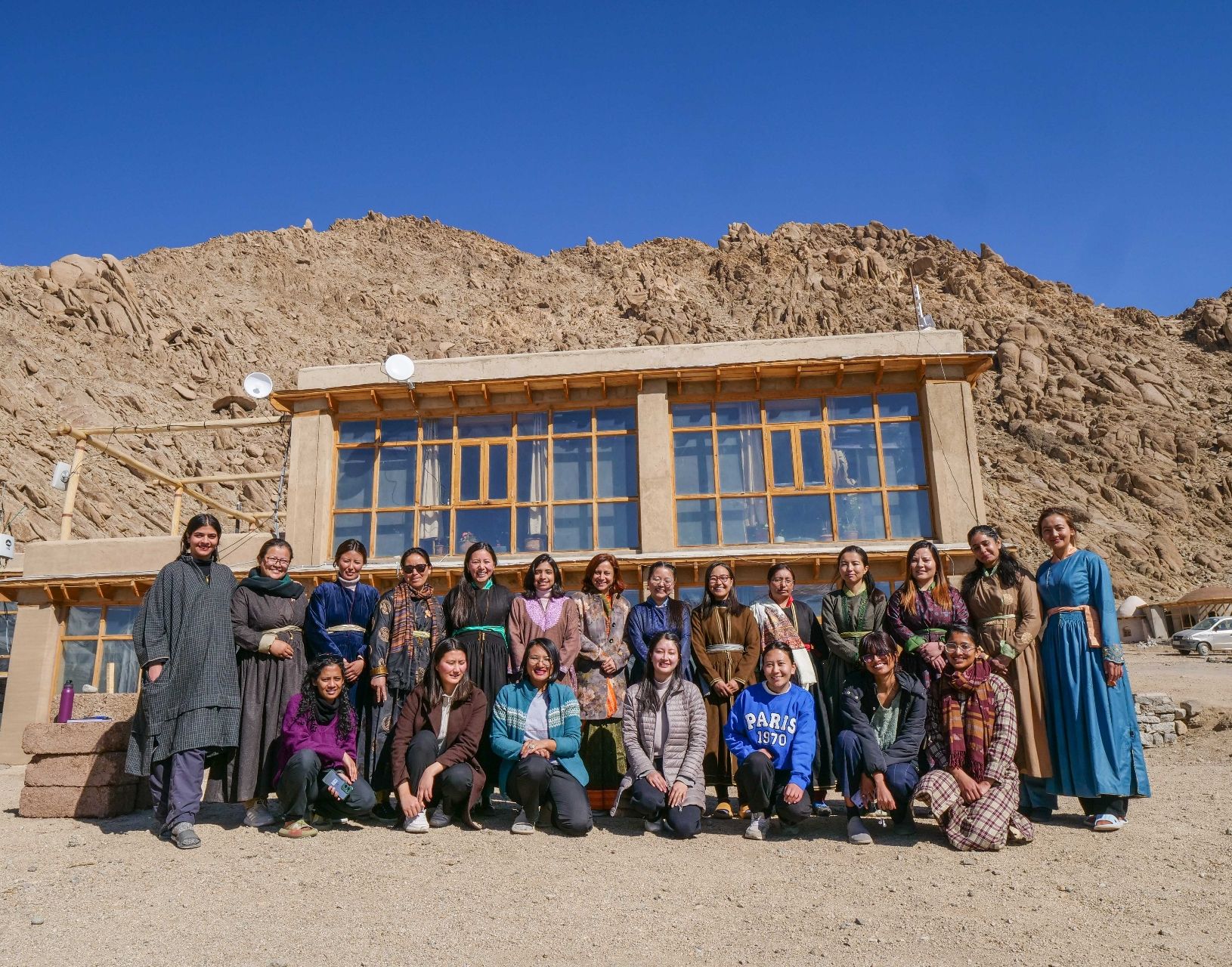
One distinction is essential. SECMOL, the older education initiative associated with Wangchuk, is not interchangeable with HIAL, and the present notice concerns Desert Flower School operating within the HIAL ecosystem. The buildings photographed on HIAL's campus are not automatically proof that the particular school had every approval it needed. Nor does a disagreement over a school's operating status amount to a judicial finding against all of Wangchuk's educational work.
This distinction is especially important for students, teachers and families. A public argument between an activist and the administration may dominate television debates, but the immediate practical questions are whether children were enrolled, whether teaching had started, what arrangements exist for their education and whether a lawful route to reopening can be agreed while litigation continues. Those questions deserve answers from the institute and the authorities.
Regulation, retaliation and the missing evidence
Wangchuk's participation in the CJP movement supplies an obvious political context. The administration's latest notice follows months of visible confrontation over Ladakh's future and education policy. It is therefore legitimate to ask whether the same regulatory standards are applied consistently to other institutions and whether the timing of enforcement was influenced by political disagreement. It would be irresponsible, however, to assert that officials acted in revenge without documents, testimony or a finding supporting that conclusion.
A meaningful test would compare HIAL's treatment with that of similarly situated educational projects. It would examine the original land-allotment terms, correspondence about the lease, inspection records, the school-registration requirements, the September NOC application and the exact terms of any judicial status-quo directions. It would also seek a full response from Angmo and the administration. If the institute breached clear conditions, the public should know. If authorities withheld approvals inconsistently or shifted the rules during a dispute, that too should be documented.
There is no public benefit in treating compliance as persecution merely because the applicant is celebrated. There is equally no public benefit in using administrative procedures to settle political disagreements. The safeguard against both abuses is evidence.
The question Ladakh must answer
The High Court proceedings will determine the legal questions placed before it. The larger public question is whether a region that urgently needs credible education and environmentally responsible development can establish predictable rules for both. Ladakh's young people should not have to choose between lawful institutions and innovative ones. Its administrators should not have to defend arbitrary discretion, and its reformers should not be exempt from transparent regulation.
Wangchuk's critics may see the notice as a straightforward consequence of unresolved permissions. His supporters may see it as another pressure point in a prolonged dispute with the authorities. At present, both positions require examination against the records. What is established is that the school has been told to halt activities, the land dispute remains before the court and the controversy has brought a nationally prominent protester back into confrontation with the Ladakh administration. The next decisive account should come from the documents, not from slogans.
- PTI / ThePrint, 3 November 2026
- The Indian Express, 3 November 2026
- The Economic Times, 3 November 2026
- The Indian Express, CJP timeline
- Reuters, 20 July 2026
Photographs are editorial archive references; publication and reuse rights should be confirmed with their respective rights holders before commercial republication.