The Rupee at 94: India’s External Squeeze Returns
The Indian rupee begins the week near 94.2 to the US dollar, caught between two powerful forces. Higher US Treasury yields, a firmer dollar and volatile oil prices are pulling it down. Foreign portfolio inflows into Indian equities are pushing in the other direction.
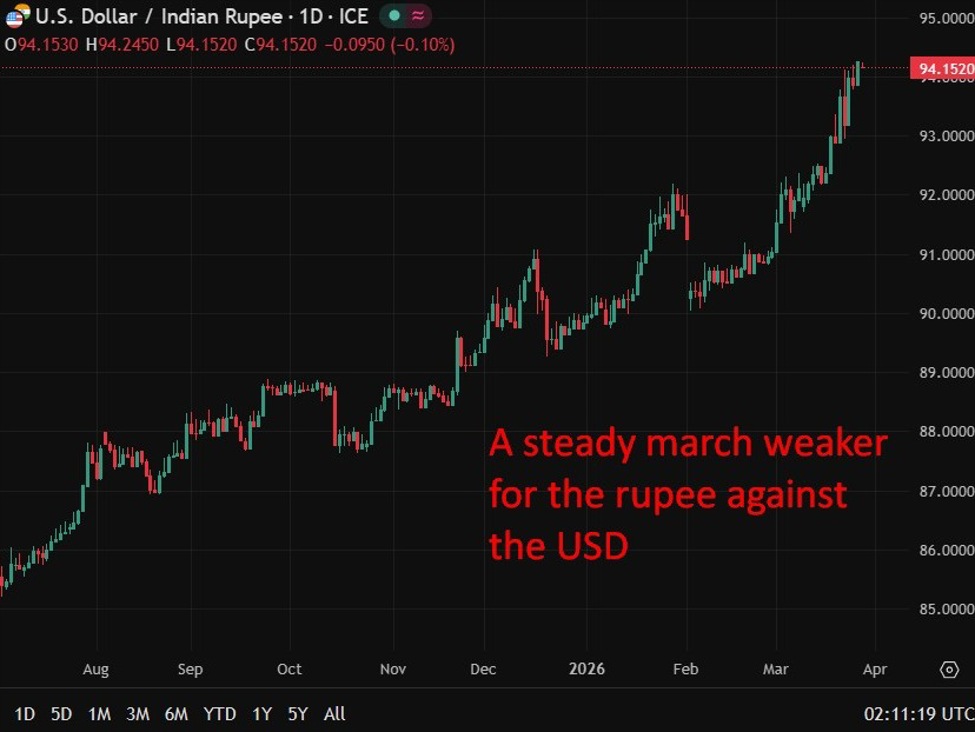
Reuters reported that the rupee ended last week at 94.24, down about 0.4 per cent over the week. Overseas investors, however, have bought nearly $9 billion of Indian equities so far this month after heavy outflows in September and October. That return of capital has prevented traders from treating the currency as a one-way bet.
Oil remains the most important external variable. India imports most of the crude it consumes, so higher oil prices increase the demand for dollars and widen pressure on the current account. Uncertainty around a possible US-Iran arrangement has kept crude volatile. At the same time, expectations of tighter US monetary policy are supporting the dollar.
The Reserve Bank of India now faces the familiar conflict between inflation, growth and currency stability. Bond yields rose sharply last week, while investors await inflation data and the next RBI and Federal Reserve decisions in December. Currency weakness does not automatically constitute a crisis, but persistent depreciation can feed imported inflation and raise costs for companies with unhedged foreign liabilities.
For households, the exchange rate appears distant until it reaches fuel, travel, electronics, education abroad and imported inputs. The rupee at 94 is therefore not merely a trading-room number. It is a reminder that India’s domestic growth story remains exposed to oil and global capital.