
The Woman Bollywood Almost Forgot
There was a wife. There was a child. There was cancer. And somewhere in the glittering corridors of Bombay's film industry, there was a romance the magazines could scarcely stop discussing. The names were Sanjay Dutt, Madhuri Dixit and Richa Sharma. Two belonged to the dazzling world of Hindi cinema's biggest attractions. The third was an actress whose life had taken a cruel turn before she had properly begun to enjoy her marriage.
For years, the story was told as a glamorous scandal involving a handsome rebel and Bollywood's reigning queen. The woman undergoing treatment for a brain tumour was generally reduced to a troublesome circumstance in somebody else's romance. Richa Sharma was Sanjay Dutt's wife when film magazines began reporting his growing closeness to Madhuri. Their marriage was already under severe strain. Whether Madhuri was genuinely involved with him remains disputed, despite the confidence with which the gossip was repeated. Richa was gravely ill, her marriage deteriorated during treatment, and the public controversy became another burden upon a woman fighting for her life.
A Marriage Before the Scandal
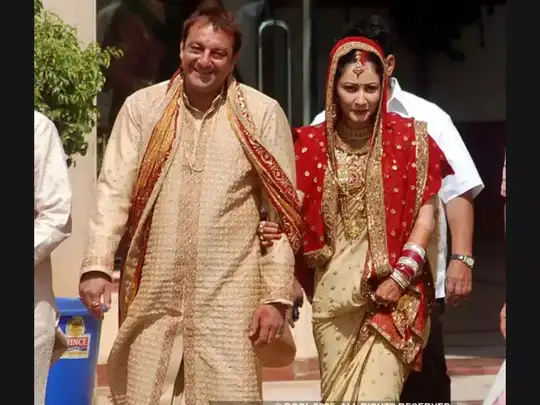
Sanjay married Richa in 1987. Their daughter Trishala was born the following year. Richa had entered films with ambitions of her own, appearing in productions including Hum Naujawan, before marriage redirected her life away from the profession. In 1989 she was diagnosed with a brain tumour. The family faced the frightening realities of serious illness, and Richa travelled to the United States for treatment while Dutt remained occupied with his film career in India.
These were years of extraordinary professional ascent for Dutt. The rebellious son of Sunil Dutt and Nargis had become a bankable leading man, capable of combining menace with tenderness on screen. Madhuri, meanwhile, was approaching the summit of her popularity. Beautiful, accomplished and exceptionally gifted as a dancer, she possessed the rare ability to command both popular affection and commercial power. Their screen appearances brought them together repeatedly.
When Screen Chemistry Became a Public Scandal

The 1991 success of Saajan strengthened their public association. Audiences admired their chemistry, film magazines examined their every gesture, and rumours travelled swiftly through an industry in which professional companionship was routinely converted into romantic speculation. A February 1993 Star & Style cover story, subsequently discussed in journalist Yasser Usman's biography of Dutt, portrayed the two actors as lovers facing family opposition and public disapproval.
Yet the distinction frequently lost is important. Magazine speculation proves that a scandal existed. It does not establish that the relationship existed in the manner described. Both actors denied the romance. In a 1993 Movie Magazine interview, Dutt maintained there had been no affair and suggested their professional familiarity had been misinterpreted. Madhuri's former manager, Rikku Rakesh Nath, later argued that several supposed romances involving the actress had been manufactured by producers seeking publicity.
That conflicting evidence deserves attention. Still, the rumours were serious enough to provoke a deeply personal response from Richa's family. While audiences celebrated an attractive screen partnership, a wife receiving cancer treatment thousands of miles away was reportedly hearing that her marriage might be nearing its end.
Richa Returns, Hoping to Save Her Marriage

In October 1992, following improvement in her health, Richa returned to Bombay with Trishala. Accounts reproduced in Usman's biography describe a woman anxious to recover the domestic happiness that illness and geographical separation had interrupted. She was reportedly confronted with an upsetting reception. In an interview published in CineBlitz, Richa's sister Ena Sharma alleged that Sanjay did not receive his wife and daughter at the airport. Within approximately a fortnight, Richa returned to New York.
There is something especially pitiless about the episode. A woman who had endured treatment for a brain tumour came home expecting some renewal of family life. Instead, according to her relatives, she discovered that her husband's affections and priorities had changed. Richa publicly expressed hope that the difficulties could be overcome, but also described having been treated badly during her visit. According to Usman's account, Sanjay filed for divorce in early 1993. A dispute concerning Trishala's custody followed.
The Sister Who Refused to Remain Polite
Richa's sister Ena did not conceal her anger. In the December 1992 CineBlitz interview, reproduced in Usman's biography, she criticised Madhuri in exceptionally harsh terms and questioned how an admired actress could become associated with a married man whose wife was suffering. Ena's indignation was understandable as the response of a family witnessing Richa's distress. Her accusation against Madhuri, however, was an allegation made by an involved relative, not independently established proof of the actress's conduct.
The popular version goes further. It alleges that Madhuri's parents objected fiercely, that she insisted the marriage was effectively finished, and that she pressured Sanjay to demonstrate his separation from Richa. The available contemporary reporting does not establish those detailed private conversations or instructions. They should not be repeated as historical certainties. The fairer and harder question is why a critically ill wife found herself defending the existence of her marriage before an audience eager to celebrate the possibility of another.
Was Madhuri the Villain, or Was Sanjay Escaping Responsibility?

The easiest version of the scandal makes Madhuri its principal villain. She was beautiful, enormously successful and allegedly desired by a married man. The familiar script places the other woman at the centre of the blame. But Sanjay Dutt was the person married to Richa Sharma. He had made the commitment. He was Trishala's father. Whatever the truth of his association with Madhuri, his responsibilities towards his wife and daughter did not depend upon the romantic choices of a colleague.
Even if the alleged affair had been conclusively established, the primary responsibility for honouring an existing marriage would have rested with the husband. That does not place a knowingly involved third party beyond criticism. It means the moral argument cannot begin and end with the woman whose beauty made her convenient for sensational headlines. Madhuri was also a major star whose professional reputation carried commercial value in an industry where a woman's personal life could damage her career more easily than a man's.
Then Came the Bombay Blasts

On 12 March 1993, Bombay suffered devastating serial bomb blasts. The investigation brought Dutt into one of the gravest criminal controversies to engulf a leading Hindi film actor. He was arrested in April 1993 in a case involving allegations under the Terrorist and Disruptive Activities (Prevention) Act, commonly known as TADA, as well as illegal possession of weapons. The distinction between accusation and conviction is essential. Dutt was acquitted of the terrorism-related charges. He was convicted under the Arms Act, and the Supreme Court subsequently upheld his conviction while reducing his sentence to five years.
The scandal altered the atmosphere surrounding him. Magazines suggested that Madhuri had distanced herself after his arrest. She denied that she had been involved with him in the first place. In an August 1993 interview, she objected to suggestions that her denial represented a newly calculated abandonment and maintained that she had denied the relationship repeatedly. Dutt stated that her comments had not upset him. Their association changed and the rumours receded, but the precise nature of their private relationship remained disputed.
Richa's Tragedy Outlived the Gossip
In the middle of 1993, Richa's cancer returned. Whatever the circumstances of her marriage, this was the development that mattered most. Her battle was once again against a devastating illness. Richa died in 1996, leaving her daughter to grow up without her mother. Trishala's later recollections of childhood have described the loss at eight years of age and the difficulty of living through her father's imprisonment and family upheaval.
The children of celebrities do not experience their parents' scandals as newspaper entertainment. They live through disruption and separation long after public curiosity moves elsewhere. Dutt continued his career and eventually rebuilt much of his professional standing. Madhuri remained one of India's most celebrated actresses, married Dr Shriram Nene in 1999 and established a family life. Richa had no comparable opportunity to begin again. This does not suggest that marital distress caused her cancer. It acknowledges that grave illness and emotional hardship coincided during the most difficult years of her life.
Bollywood's Selective Conscience

Bollywood has always understood how to forgive its leading men. Public disgrace can be followed by a triumphant comeback, a sympathetic biography and an audience willing to celebrate redemption. Women receive less consistent treatment. A famous actress may find her reputation marked by allegations that were never substantiated. A wife may receive sympathy for a few months, only to disappear from the story once her suffering ceases to attract attention.
The Madhuri-Sanjay-Richa episode exposes both tendencies. The alleged relationship became a permanent feature of Bollywood folklore. Richa's struggle was often presented as a tragic subplot. Yet she was the only person among the three whose life ended before she could write another chapter. The industry found it remarkably easy to romanticise the possibility of a new marriage while an existing one was collapsing under illness, separation and speculation. Condemning Madhuri on unproven allegations is no answer to the industry's long history of excusing powerful men.
The Final Question
The record leaves much unresolved. It does not prove that Madhuri Dixit deliberately broke up Sanjay Dutt's marriage. It does establish that Richa Sharma returned from cancer treatment hoping to rebuild her family, that the marriage was in severe difficulty, and that her relatives publicly expressed considerable anguish. Those facts permit an honest reckoning without embellishment.
Dutt's struggles, legal troubles and professional recovery have been examined repeatedly. Madhuri's extraordinary career has received the admiration it deserves. Richa remains far less familiar to younger audiences. Perhaps the enduring scandal is not simply whether two film stars were romantically involved. It is the ease with which a woman's fight for her marriage and her life became an entertaining chapter of somebody else's celebrity legend. The headlines belonged to Madhuri and Sanjay. The deepest tragedy belonged to Richa. For all the industry's appetite for love stories, hers deserves to be remembered.