Before the Battles of Politics: The Young Rahul Gandhi Who Asked Indira About Elections
A family-table video from the early 1980s has gone viral again. It shows the ordinary voices behind one of India's most extraordinary political households. Yet the recording's exact year and archival source remain unverified.
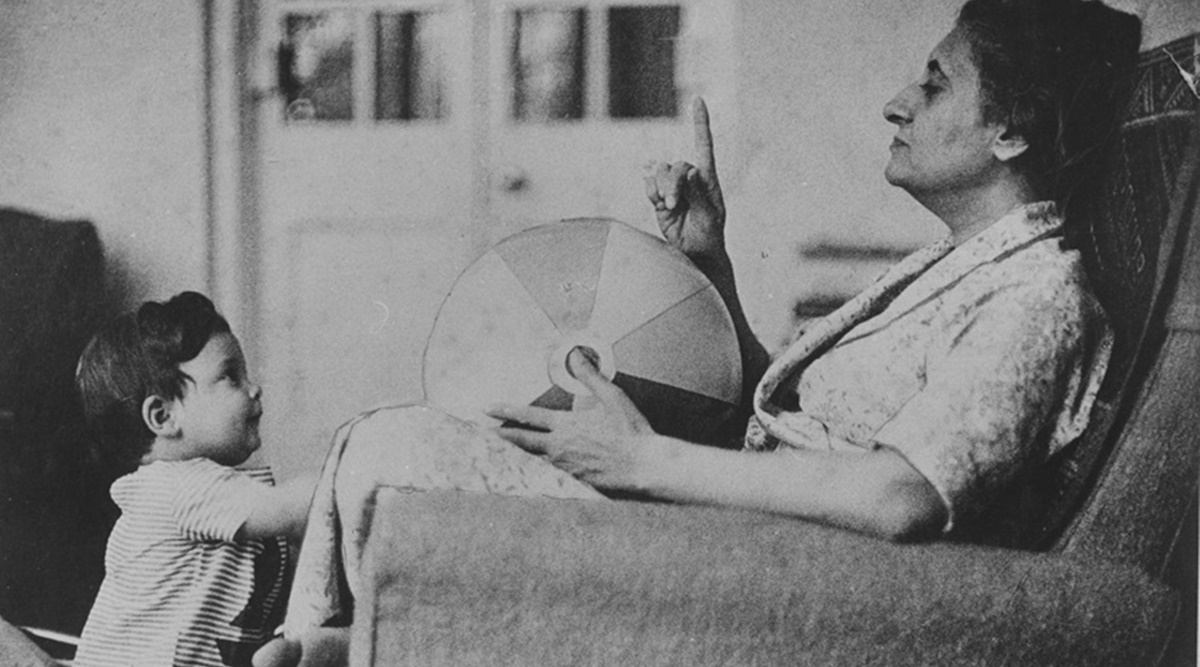
NEW DELHI, 10 November 2026. The most striking thing about the short family video circulating across Indian social media this week is not that a prime minister appears in it. India has seen countless photographs of Indira Gandhi addressing crowds, receiving visiting leaders, confronting opponents and presiding over the rituals of power. The remarkable element is the ordinariness. At a dining table, she listens to a child asking questions. There is talk of election victories, numbers and candidates. Someone is on the telephone. A grandmother offers advice about eating a mango.
The child is identified in the widely shared footage as Rahul Gandhi, now a leading figure in India's opposition politics. His grandmother was one of the most formidable and contentious prime ministers the republic has known. The contrast has helped propel the recording through X, Instagram and news websites on 9 and 10 November. The clip invites viewers to look backward, beyond the public speeches and the long antagonisms that have surrounded the family.
Reports describe the video as dating from around 1980 or 1981. TCN has not located an authenticated original recording, production log, archive accession or independently established recording date. The period is therefore a reported estimate, not a verified timestamp. Several online commentaries identify other members of the household, including Sonia Gandhi and Priyanka Gandhi; references to Maneka Gandhi also appear in coverage. Care is needed before interpreting who was present, absent, speaking or reacting in a particular shot.
The Prime Minister at the Dining Table
In the reported conversation, Sonia Gandhi discusses an election result by telephone, referring to a lead of approximately 237,000 votes. Indira Gandhi is said to offer a story about a candidate whose vote total was exceptionally small, while the children pursue questions about electoral margins. Priyanka is reportedly asked to explain the English numerical equivalent of a lakh. Rahul wants to know how much his grandmother won by.
Those who have grown accustomed to Rahul Gandhi the politician may find the childhood curiosity arresting. He is not delivering a speech, taking a position or challenging the government. He is trying to understand the strange adult language of majorities, votes and public office. That may be the most honest thing in the footage. Children living near power do not always understand the institutions that govern their lives. They ask why, how many and what happened, as children everywhere do.
According to one published account, the exchange eventually turns to a piece of domestic advice about eating mangoes on a large plate. It is an almost comic ending to a conversation framed by election results. The political leader becomes a grandmother concerned about the practical mess of fruit at a family meal. It is precisely the incongruity that makes the video attractive to viewers on all sides of India's political divide.
What the Camera Does Not Tell Us
A private recording can be revealing while remaining profoundly incomplete. We do not know who operated the camera, why the scene was recorded, how long the original continued, whether it was edited or how the current circulating file travelled between owners and social-media accounts. A fragment from a family dining room cannot establish the emotional relations of everyone who appeared there. Claims that one relative looked isolated, uncomfortable or favoured are interpretations, not verified conclusions.
Still less can the clip supply proof of an elaborate political destiny. It is tempting to describe the schoolboy's interest in elections as the first visible sign of the parliamentary career he would eventually pursue. That is hindsight. Children ask about subjects heard at home. The unusual fact here is that the home belonged to the prime minister. We should resist turning an ordinary childhood question into an inevitable prophecy of leadership.
The video also comes through a social-media environment in which affection, nostalgia and partisan hostility compete over the same images. Admirers may see a tender portrait of political lineage. Critics may see an emblem of dynastic privilege. Both reactions are understandable, and neither changes what the footage can independently establish.
A Household in the Shadow of History
To understand why these domestic scenes draw attention, one must recall the political atmosphere of the period they are said to depict. Indira Gandhi had returned to power after her electoral defeat in 1977, which followed the Emergency. Her comeback at the 1980 general election restored her authority, but the controversies over civil liberties, centralisation and political coercion remained part of her record. A family breakfast could never be wholly detached from that national history.
The household itself was approaching profound changes. Sanjay Gandhi died in a plane crash in June 1980. Rajiv Gandhi would enter electoral politics and later succeed his mother after her assassination in October 1984. The family story was punctuated by bereavement, competing political loyalties and highly public disagreements. Those events should not be retrofitted into the mood of a particular film clip, but they explain why viewers search old images for clues to relationships that changed dramatically.
India's fascination with the Nehru-Gandhi family has always involved a tension between public institution and private lineage. The family furnished several national leaders, and political opponents have criticised the influence of inheritance in democratic leadership. Supporters, in turn, have emphasised electoral mandates, sacrifice and a continuing association with the independence movement. A home video does not settle that argument. It makes the people inside it seem momentarily less abstract.

How Old Family Films Become Today's Political Arguments
Modern political communication operates in fragments. A few seconds of a speech may be separated from its surrounding remarks. A still photograph can be used to suggest an attitude no one has independently established. An intimate family moment can be posted as evidence of either exceptional humanity or inherited privilege. The clip under discussion has already attracted commentary about family dynamics, and that is a reminder of the danger of reading certainty into body language.
There is, nevertheless, genuine cultural value in home movies. They preserve accents, conversational rhythms, gestures and ordinary routines that official portraits rarely capture. A political leader who appears remote in a formal photograph becomes someone explaining arithmetic to a child. Such moments can enlarge historical understanding if they are dated, preserved, contextualised and made available with proper provenance.
That last condition matters. A recording reportedly made four and a half decades ago deserves more than a chain of anonymous reposts. Ideally, its original holder would identify when it was filmed, provide the unedited version and establish who authorised its release. An archive could then preserve it with contextual notes and make the distinctions between memory, interpretation and verifiable fact visible to future researchers.
The camera captures a grandmother talking to a child. The country sees a dynasty, a controversy and four decades of politics. Both views exist, but only one is visible in the room.
The Distance Between the Boy and the Politician
Rahul Gandhi has spent adult decades in a political arena in which his family name is simultaneously his greatest advantage and a persistent source of attack. To supporters he represents continuity and resistance; to detractors he embodies the persistence of hereditary influence. His own electoral history, parliamentary record and public positions must be evaluated on their merits. Childhood footage should neither excuse political errors nor be enlisted to ridicule a boy who was asking ordinary questions.
Indira Gandhi deserves the same serious treatment. Her place in Indian history involves major institutional decisions, military and diplomatic events, the Emergency, electoral defeat and a dramatic return to power. A warm moment with grandchildren tells us something about her private life, but it cannot substitute for the harder historical accounting. One can recognise tenderness without forgetting coercion, and one can criticise governance without denying that leaders also inhabit families.
Perhaps that is why this video has spread so quickly. Its power is not in a scandal or a revelation of state policy. It offers an encounter with a time that cannot be revisited. The political household is still intact in the frame; the children are young; the future has not yet happened to them. The audience knows what follows, and that knowledge makes an ordinary question about votes seem unusually poignant.
The Value of an Honest Archive
TCN believes that rare historical recordings deserve public attention, but the adjective rare should not become a substitute for authentication. The original source and the exact date of this footage remain open questions. The people and dialogue identified in contemporary coverage should be checked against the complete recording. The segment may be a rediscovery, a new circulation of an older published clip or a partial extraction from a longer family film.
For the moment, the most defensible conclusion is also the most human. A video reported to show Indira Gandhi at a family table with young Rahul and other relatives has captured the imagination of social-media users. It gives the public an unusually informal view of people better known through elections, crises and political rivalry. Its historical interest is real, even though its complete provenance is not yet established.
Long after the slogans and television arguments have faded, the image that survives may simply be that of a grandmother answering a child's questions about elections, then reminding him to take a larger plate for his mango.
Free Press Journal, 10 November 2026 — description of circulating video
The Telugu News, 9 November 2026 — contemporaneous coverage and archival caveat
Indian Express, 2016 — an earlier circulating Gandhi family film
Indian Express Archives — historical Rahul and Indira photograph
Free Press Journal — archival family photograph