The Republic That Still Asks What She Was Wearing
From the police station to the marital bedroom, India has rewritten its rape laws while leaving women to fight for the ordinary right to say no.

The men walked out of Godhra prison in August 2022. Eleven had been sentenced to life imprisonment in the case arising from the gang rape of Bilkis Bano and the murder of members of her family during the 2002 Gujarat violence. Gujarat had remitted their sentences. Television showed a welcome of sweets and gestures of respect. Other coverage reported garlands. Two days later, through her lawyer, Bano said the decision had shaken her faith in justice. The contrast requires no embellishment. One group was welcomed home. A woman who had spent years seeking justice had to ask, again, whether she could live in peace. [1]
In January 2024, the Supreme Court quashed the remission orders and directed the men to surrender. It held that Maharashtra, where the trial and sentencing took place, was the competent state to consider remission. The Court also found that an earlier order directing Gujarat to consider an application had been secured through suppression of material facts and fraud on the Court. A lawful system can permit remission. In this case, the highest court found that Gujarat had exercised a power it did not possess. The men’s reception outside prison exposed a separate failure, one for which no jurisdictional ruling can supply a remedy. People had chosen to honour them. [2]
The girl in the police station
Long before that welcome, a case known by the name Mathura forced India to examine what happened when the men entrusted with protection were themselves accused. In 1972, a young Adivasi woman alleged that she had been raped in a Maharashtra police station. A trial court acquitted the policemen, the Bombay High Court convicted them, and the Supreme Court restored the acquittals in a judgment delivered in 1978 and reported in 1979. The absence of injuries and the Court’s reading of her conduct helped drive its finding on consent. The decision provoked protests and an open letter from four law teachers. The 1983 reforms introduced special provisions for custodial rape and an evidentiary presumption concerning absence of consent in specified prosecutions. [3]
The question the protests put to the country was painfully ordinary. How much resistance can a young woman be expected to offer inside a police station? An institution can make resistance dangerous and later treat its absence as evidence of agreement. The same habit survives when men laugh at a woman’s refusal, when relatives ask why she went to a room alone, and when a complaint becomes an inquiry into the complainant’s character. A woman’s clothes, previous relationships and freedom of movement tell us nothing about whether she agreed to a particular act.
What Delhi changed, and what Parliament kept
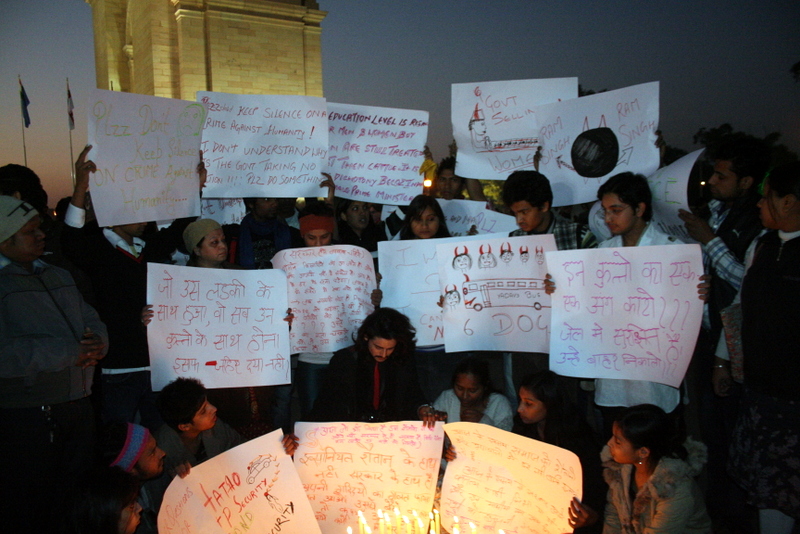
The December 2012 gang rape in Delhi brought crowds into the streets and led the Union government to appoint the Justice Verma Committee. The 2013 amendments broadened the definition of rape and created distinct offences for conduct including sexual harassment, voyeurism and stalking. The committee also recommended removing the marital rape exception. Parliament left it in place. More than a decade later, when the Bharatiya Nyaya Sanhita replaced the Indian Penal Code from July 2024, legislators retained the adult marital exception in Section 63. The new statute did not inherit it by accident. It enacted it again. [3][4]
Section 63 otherwise defines consent as voluntary and unequivocal agreement to the specific sexual act. It expressly says that a woman’s failure to resist physically does not by itself establish consent. Exception 2 then excludes sexual acts by a man with his own wife from the definition of rape when she is eighteen or older. Section 67 separately criminalises non-consensual sexual intercourse by a husband with his wife when she is living separately, under a decree of separation or otherwise. It carries a prison term of two to seven years and a fine. The Protection of Women from Domestic Violence Act recognises sexual abuse and provides remedies including protection and residence orders. Those remedies matter. They leave the adult marital exception in the rape law intact. [4][5]
The Supreme Court heard challenges to the exception in September 2026. The Union’s defence of the exception has put the consequences of criminalisation for marriage and the proper role of Parliament before the Court. Those questions deserve a hearing. So does the woman whose home is the place where she is least able to refuse. England and Wales, whose common-law tradition helped furnish the old doctrine of marital immunity, abandoned it through the House of Lords judgment in R v R in 1991. That ruling did not relieve prosecutors of proving the offence. It removed marriage as a defence. India has had decades to reckon with that distinction. [6]
When the courtroom asks her to make peace
In Aparna Bhat v State of Madhya Pradesh, the Supreme Court in 2021 set aside a High Court bail condition requiring an accused man to ask the complainant to tie a rakhi on his wrist. The alleged conduct was the subject of a criminal case. The bail condition invited the woman to perform a ritual of kinship with the man she had accused. The Supreme Court directed judges to avoid conditions that bring an accused into contact with a complainant and to reject stereotypes when dealing with sexual offences. Granting bail and preserving the presumption of innocence require no performance of reconciliation by the complainant. [7]


The examination room has had its own version of this indignity. The discredited two-finger test was used to draw conclusions about a woman’s sexual history. In 2022, the Supreme Court again condemned it. In a 2024 order, the Court noted a case in which the examination had been conducted in October 2013, after its earlier ruling against the practice that April. The distinction in dates matters. That order documents disobedience after the 2013 ruling. It is no basis for claiming the examination occurred in 2024. The larger point survives the correction. An instruction from Delhi means little to a woman examined by somebody who ignores it. [8]
What the numbers can tell us
The national health ministry’s summary of NFHS-5, conducted in 2019–21, puts the share of ever-married women aged 18–49 who reported having experienced physical or sexual violence by a husband at about 29 per cent. That is a combined survey measure. It cannot be read as the percentage raped by a husband, and it cannot be compared directly with a police count of registered rape cases. Police records describe cases that reach the system and are recorded under particular offences. A survey asks about experiences, including some that never reached a police station. The distance between the two is part of the story, not a calculation one can make by subtracting one figure from the other. [9]
Consider what a complaint can demand of a woman who depends on the household she is accusing. She may need a safe room before she can make a safe telephone call. She may have to arrange travel, childcare and time off work for a hearing fixed months after she first spoke. A woman facing caste hostility or local political influence may have to seek help from people who know her family and the accused. A survivor with a disability may need an interpreter or accessible transport. Every adjournment has a date on a court list and a cost in somebody’s life. The court list usually records only the date.
The state must answer for the hours after a woman speaks
Remove the marital exception and apply the ordinary requirement of proof to allegations within marriage. Publish district figures for the time between complaint, investigation and trial. Tell survivors promptly about bail and release decisions that affect their safety. Fund competent examination, shelter, legal assistance and witness protection. Ask who was responsible when an officer refused to record a complaint, when a hospital repeated a prohibited examination, and when a court treated a woman’s sexual history as a substitute for evidence of consent. These are decisions made by people with names and offices. They can be examined.
The public test of reform is what happens after the press conference. A district can announce a fast-track court while leaving a survivor to find her own transport and legal advice. A hospital can issue a protocol without ensuring that the clinician on the night shift knows it. The useful questions are whether the money reached the service, whether the service reached the woman, and whether anyone checked. Each has an answer that government can publish.
The garlands in Gujarat were visible. Much of the country’s indulgence is quieter. It can sound like an uncle asking a woman to think of the family, a colleague telling her that a joke was harmless, or a man treating a wedding as the last occasion on which his wife’s agreement had to be sought. India has spent years instructing women to be careful. The law and the men who invoke it have a simpler duty. When a woman says no, hear her the first time.
Sources and court records
- NDTV, contemporary release footage and coverage · Deccan Herald, Bilkis Bano’s statement
- Supreme Court, Bilkis Yakub Rasool, 2024 INSC 24
- Justice Verma Committee report, 2013
- India Code, BNS §§63, 67 and 72 · PIB, commencement of criminal laws
- India Code, Protection of Women from Domestic Violence Act
- Supreme Court Observer, September 2026 hearing · House of Lords, R v R · Union government’s 2024 affidavit, reported by The Indian Express
- Supreme Court, Aparna Bhat judgment
- Supreme Court order of 7 May 2024 on the two-finger test
- Ministry of Health and Family Welfare, Health and Family Welfare Statistics in India 2023, C.2.15