Cricket · ACC Men’s U19 Asia Cup · India v Pakistan
The Last Ball Belonged to India
Pakistan made 337. India needed 338. Nine wickets had gone, three runs were required from the final ball, and an Under-19 Asia Cup final had become something larger than youth cricket. Mohit Ulva advanced, swung, and sent the ball to the boundary.
There are cricket matches which are remembered for a century, others for a collapse, and a few because the last ball refuses to surrender its place in history. At Al Amerat in Oman on Saturday, India and Pakistan produced one of those rare finals in which the scorecard seemed inadequate to describe what had happened. Pakistan, unbeaten on their way to the title match and defending champions besides, made 337 for nine in fifty overs. India, who had already lost to Pakistan in the group stage, came to the last over with one wicket left and eight runs still required. The old rivalry, usually burdened with more emotion than any group of teenagers ought reasonably to carry, had reduced itself to six deliveries, two young men at the crease and a fielding side one mistake from retaining the cup.

The final had begun in Pakistan’s favour. Farhan Yousaf won the toss and chose to bat, and his side batted with the composure of a team that had not yet learned the meaning of defeat in this competition. Usman Khan was the central figure. He made 107 from 111 balls, with eleven fours and three sixes, an innings built first on judgment and later on authority. Hayam Khan helped him put on 62 for the first wicket, but the match truly began to tilt when Abdul Qadir arrived. Qadir’s 80 came from only 54 balls and contained eight sixes, the sort of assault that can turn a respectable score into a threatening one before the opposition has fully understood what has changed. Their second-wicket partnership yielded 135, and by the time Qadir departed Pakistan had already crossed 197.
Usman continued beyond the hundred and captain Farhan added 63 from 60 balls, ensuring that India were never allowed the comfort of a quiet middle period. Pakistan were 240 for three in the thirty-seventh over and 299 for four in the forty-fifth. At that point 350 appeared likely, perhaps more. India, however, discovered something important in the final overs. Kavya Paresh Patel, who had been made to work hard earlier in the innings, finished with four for 68, while Chigurupati Venkata took three wickets in only five overs. Pakistan were checked just enough to finish at 337 for nine rather than disappear beyond reach.
The chase began with the steadiness India required. Aaryavir Sehwag, whose surname inevitably attracts notice, made 58 from 61 balls with nine fours, and captain Lakshya Raichandani played the more patient hand, 80 from 101 deliveries. They added 95 for the first wicket and gave India the rare luxury of beginning a chase of 338 without panic. The innings nevertheless changed sharply once Pakistan found their way through the top order. VK Vineeth made 24, Arjun Rajput 16, Yashbardhan Chauhan nine and wicketkeeper Anvay Dravid 19, but wickets came too regularly for India to establish control.
At 252 for eight in the forty-second over, India still needed 86. A final that had been alive was now, by ordinary cricket logic, almost over. Pakistan had the field, the bowlers, the scoreboard and the defending champion’s confidence. Rizwanullah had taken three wickets and Niqab Shafiq two. The asking rate had risen, and India had reached the tail. What remained was not a conventional chase but an act of refusal.

Manal Chauhan altered the match first. His 47 from 32 balls contained three fours and three sixes, and he refused to behave like a batsman whose side had eight wickets down. Beside him stood Mohit Ulva, better known for his bowling and already expensive with the ball, having gone wicketless for 57 in eight overs. Few cricketers receive so dramatic an opportunity to reverse the meaning of their day. Ulva seized it. He played not with the caution of a tailender but with the clean aggression of a man who had decided that survival alone would achieve nothing.
The pair added 57 for the ninth wicket, dragging India from 252 for eight to 309 before Chauhan was caught. The arithmetic was still forbidding. India now had only one wicket left. Venkata came in and, to his lasting credit, did not become a spectator. He made 11 not out from eight balls, including two fours, while Ulva continued to strike with a freedom that seemed almost unreasonable under the circumstances. He hit five fours and three sixes in his unbeaten 49 from 26 deliveries, scoring at a strike rate close to 190 in the most pressurised portion of the match.
The penultimate over produced seventeen runs and left India eight short of victory. Ahmed Hussain was entrusted with the fiftieth. The over began with a dot ball, then a wide, then singles. Pakistan did not collapse into disorder; India did not find an easy boundary. The equation narrowed ball by ball until, after Venkata took one from the fifth legal delivery, India required three from the final ball. A tie would have sent the match to a Super Over. Two runs would have preserved possibility. One would have preserved only anguish.
Ulva advanced down the pitch. The delivery was flatter and a little short. He drove it hard and wide of long-off. There was no need to run. The ball reached the rope, India reached 339 for nine, and a final that had seemed beyond them became theirs on its final possible delivery. Ulva remained unbeaten on 49. The number was one short of a fifty and utterly irrelevant. His innings had already crossed into something more valuable than a statistical milestone.
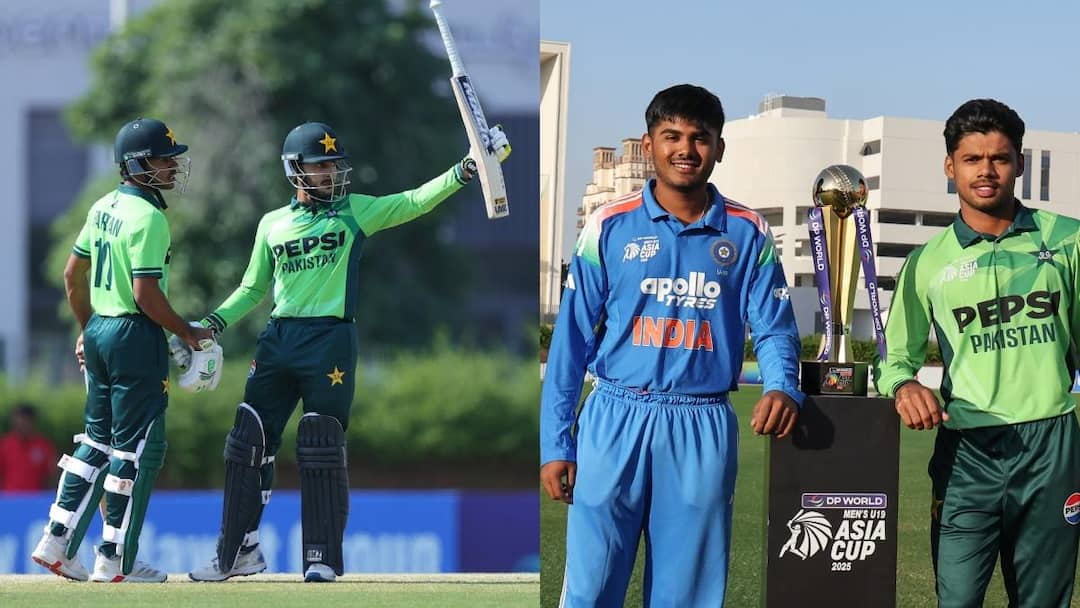
The victory gave India a record-extending ninth Under-19 Asia Cup title and their first since 2021. The tournament’s history helps explain why that figure matters. India won the inaugural competition in 1989, beating Sri Lanka by 79 runs, and won again when the tournament returned in 2003. The 2012 final against Pakistan ended in one of the competition’s most famous curiosities, both teams finishing on 282 and sharing the trophy. India then beat Pakistan by 40 runs in the 2013-14 final, while Afghanistan, Bangladesh and Pakistan later interrupted India’s dominance. Bangladesh won successive editions in 2023 and 2024, and Pakistan took the 2025 title after defeating India heavily in the final.
That recent history gave the Oman final an added edge. Pakistan arrived as champions and had already defeated India by three wickets in the group stage on 8 November. They then brushed Bangladesh aside by nine wickets in the semi-final, while India reached the final by beating Afghanistan by eight wickets, Raichandani making 93. Pakistan therefore possessed both recent superiority over India and the tournament’s strongest immediate form. India’s victory in the final was not merely another trophy added to a large cabinet; it was a reversal achieved against the one side that had already beaten them in the same competition.
The 2026 Tournament in Numbers
| Record | Player / Team | Figure |
|---|---|---|
| Champions | India U19 | 9th title |
| Runners-up | Pakistan U19 | Defending champions |
| Player of the Tournament | Aaryavir Sehwag | 361 runs in 5 innings, average 90.25 |
| Second-highest run-scorer | Usman Khan | 345 runs, average 115.00 |
| India captain | Lakshya Raichandani | 243 runs, average 60.75 |
| Most wickets | Noor Ali Niazi / Rizwanullah | 14 each |
| Final: best bowling | Kavya Patel | 4/68 |
| Final: Player of the Match | Mohit Ulva | 49* off 26; 0/57 with the ball |
Aaryavir Sehwag finished as the tournament’s leading run-scorer with 361 in five innings at an average of 90.25 and was named Player of the Tournament. Usman Khan was scarcely less imposing, scoring 345 at an extraordinary average of 115, while Raichandani accumulated 243 at 60.75 and produced his two most important innings in the semi-final and final. Among the bowlers, Afghanistan’s Noor Ali Niazi and Pakistan’s Rizwanullah finished level on fourteen wickets, evidence that this was not merely a tournament for batsmen despite the extraordinary totals in the final.
The Under-19 Asia Cup has always been more than a junior trophy. Its first Indian champions in 1989 included names who would later become familiar to senior cricket followers, and the competition has repeatedly provided an early view of players before reputations harden and technique is tested by the international game. That is its enduring fascination. At this level the players are accomplished enough to produce high-class cricket but young enough that careers remain unwritten. Aaryavir Sehwag and Anvay Dravid carry surnames that invite comparisons with famous fathers, but the tournament itself is a reminder that inheritance gets a player only so far. Runs must still be made, catches held and last balls struck.
For Pakistan, defeat will be unusually difficult because they played much of the better cricket in the tournament and much of the better cricket in the final. A total of 337, a century from Usman, an explosive 80 from Qadir and India eight down for 252 ought ordinarily to have been enough. It was not. For India, the lesson is almost the reverse. They did not win because the match unfolded according to plan. They won because, when the plan had failed and the obvious batsmen had gone, two lower-order partnerships refused to accept the verdict already being written for them.
There will be larger India-Pakistan matches, louder crowds, greater television audiences and senior cricketers with careers worth millions. Yet the final at Al Amerat deserves its own place in the rivalry because youth cricket briefly produced the oldest cricketing truth of all: a match is never finished merely because everybody believes it should be. On Saturday evening, with three required from one ball and the last wicket standing, Mohit Ulva moved down the pitch and struck through the off side. The boundary arrived, the Indian players ran from the dugout, and the Under-19 Asia Cup changed hands at the very last instant.