India · Pakistan · Cricket · Rivalry · Sportsmanship
When Cricket Becomes a Border
India and Pakistan still produce some of sport’s finest contests, but the rivalry now carries gestures, political grievance, social-media fury and inherited hostility onto the field. The danger is not that the cricket is too intense. It is that the game increasingly becomes a theatre for everything the two countries cannot settle elsewhere.
There was a time when India against Pakistan could be fierce without becoming poisonous. The crowds shouted, fast bowlers glared, batsmen answered with strokes, and defeat hurt for weeks, yet the contest still possessed the old sporting understanding that the opponent was necessary to the spectacle. That compact has been fraying for years. The evidence was visible again in Oman after India’s extraordinary last-ball victory in the 2026 Under-19 Asia Cup final. Teenagers who had just completed one of the most dramatic chases in the history of the competition rushed onto the field in triumph, as they had every right to do, but some of the celebrations spilled beyond jubilation. Broadcast footage and subsequent reports showed Indian players making aggressive and inappropriate gestures towards Pakistani opponents while members of the support staff moved in to calm the scene. The match had ended, yet the argument had only begun.

Within hours, the old machinery of India-Pakistan grievance was operating at full speed. Pakistani commentators described the Indian behaviour as a disgrace to sportsmanship. Indian respondents replied with an inventory of Pakistani provocations from earlier matches and earlier years. Some defended the teenagers as reacting to harassment during the game, while others, including Indian users, criticised the celebrations as ugly and unworthy of the shirt. The more extreme replies quickly abandoned cricket altogether and descended into religious abuse, terrorism references, national humiliation and the sort of language that reduces millions of people to caricature. Social media did not create this rivalry, but it has given every grievance an archive and every gesture an afterlife.
The difficulty is that both sides can produce evidence. In the 2025 Asia Cup, Haris Rauf was reported to have made aircraft-falling gestures and a “6-0” sign towards Indian supporters, while Sahibzada Farhan celebrated a fifty by mimicking gunfire with his bat. India’s Suryakumar Yadav made politically charged remarks after a victory, and Jasprit Bumrah later answered Rauf with an aircraft-style gesture of his own. The International Cricket Council eventually sanctioned players from both teams, with Rauf receiving a two-match suspension and others receiving fines or warnings. That sequence should have settled one argument permanently: neither side owns virtue in this rivalry.

The failure, however, is larger than any single player. India-Pakistan cricket has become a national memory test in which every generation is expected to inherit the grievances of the previous one. A player raises six fingers and supporters interpret a military claim. Another shapes a bat like a gun and an entire political history rushes onto the field. A rival answers with an aircraft gesture and the response is applauded as justice rather than recognised as continuation. The original incident becomes almost secondary. What matters is the belief that one insult has earned another.
Cricket is not even the only sport to have suffered from this contamination. In December 2014, after Pakistan beat India 4-3 in a Champions Trophy hockey semi-final in Bhubaneswar, several Pakistani players celebrated provocatively in front of the home crowd, removing shirts and making obscene gestures. The episode caused outrage in India and disciplinary consequences followed. It remains one of the ugliest visual memories in modern India-Pakistan sport because the provocation was no longer incidental to the match. It became the image by which the match was remembered.

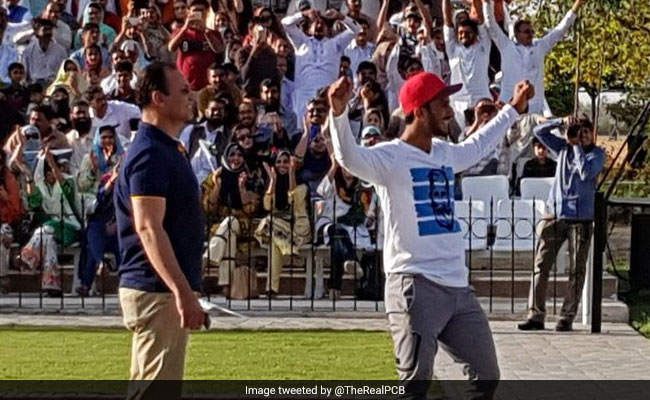
Four years later, Pakistan fast bowler Hasan Ali wandered into another symbolic arena when he performed his trademark wicket celebration during the evening ceremony at the Wagah border. There was no cricket match in progress. The setting itself carried the meaning. Indian authorities objected to a cricketer entering the ceremonial space and turning a military ritual into an extension of sporting theatre. Again, the gesture was trivial in isolation and enormous in context, which is precisely the problem with India and Pakistan. Almost nothing involving the other side remains merely what it is.
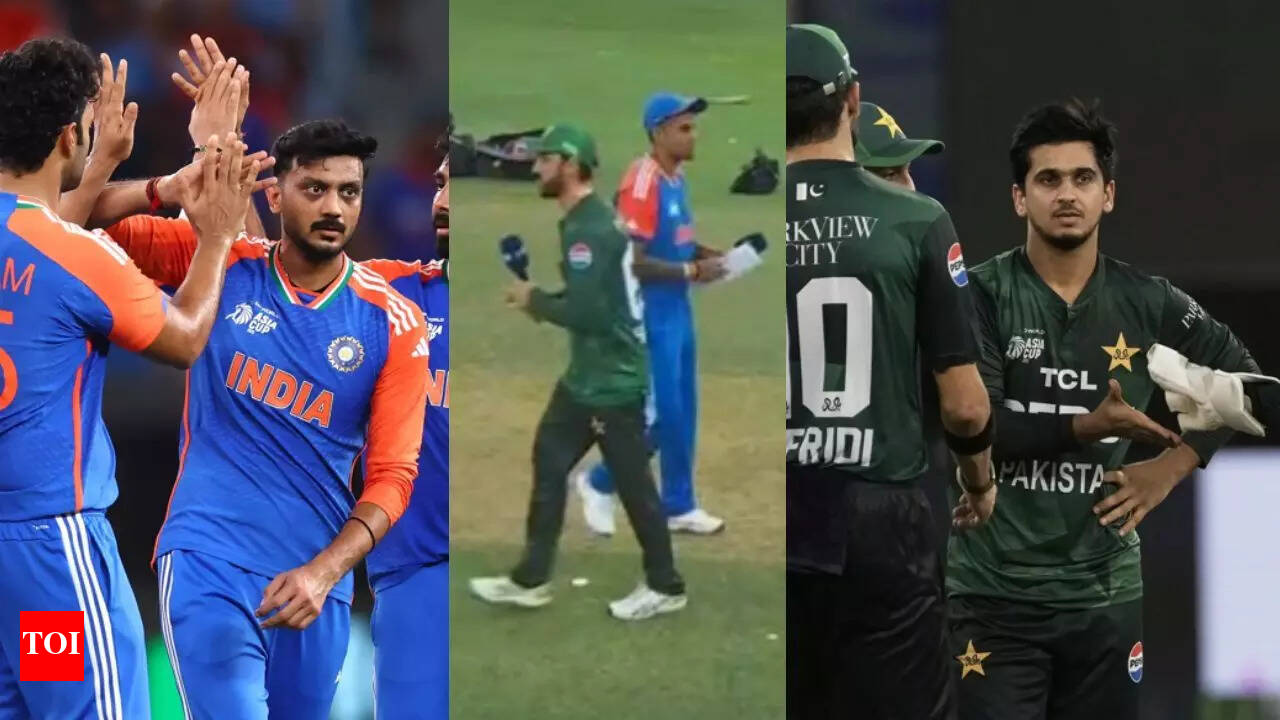
The 2025 Asia Cup took this deterioration further. India and Pakistan met repeatedly, yet the cricket was accompanied by the absence of customary handshakes, public accusations, political dedications and a trophy ceremony that became a diplomatic quarrel of its own. The most basic ritual of sport, two teams acknowledging one another after the contest, became politically loaded. When a handshake itself becomes controversial, the rivalry has crossed a revealing threshold. It means the field is no longer insulated from the quarrels outside it.
Yet there is another archive, and it should not be forgotten. India and Pakistan have also produced moments of genuine sporting grace. Players have exchanged shirts and bats, checked on injured opponents, applauded centuries and walked off together after exhausting matches. At the 2010 Asia Cup in Dambulla, a ferocious contest ended with players from both teams exchanging handshakes after India’s narrow victory. Such scenes once seemed routine. Today they appear almost nostalgic, which says more about the present than about the past.
It is tempting to blame the players, but the burden placed upon them is absurd. India-Pakistan matches are marketed as wars without bullets, treated by broadcasters as national referendums and consumed by supporters who often speak of victory and defeat in military language. Politicians comment. Television studios rehearse grievance. Social platforms reward the most enraged interpretation. Then the players are expected to walk onto the field, absorb all this theatre and behave as though the occasion were an ordinary fixture between two cricket associations. The contradiction is obvious.
The Under-19 final makes that contradiction especially uncomfortable. These were teenagers. India had just chased 338, recovered from 252 for eight and won with three required from the last ball. The adrenaline would have been overwhelming. Some context is therefore necessary before moral judgment becomes character assassination. Youth should be allowed the possibility of error. But youth is also exactly why the incident matters. If players not yet twenty are already reproducing the gestures and vocabulary of the senior rivalry, then the culture is being inherited before careers have properly begun.
A Rivalry of Gestures
- 2014, hockey: Pakistan’s post-match celebrations after beating India in Bhubaneswar drew condemnation for obscene gestures towards spectators.
- 2018, Wagah: Hasan Ali performed his wicket-taking celebration during the border ceremony, prompting objections in India.
- 2025 Asia Cup: Rauf’s aircraft gesture, Farhan’s gun celebration, political remarks from Suryakumar Yadav, Bumrah’s reply and the no-handshake controversy produced ICC disciplinary action.
- 2026 U19 Asia Cup: India’s last-ball title victory was followed by aggressive gestures towards Pakistani players, while support staff intervened and social media erupted on both sides.
The strongest response therefore is not to demand that India become meek when Pakistan provokes, nor that Pakistan accept Indian aggression without answer. It is to reject the entire childish arithmetic of retaliation. “They did it first” may explain behaviour; it does not dignify it. If every generation is permitted to inherit the previous generation’s insult, there is no logical end to the sequence. The stadium becomes a courtroom in which every player arrives carrying evidence from matches he did not play and political events he did not create.

The tragedy is that the cricket itself rarely needs assistance. India and Pakistan have produced enough extraordinary sport to fill libraries: Javed Miandad’s Sharjah six in 1986, Sachin Tendulkar and Shoaib Akhtar in World Cups, Chennai in 1999, the 2003 Centurion chase, the 2007 World T20 final, the 2011 Mohali World Cup semi-final, Kohli at Melbourne in 2022 and now Mohit Ulva’s last-ball boundary in Oman. Those moments survive because they were dramatic before anyone attached a political slogan to them. The game supplied the theatre.
That is what should be protected. Rivalry is valuable because the opponent matters. Hatred is destructive because the opponent ceases to be human. When Pakistan loses, Indian supporters should be able to celebrate without needing to humiliate Pakistanis. When India loses, Pakistani supporters should be able to rejoice without converting defeat into a verdict on a civilisation. The standard should not depend upon whose flag is on the shirt.
The young men in Oman will learn from what happened. They should be criticised where criticism is deserved and defended from the excesses of adults who would turn teenage mistakes into permanent national accusations. Their coaches have a simpler responsibility: teach them that ferocity during the contest and dignity after it are not opposites. The greatest competitors have always understood this. You may spend six hours trying to break an opponent’s resistance and still shake his hand when the work is done.
India and Pakistan do not need less rivalry. They need a better one. The matches should remain loud, difficult, proud and emotionally exhausting. Fast bowlers should stare. Batsmen should answer. Crowds should roar until the stands shake. But when the final ball has been bowled, sport must recover its oldest boundary, the one separating competition from contempt. If that line disappears, the result may still enter the record books, but something more important will have been lost.