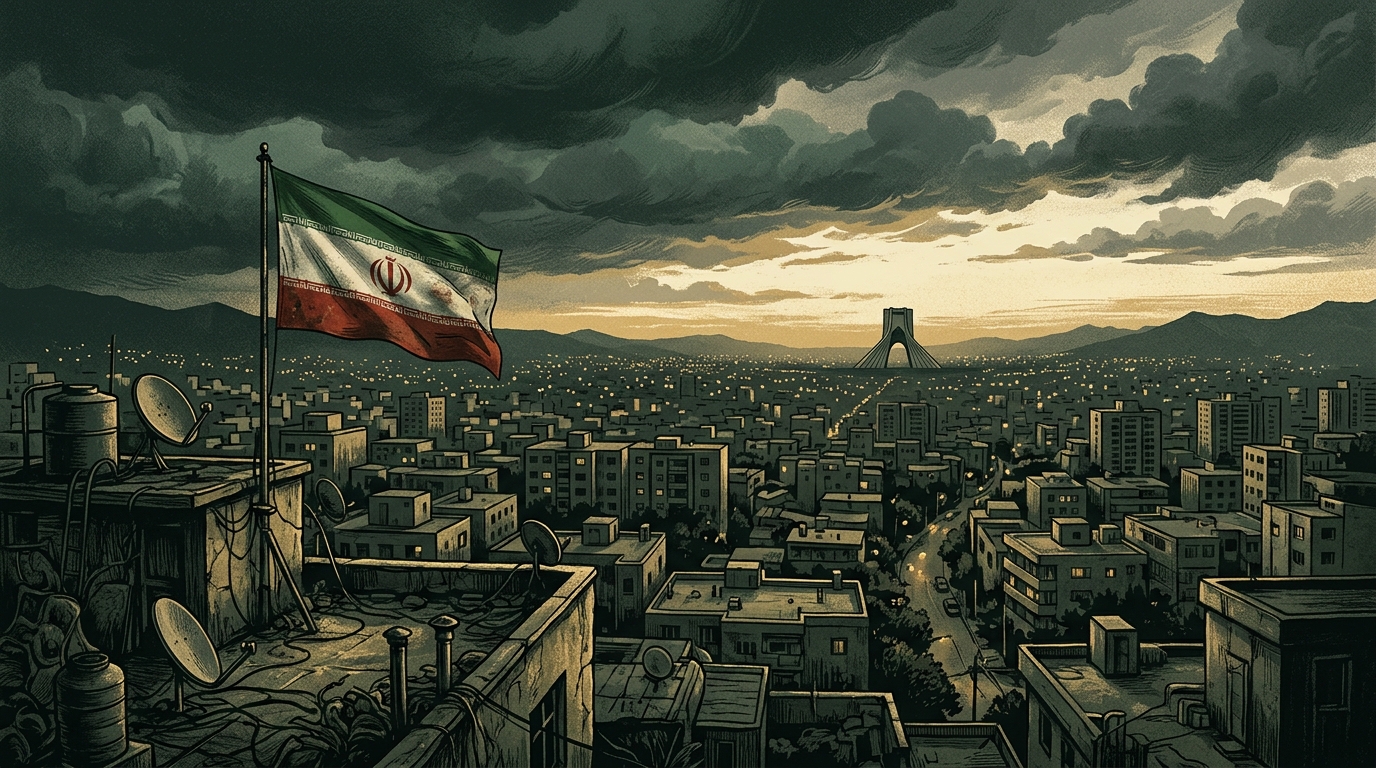
NEW DELHI / TEHRAN, 5 NOVEMBER 2026 — The trouble with foreign policy is that its finest principles tend to flourish in peacetime, when nobody is particularly interested in testing them. Strategic autonomy is celebrated in diplomatic speeches, embroidered into declarations and presented at international conferences as evidence of national maturity. It sounds splendid beneath chandeliers. Its real examination begins when a friendly superpower demands obedience, a neighbouring region descends into war and every diplomatic gesture acquires the weight of an accusation.
India is approaching precisely such a moment.
A discussion hosted by Nidhi Razdan for DeKoder's India & The World, featuring former ambassadors Jawed Ashraf and D. P. Srivastava, West Asia analyst Dr Waiel Awwad and American political scientist Christopher Clary, raised a question that deserves attention beyond the ordinary television quarrel. Has India's approach to Iran undergone a fundamental change, and has Washington acquired an influence over New Delhi's choices that India would once have resisted more openly?
It is an uncomfortable question, and discomfort is often a useful beginning in foreign affairs.
India has spent decades cultivating the reputation of a country capable of maintaining relationships across ideological and strategic divisions. It dealt with Moscow without surrendering its independence to the Soviet Union. It developed relations with Washington while preserving other partnerships. It pursued cooperation with Israel while sustaining ties with Arab governments and Iran.
The arrangement required patience, calculation and a certain tolerance for contradiction. It was never morally immaculate. Diplomacy seldom is. Its virtue lay in preserving India's freedom to act according to its own interests.
That freedom is now being tested in the smoke of a Middle Eastern war.
A Friendship With Israel, a History With Iran
India's relationship with Israel is substantial and legitimate. Defence cooperation, intelligence exchanges, technology and agriculture have provided practical foundations for an increasingly close partnership. There is no sensible argument that New Delhi should abandon those interests merely to satisfy another government.
Iran, however, occupies a different and equally consequential place in India's strategic geography.
It is a country of considerable historical and civilisational importance, situated across maritime routes vital to Indian trade and energy security. It offers connections to Afghanistan and Central Asia that cannot easily be replaced by expressions of friendship from Washington.
The development of Chabahar was never simply a matter of constructing port facilities. It represented India's ambition to establish commercial access and strategic reach beyond the geographical restrictions imposed by Pakistan.
A country that neglects such an investment for the convenience of a distant ally is entitled to reconsider the meaning of its own strategic independence.
This does not mean that Iran's government deserves exemption from criticism. Tehran's support for armed regional groups, its coercive internal politics and the dangers created by its military activities present legitimate grounds for concern.
But a mature foreign policy can condemn conduct without surrendering an entire relationship. Indeed, that distinction is one of the elementary accomplishments expected of a serious diplomatic establishment.
The DeKoder discussion explored whether India's conduct during the conflict had created an impression, particularly among Iranian and Arab observers, that New Delhi was moving closer to the American and Israeli position.
Perceptions in diplomacy are rarely innocent. They can harden into policy, influence negotiations and eventually acquire consequences well beyond the incident that produced them.
The Curious Mathematics of Strategic Autonomy
India frequently assures the world that its foreign policy is independent. There is every reason to welcome that assertion. The difficulty begins when independence is demonstrated most vigorously toward countries that possess relatively little power to punish it.
It is easy to proclaim autonomy before a government whose displeasure carries modest commercial consequences. The test becomes more demanding when the displeased government occupies the White House.
President Donald Trump has shown little affection for the delicate vocabulary upon which traditional diplomacy depends. His administration has approached international relationships through sanctions, tariffs, military pressure and the expectation that partners should demonstrate loyalty in practical terms.
India is hardly alone in confronting this approach. Even established American allies have discovered that friendship with Washington may arrive accompanied by an invoice.
Yet a country of India's size, history and ambitions must be especially cautious about allowing its foreign policy to become an extension of another government's immediate political requirements.
On 4 November, the United States announced further sanctions against individuals and businesses in India and Turkey accused of assisting Iranian petroleum shipping networks.
The American Treasury alleged that false maritime documentation had helped sanctioned vessels evade restrictions. The allegations concern specific activities and must be assessed upon their evidence, but the development demonstrates the reach of American economic pressure into India's commercial environment.
There is an irony here that deserves attention. India can cultivate Washington's goodwill, expand strategic cooperation and moderate its diplomatic language, yet still find Indian entities exposed to American sanctions whenever Washington considers its interests threatened.
Apparently, even a close friendship with a superpower does not include immunity from its displeasure.
The Gulf Is Not an Incidental Consideration
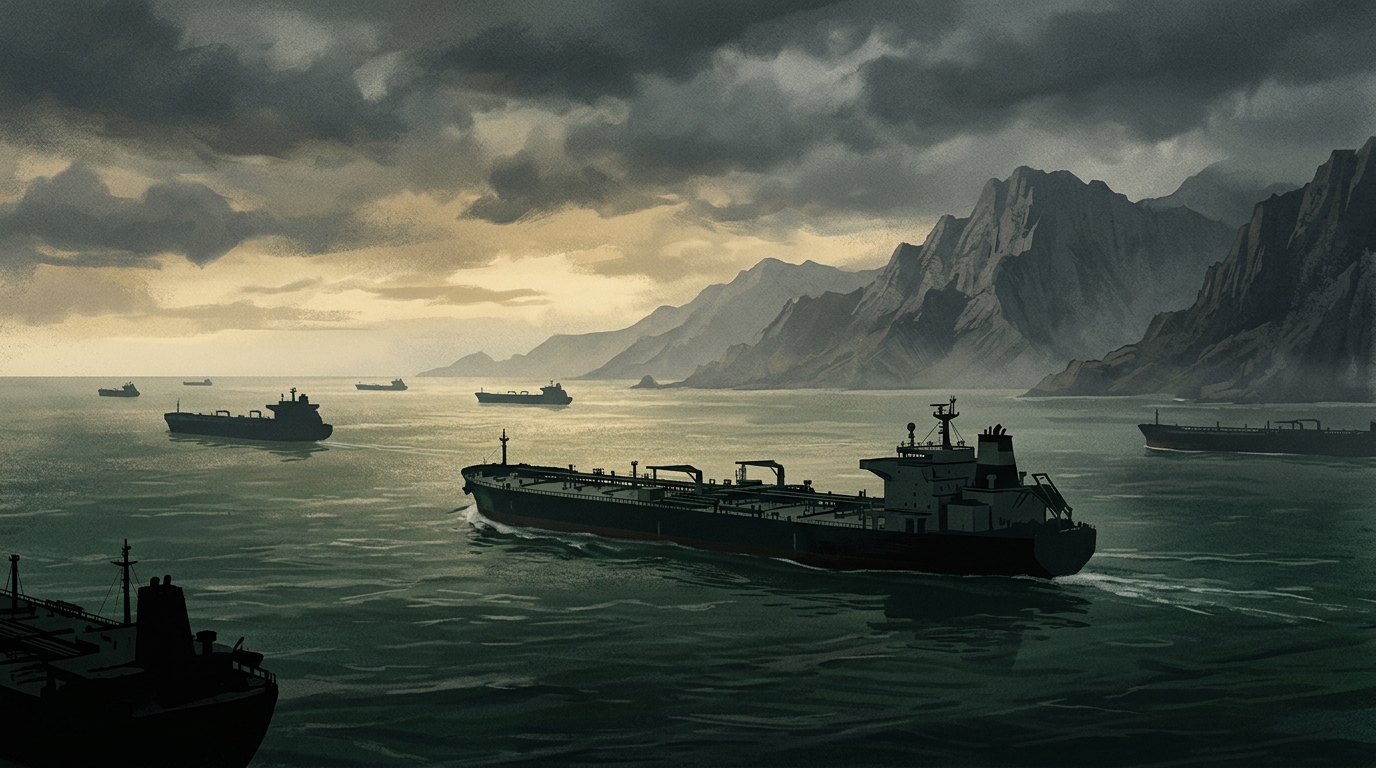
India's interests in the Gulf are too extensive to be treated as secondary to its relationship with either Washington or Tel Aviv.
Millions of Indians have built their working lives across the Gulf states. Their families depend upon the income they earn. Indian businesses depend upon regional markets. India's energy security and maritime commerce remain closely connected with the stability of the Arabian Peninsula and the waters around it.
The present war has exposed these interests to dangers no diplomatic declaration can remove.
Recent threats of renewed American strikes against Iran have caused anxiety among Gulf governments, which fear retaliation against military installations and essential infrastructure on their territory.
Their concern is entirely reasonable. American bases may provide deterrence, but in a major confrontation they also become targets.
For India, the lesson should be unmistakable. A foreign policy that concentrates too heavily upon the preferences of one powerful partner risks neglecting the security calculations of several others whose stability is indispensable to Indian prosperity.
The Gulf states are no longer passive recipients of Western security policy. Saudi Arabia, Qatar, the United Arab Emirates and Oman pursue increasingly distinct diplomatic strategies.
They are cultivating relationships across established geopolitical divisions while protecting their own economic futures.
India would be unwise to imagine that these countries will indefinitely view the region through Washington's eyes.
New Delhi's importance lies partly in its ability to speak across those divisions. If that capacity diminishes, India loses an advantage accumulated over decades.
Iran May Emerge Wounded, Yet Difficult to Ignore
The assumption that overwhelming military power necessarily produces lasting political submission has repeatedly disappointed its advocates.
Iran has endured enormous damage during the conflict. Its political leadership has suffered severe losses. Its economy faces extraordinary pressure.
None of these developments guarantees that Tehran will become strategically irrelevant.
A battered state can remain dangerous. A government under siege can retain instruments of regional pressure. Geography, unlike political leadership, cannot be removed through an air strike.
Iran's position near the Strait of Hormuz gives it influence over one of the world's most consequential maritime passages.
Military coercion may weaken its capacity to exercise that influence, but it cannot abolish the geographical fact.
Participants in the DeKoder discussion examined the possibility that Iran's resistance and its leverage over regional shipping could alter the strategic balance even after heavy military losses.
That argument deserves consideration without requiring acceptance of every prediction made in the discussion.
India should prepare for a region in which Iran remains an important actor, irrespective of whether New Delhi approves of its government.
Foreign policy conducted upon the expectation that an inconvenient country will eventually disappear is generally a poor investment.
Countries have a habit of surviving the predictions made about their extinction. And when they survive, they remember who maintained the relationship.
The Foreign Policy of Applause
There is a growing temptation in modern diplomacy to mistake public spectacle for strategic accomplishment.
A state visit produces embraces and photographs. The language of friendship becomes exuberant. Political supporters celebrate the encounter as evidence that their nation has acquired unprecedented international standing.
Then the cameras depart, and the world resumes its inconvenient habits.
Sanctions remain sanctions. Commercial concessions require negotiation. Military alliances carry obligations. Regional conflicts demand choices that no amount of ceremonial warmth can settle.
India has acquired considerable international standing through economic growth, technological development, military capacity and the strength of its global relationships.
It should have sufficient confidence to distinguish these substantial achievements from the transient pleasure of receiving applause in a foreign capital.
A genuine partnership with the United States is too important to be reduced to personal cordiality between leaders.
Equally, India's relationship with Israel should not compel estrangement from Iran.
Diplomacy is not a competition in which the loudest declaration of friendship receives the highest mark.
It is the disciplined protection of national interests across circumstances that cannot be predicted in advance.
An Old Republic Must Remember Its Own Standing
India's inheritance in foreign affairs extends beyond the vocabulary of contemporary strategic partnerships.
Its early diplomatic identity emerged from an insistence that an independent country should retain the freedom to judge international disputes without automatic submission to rival power blocs.
That tradition was never consistently observed, and it should not be romanticised. Its central principle nevertheless remains useful.
A nation is entitled to choose its friends. It should be reluctant to allow its friends to choose its enemies.
The United States will remain an important partner for India. Israel will continue to offer substantial opportunities for cooperation. Iran will remain part of India's strategic neighbourhood. The Arab states of the Gulf will retain their economic and human importance.
The difficult business of foreign policy is to recognise all these realities simultaneously.
India cannot guarantee that every government will be satisfied with its decisions. Nor should it attempt to purchase universal approval through carefully rehearsed ambiguity.
But there is a difference between independent judgement and a reluctance to offend the powerful.
One reflects confidence. The other invites dependence.
The war against Iran, the continuing instability of the Gulf and the political upheaval now unfolding in Washington make this distinction more important than at any point in recent years.
The government in New Delhi need not prove its independence through theatrical defiance. Nor should it abandon valuable partnerships in pursuit of some sentimental reconstruction of non-alignment.
It must simply demonstrate that India's decisions are made in India, with a clear understanding of their long-term consequences.
It is the authority to say yes when agreement serves the nation, and to say no when it does not.
If India finds that the second word has become increasingly difficult to pronounce in Washington's presence, perhaps the time has arrived to examine how much independence remains beneath the ceremony.
Editorial note: This original foreign-affairs analysis draws upon publicly available DeKoder programme material and independently reported developments. The views and conclusions belong to The Continental News Foreign Affairs Desk.