Investigation · Indian Real Estate · Residential Construction
India’s Housing Boom Has a Middle-Class Problem
India is building more expensive homes, selling them to a narrower but wealthier class of buyers, and calling the result a housing boom. Beneath the cranes and launch advertisements lies a more complicated market: resilient demand, rising prices, growing inventory, costly finance, a regulatory system that has improved but remains uneven, and an affordability question that the industry can no longer avoid.
India’s residential property market in 2026 is not in crisis, but neither is it the uncomplicated boom portrayed in developer brochures. The sector has entered a more mature, more expensive and more segmented phase. In the eight largest residential markets tracked by Knight Frank, 86,767 homes were sold in the third quarter of 2026. Sales for the first nine months were broadly flat compared with a year earlier, while new launches were up about four per cent. That is an important change of tone. For several years after the pandemic, the story was one of extraordinarily rapid absorption, shrinking inventory and a powerful return of owner-occupier demand. The 2026 market still has buyers, but supply has begun to run ahead of sales in some places, and the most profitable end of the market is increasingly detached from the affordability concerns of ordinary salaried households.

The topline numbers conceal sharp differences between cities. Mumbai remained the country’s largest market in Q3, with 25,449 sales, while Bengaluru recorded 15,172 and Pune 11,512. The National Capital Region was the conspicuous weak spot: Q3 sales fell 17 per cent year on year and year-to-date sales were down 11 per cent. Hyderabad, by contrast, continued to grow modestly, though its earlier burst of construction has left it with one of the country’s heavier inventory burdens. ANAROCK estimated inventory overhang in Hyderabad at about 26 months in the first quarter of 2026, compared with roughly 14 months in Bengaluru and 18 months in both MMR and NCR. This does not amount to a glut in the old post-2010 sense, but it is evidence that developers can no longer assume that every launch will sell quickly merely because residential property has become fashionable again.
Prices, meanwhile, continue to rise. The Reserve Bank of India’s transaction-based House Price Index for eighteen major cities increased 3.6 per cent year on year in the first quarter of 2026-27 and 1.1 per cent from the previous quarter. The figure is moderate when placed beside the double-digit appreciation often advertised in individual micro-markets, but it confirms that the broad market is still becoming more expensive. The deeper question is whether household incomes are keeping pace. In many major cities the answer is increasingly doubtful, particularly for first-time buyers who must assemble a down payment, pay stamp duty and registration costs, furnish the property, and then service a twenty-year mortgage.
The clearest evidence of this segmentation is the extraordinary rise of the ₹1 crore-plus home. Knight Frank’s longer-term data show that in Bengaluru, homes valued above ₹10 million accounted for 78 per cent of sales in the first half of 2026. In NCR the share was 84 per cent. Hyderabad stood at 73 per cent. Even Pune, historically a middle-income end-user market, had reached 36 per cent. These figures do not mean that every homebuyer has suddenly become rich. They mean land prices, construction costs and developer strategy have pushed new supply upwards in ticket size, while major listed developers have deliberately concentrated on customers with stronger balance sheets. Luxury and upper-mid-income housing offers better margins, better pre-sales visibility and less exposure to the economics that make truly affordable housing difficult to build.
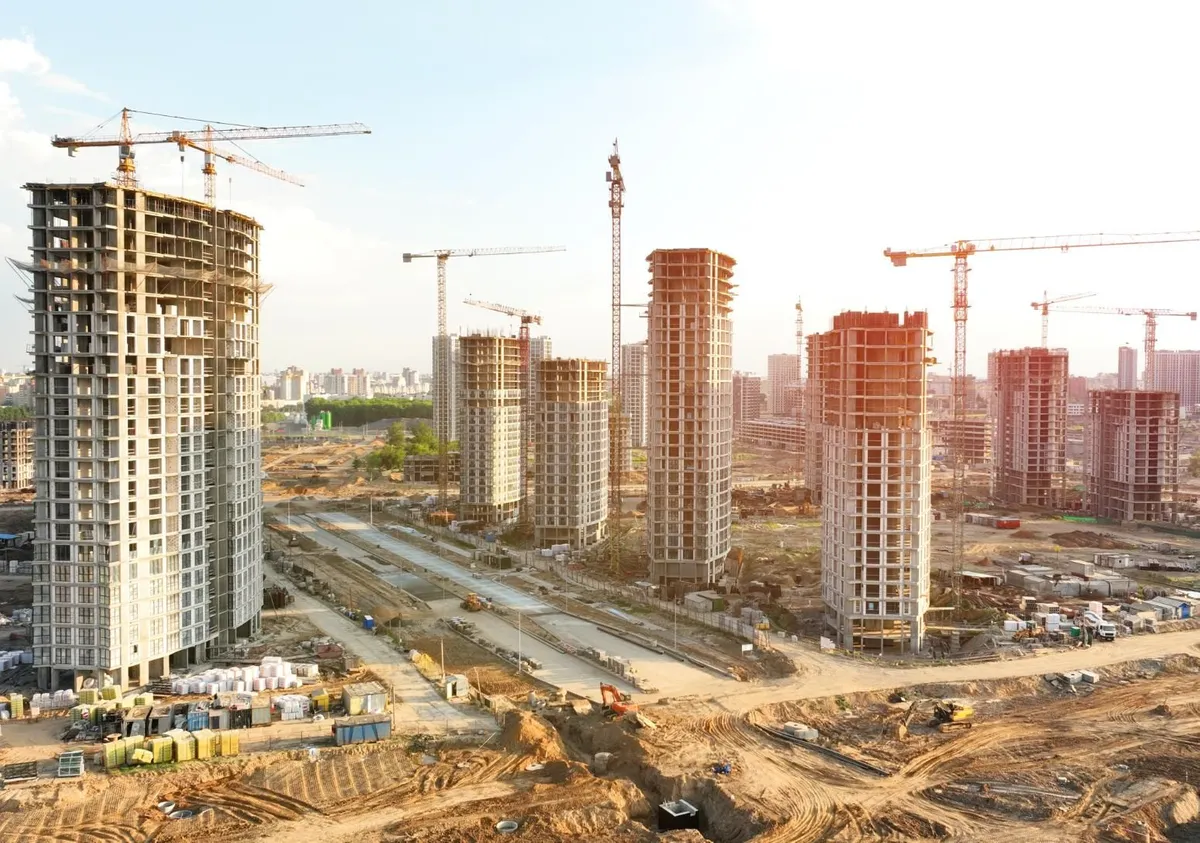
Developers have rational reasons for moving upscale. Land in urban India is expensive and fragmented. Approval periods remain unpredictable despite digitisation efforts in several states. Construction finance is not cheap, and capital is particularly difficult for small builders without a strong delivery record. JLL projected construction costs across Indian real estate asset classes to rise by three to five per cent in 2026, with labour costs under particular pressure. Aluminium and copper had already registered sizeable cost increases in 2025. On a high-value project, these pressures can be passed on. On a ₹35 lakh or ₹50 lakh apartment, the room to absorb them is narrow.
Finance is again becoming a constraint. The Reserve Bank’s policy repo rate stood at 5.50 per cent in mid-November after the October Monetary Policy Committee raised it by 25 basis points and moved to a calibrated-tightening stance. Housing loans are not priced directly at the repo rate in every case, but the direction matters. A household borrowing ₹60 lakh for twenty years is highly sensitive to changes in mortgage rates, especially when its income is already stretched by school fees, transport and urban rents. Higher rates also reduce the number of households that pass bank affordability tests. The property industry often celebrates a rate cut immediately and dismisses a rate increase as marginal; for an actual family signing a loan agreement, neither is marginal.
The Market in Numbers
| Indicator | Latest reading | What it means |
|---|---|---|
| Q3 2026 residential sales, top 8 cities | 86,767 units | Demand remains substantial, but total sales were down 1% YoY in Q3. |
| Q3 2026 new launches, top 8 cities | 92,549 units | Supply exceeded quarterly sales and launches were up 4% YoY. |
| All-India RBI HPI, Q1 FY2026-27 | 117.5 | Prices rose 3.6% YoY and 1.1% QoQ across 18 cities. |
| Homes above ₹1 crore, H1 2026 sales share | NCR 84%, Bengaluru 78%, Hyderabad 73% | New housing demand is heavily tilted toward premium segments. |
| Inventory overhang, Q1 2026 | Hyderabad 26 months; Bengaluru 14; MMR/NCR about 18 | Buyer leverage varies sharply by city and micro-market. |
| RERA registrations | 1,59,830 projects; 1,12,712 agents | Regulation is now embedded in the formal market, though enforcement remains uneven. |
| PMAY-U progress | 127.68 lakh houses sanctioned; 99.07 lakh completed | Affordable housing increasingly relies on public policy and subsidy architecture. |
The buyer-seller balance cannot be described nationally with a single label. In marquee projects by large developers in sought-after parts of Mumbai, Gurugram, Bengaluru or Hyderabad, sellers still hold considerable power. In peripheral locations, older projects and markets with high inventory, buyers have more leverage. Discounts often appear not as headline price cuts but as waived charges, flexible payment plans, free parking, brokerage support or quiet negotiation at the closing table. The official rate may remain firm while the effective price softens.
Indian real estate also suffers from opaque price discovery. Two apartments in the same tower can transact at very different effective rates. Registration data arrive with a lag, online portals usually show asking rather than final prices, and developers protect published rate cards. Buyers therefore need micro-market evidence: comparable available units, days on market, the developer’s recent absorption and the amount of new supply due nearby.
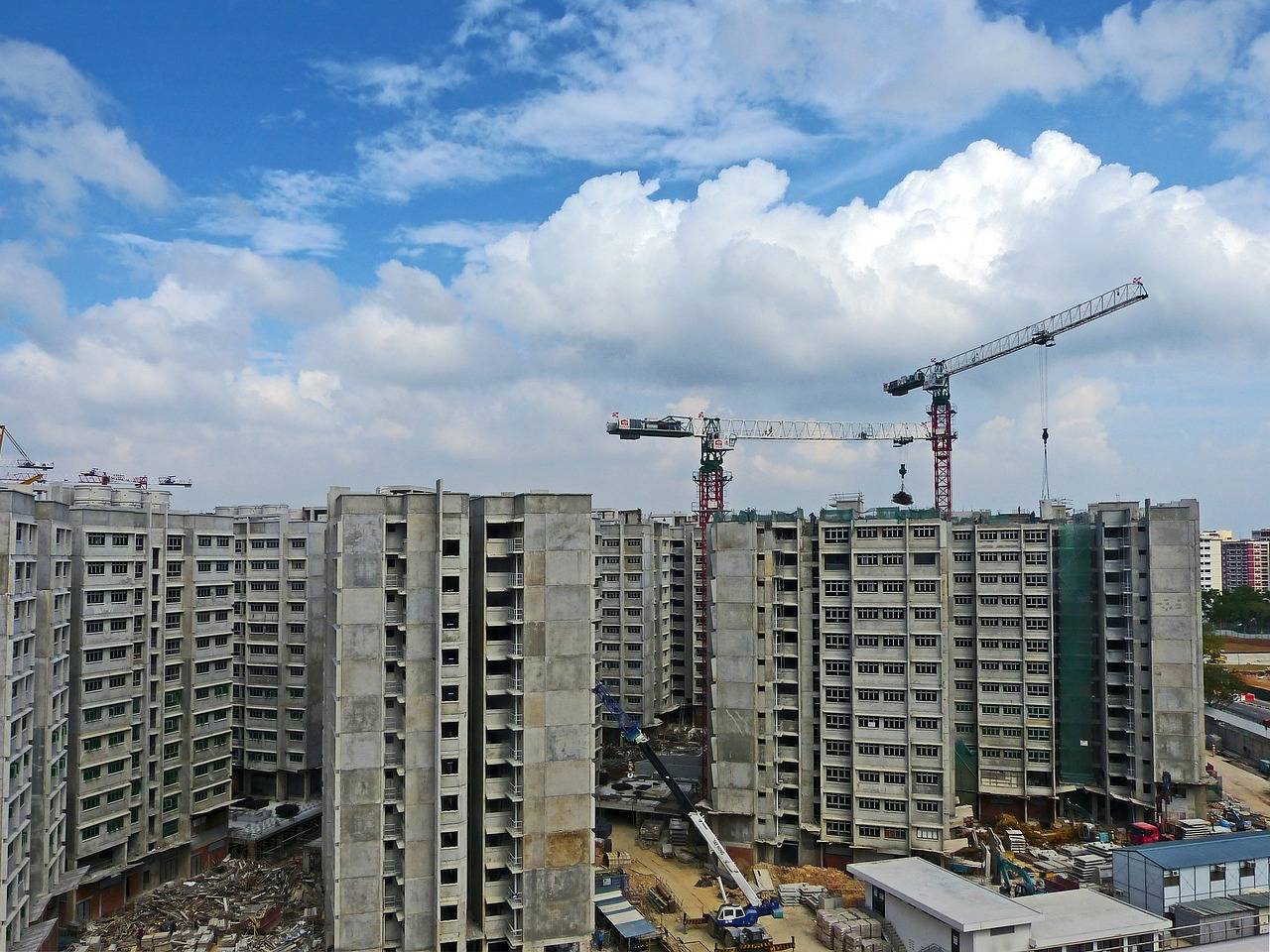
RERA has materially changed this landscape. The Ministry of Housing and Urban Affairs dashboard now records roughly 1.60 lakh registered real estate projects and more than 1.12 lakh registered agents. The Act forced formal developers to disclose approvals, project timelines and sales status, and it created a dedicated route for complaints. Yet RERA remains an institutional framework rather than a guarantee of delivery. Enforcement quality differs between states, appellate capacity is uneven and distressed projects can still become entangled in insolvency, litigation, land disputes and funding gaps. Buyers should treat RERA registration as the beginning of due diligence, not the end of it.
The government’s other great intervention is affordability. PMAY-U and PMAY-U 2.0 together form one of the world’s largest urban housing programmes. The official portal currently reports 127.68 lakh homes sanctioned, 121.03 lakh grounded and 99.07 lakh completed, with total investment approaching ₹8.96 lakh crore. PMAY-U 2.0 adds beneficiary-led construction, affordable housing partnerships, affordable rental housing and an interest subsidy architecture. This is significant public policy, but it also exposes the private market’s weakness: housing that is genuinely affordable to lower-income urban families often does not emerge from normal developer economics without subsidised land, interest support, cross-subsidy or direct state participation.

Taxation adds another layer. Under the post-2019 GST structure, under-construction residential property is generally taxed at five per cent without input-tax credit, while qualifying affordable residential apartments attract one per cent, also without ITC. Completed property sold after the completion certificate does not attract GST, although stamp duty and registration charges remain. This creates a curious market distortion. Under-construction homes can offer staged payments and potential appreciation, but expose buyers to execution and GST costs. Ready homes offer certainty and immediate use, but may require a larger upfront financial commitment. The buyer is therefore pricing not just square feet, but delivery risk, tax, financing cost and time.
The residential construction industry is nevertheless stronger than it was a decade ago. Large developers have better access to institutional capital, listed companies disclose pre-sales and debt more systematically, and buyers prefer recognisable brands after years of delayed projects. Consolidation may improve execution, but it does not automatically produce cheaper housing. Well-capitalised developers can acquire land, fund infrastructure and take market share from smaller builders while continuing to target higher-margin customers.
The next stage of the market will be decided by affordability rather than aspiration. India still has enormous structural housing demand as cities grow, households form and new transport corridors open. Yet infrastructure-led appreciation can outrun the incomes of the people it is meant to serve. A metro line may shorten the commute while sharply raising the land value around its stations.
For buyers, 2026 demands discrimination rather than fear of missing out. More launches mean more choice. Buyers should compare completed inventory with new supply, scrutinise RERA filings, check title and encumbrances, study the developer’s delivery history, calculate the mortgage at a rate above today’s advertised rate and negotiate the total acquisition cost rather than the quoted base price. Sellers, meanwhile, should remember that liquidity is local. A well-priced home can move quickly; an ambitiously priced resale can remain online for months.
The Indian housing market is therefore not heading towards collapse. It is heading towards a test of quality. The easy post-pandemic narrative has run its course. The next winners will be developers that control costs, deliver on time and build where employment and infrastructure genuinely support demand. The next successful buyers will be those who distinguish a good home from a good advertisement. And the central policy challenge will remain the one that no amount of luxury launches can answer: whether the country can build enough decent urban housing at prices linked to Indian incomes rather than merely to Indian land values.
Sources and reference material
Knight Frank India, India Real Estate Q3 2026: residential sales and launches across eight major cities. https://www.knightfrank.co.in/
Knight Frank, Building Viksit Bharat: long-term city sales data and the rising share of homes priced above ₹1 crore.
Reserve Bank of India: All-India House Price Index, Q1 2026-27; current policy rates and October 2026 Monetary Policy Committee resolution. https://www.rbi.org.in/
ANAROCK Research: 2025 annual residential report and Q1 2026 inventory-overhang analysis.
Ministry of Housing and Urban Affairs: RERA dashboard and PMAY-U / PMAY-U 2.0 progress data. https://mohua.gov.in/ and https://pmay-urban.gov.in/
CBIC: GST treatment of residential construction services. https://cbic-gst.gov.in/
JLL Construction Cost Guide 2026: construction-cost outlook and input-cost pressures.