The E-Rickshaw Wale Bhaiya
After more than two decades in the United States and the Gulf, I have returned to my hometown to find an unexpectedly useful little vehicle serving the streets beyond the matador routes. From Nanak Nagar and Preet Nagar to Channi Himmat and Gangyal, its rise tells a larger story of work, migration and everyday civic life.
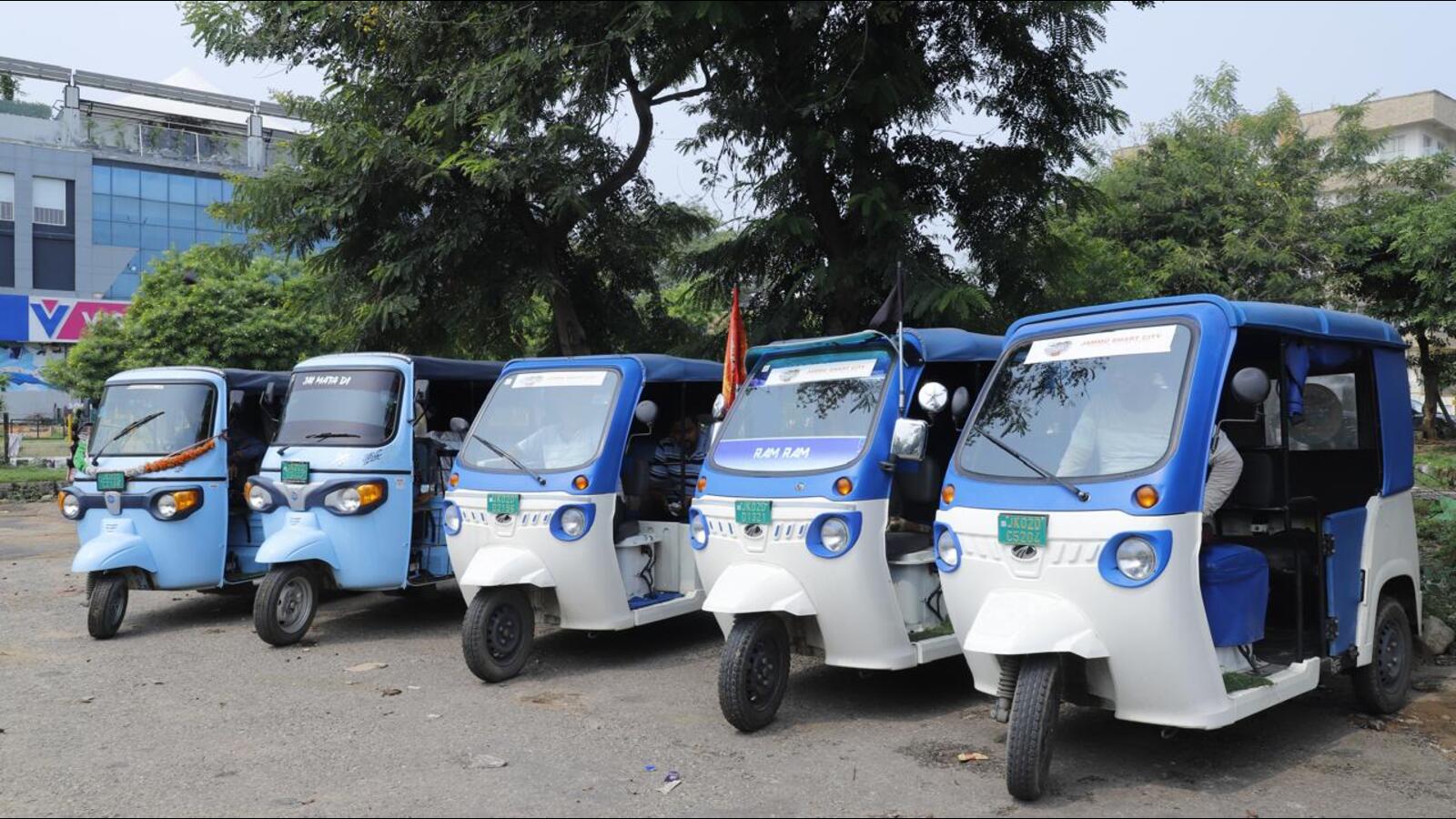
After living for more than twenty-four years in the United States and the countries of the Gulf, I have returned to Jammu, the city to which I have always belonged, though much of my adult life was spent elsewhere. A return of this sort alters one's understanding of familiar places. The old streets seem smaller, the new colonies more extensive, and the arrangements of everyday living invite comparison with cities one has come to know abroad. I expected to encounter wider roads, more traffic, expanding commerce and the usual contest between development and disorder. What arrested my attention was a humbler innovation. It was the electric rickshaw, moving along the residential streets and answering to the affectionate summons of “e-rickshaw wale bhaiya”.
There is an ordinary transaction taking place in the lanes of Jammu which deserves rather more attention than it has received. A resident emerges from a house in the inner reaches of Nanak Nagar, perhaps with a shopping bag, a child returning from tuition or an elderly parent whose knees no longer permit a brisk walk to the main road. A battery-powered rickshaw passes. The passenger asks, “Bhaiya, chaloge?” A destination is named, a fare discussed and the journey begins. Such a scene may hardly qualify as an event in the conventional newspaper sense, yet the quality of a city's life is determined by countless transactions of this character. Where public transport has long been thought of as something to be found on a principal road, this vehicle appears capable of bringing a modest public service almost to the front gate.
Jammu has never lacked movement. Its matadors, the privately operated minibuses which generations of residents have relied upon, remain part of the city’s public life. They connect important roads and commercial centres, carry students and workers, and offer a relatively economical journey to those who know the routes. Their limitation is equally familiar. A matador is built for a corridor and a succession of stops, not the narrow turn into a residential pocket. Beyond the point where the passenger gets down begins an often overlooked part of the journey. The remaining distance may be inconvenient in the afternoon heat, difficult for an older person, uncomfortable after dusk and expensive if the only alternative is a privately hired auto.
My years abroad have made me particularly attentive to this last part of a journey. In American cities, the convenience of mobility often depends upon the private car, though the arrangements vary considerably from one place to another. In the Gulf, well-financed roads, taxis, buses and, in some cities, rail services have transformed travel, yet even the most ambitious network must eventually deal with the distance between a station and a house. There is little wisdom in pretending that a European or Gulf model can be imported whole into Jammu. The population, income levels, street patterns and public resources are different. What can be borrowed is a principle. Transport should be assessed from the point of view of the traveller completing a journey, rather than from the point of view of the official counting vehicles on a major road.
The missing mile between the main road and the front gate
The problem is especially plain in the deeper residential sectors of Nanak Nagar and the adjoining lanes of Preet Nagar. Both contain homes and everyday destinations whose nearest reliable matador connection may require a walk to a busier road. Channi Himmat presents another version of the same difficulty. Its larger streets and commercial approaches are readily recognised, but the internal stretches of a growing residential neighbourhood are less easily served by fixed-route minibuses. In the industrial area of Gangyal, the need is different in character yet similar in effect. A worker going between an internal factory lane and a principal road, a visitor carrying documents to a workshop, or an employee leaving after a shift needs a short connection which a full-sized bus service is poorly equipped to provide.
It is in these details that I recognise a changed Jammu. The city I remember from earlier years was not without its transport difficulties, but the sheer spread of residential development has enlarged the distance between a neighbourhood and a dependable public route. Houses rise behind houses, commercial activity travels into former residential streets and industrial employment creates its own pattern of journeys. A visitor may praise an improved carriageway without ever asking how someone living several turns away reaches it. The answer is of particular consequence to households without a car, to older people who no longer drive and to workers whose wages cannot reasonably support repeated private taxi journeys.
These are examples of the urban geography in which electric rickshaws can be useful, not a claim that every named street lacks other services. Transport availability changes by hour and by route. Yet the underlying distinction matters. A journey is rarely finished merely because a passenger has reached the principal road. For a woman returning with groceries, a schoolchild moving between home and coaching, a patient leaving a clinic, or a worker approaching an industrial unit, the last kilometre may determine whether public transport is convenient enough to use at all.
What has made the e-rickshaw effective is its modesty. The vehicle needs less space than a conventional minibus, uses electric propulsion and can undertake short, local trips without expecting every passenger to travel the length of a major route. It cannot replace an efficient network of buses and matadors, nor should the city pretend that it can. Its proper value lies in completing journeys which those larger vehicles have already begun.
There is also a social difference between a scheduled minibus and a neighbourhood rickshaw. A minibus must keep moving along its route. An e-rickshaw driver may become familiar with the lanes, the shop entrances, the hospital approach and the families whose daily journeys recur at predictable hours. Familiarity can encourage trust, although it should never be mistaken for a substitute for licensing and safety. The ideal is an accessible service which is friendly without becoming informal to the point of unaccountability.
From novelty to a serious part of Jammu’s transport
Electric three-wheelers entered Indian urban transport gradually, their growth encouraged by the demand for inexpensive short-distance travel, the availability of relatively simple battery-powered vehicles and the possibility of earning a living without acquiring a conventional taxi. Jammu’s adoption has been sufficiently substantial to require public policy rather than casual tolerance. In 2023, local reporting described plans to assign e-rickshaws fixed routes and stands so that their service could reach narrow lanes while reducing disorder on busy roads. The Jammu Smart City electric mobility initiative subsequently attracted national recognition, while officials introduced zonal and colour-coded arrangements to regulate where various electric three-wheelers could operate.
This development tells us something about the city itself. A vehicle initially welcomed for its convenience can become numerous enough to raise questions about traffic, safety, parking, charging and competition with older operators. The administration must protect public roads and enforce permits, but regulations should preserve the very service which gave the e-rickshaw its social usefulness. An electric rickshaw prevented from connecting an underserved lane to a transport corridor risks becoming merely another vehicle circulating on roads which are already crowded.
From the perspective of a returning resident, I find it encouraging that so modest a device has been capable of answering a real demand. We are accustomed to associating progress with projects large enough to merit ceremonial openings. A transport improvement, however, need not be monumental to be valuable. It can consist of a small enterprise undertaken by an individual, serving a street that a bigger vehicle has little reason to enter. Public authority has a legitimate duty to organise that activity, but it should begin by understanding why passengers sought it in the first place.

The men called “Bihari bhaiya”
One cannot write honestly about the labour of the city without considering the men who arrive from elsewhere in search of it. Jammu, like many towns of northern India, has long depended on migrant labour in construction, shops, transport and small services. Men from Bihar are among the workers who travel north in search of earnings, and the colloquial “Bihari bhaiya” is part of the speech through which residents sometimes identify them. Yet it would be wrong to conclude, without a survey, that most Jammu e-rickshaw drivers come from Bihar. Some are local residents, some belong to other districts and states, and their circumstances differ. Their place of birth is less important to the public than the quality and legality of the service they provide.
The nickname itself deserves a little care. Spoken with affection, “bhaiya” can acknowledge a person who has become familiar in the neighbourhood. Used carelessly, the reference to Bihar can reduce a worker to an outsider even after years of labour in the city. A driver should be judged by whether he holds the required authorisation, observes traffic rules, treats passengers fairly and earns his living honestly. To call every driver “Bihari” is neither accurate nor necessary. The more interesting fact is that a city may rely heavily on men whose names it seldom learns, until an ordinary service disappears and their contribution becomes painfully visible.
Having myself spent so many years away from my birthplace, I cannot regard migration as an abstraction. A professional working abroad and a labourer travelling across Indian states inhabit very different economic circumstances, yet both understand something of the decision to leave familiar surroundings in search of work. That recognition should temper the language with which we describe workers from Bihar, Uttar Pradesh and elsewhere. One may legitimately discuss registration, permits and competition for employment while still acknowledging the dignity of the people involved. Jammu benefits from their labour in ways that should be examined honestly, without sentimentality and without prejudice.
Driving an e-rickshaw is not free of hardship. An owner must bear the cost of a vehicle, batteries, charging and maintenance. A driver who rents rather than owns it must first meet a daily obligation before taking money home. Traffic enforcement, irregular passenger demand and unexpected repairs further complicate an occupation whose earnings are easily overstated by those who see only the fare changing hands. A fair urban policy must protect passengers from arbitrary charges while recognising that workers cannot provide a dependable service at rates which make their livelihood impossible.
What should the passenger pay?
Fare regulation is the point at which the passenger’s interest and the driver’s anxiety most visibly meet. Earlier reports in Jammu recorded complaints about arbitrary demands, including a 2023 example of ₹120 for a journey of about five kilometres while a matador ticket on a comparable corridor cost far less. In April 2026, the Jammu and Kashmir government announced a revised passenger fare framework, with reporting on the notification stating ₹15 per kilometre for e-rickshaws and a separate e-auto schedule of ₹25 for the first kilometre followed by ₹20 for each additional kilometre. Those figures should not be confused with an automatically verified quotation for every passenger’s particular journey.
The practical answer is a fare chart that ordinary people can read, a meter or transparent agreed fare where required, and a complaint mechanism that actually responds. Such arrangements would benefit the driver as well as the customer. When the rate is known in advance, there is less room for quarrel at the destination, less suspicion that a visitor is being charged more than a resident, and less likelihood that a genuine worker is blamed for the conduct of an unscrupulous few. A city which depends upon short-distance vehicles ought to make short-distance fares comprehensible.
I would go further. If Jammu means to treat the e-rickshaw as part of its public transport, fare information must be published in a form that can be understood by a resident who has never read a government notification. The distinction between a fare for each passenger and a fare for the entire vehicle is essential. So is the distinction between an e-rickshaw and an e-auto, which are not necessarily governed by identical tariffs. Public notices should be displayed in vehicles and at stands, and complaints should receive a documented response. The driver too deserves clarity about the rules by which he is expected to earn his living.
What residents might reasonably say
There is a temptation in writing about a neighbourhood to invent a grateful mother, an indignant shopkeeper and a hard-working driver, place polished sentences in their mouths and call the result public opinion. This report has undertaken no such interviews. The following are representative concerns, offered as illustrations rather than attributed testimony. A parent in an interior sector of Nanak Nagar would reasonably welcome transport that gets a child closer to home after tuition. An older resident in Channi Himmat might prize the ability to avoid a long walk from the main road. A Gangyal employee might value the service at the end of a shift but worry about its availability after dark. A driver, meanwhile, might ask why the public demands low fares without considering charging costs, repairs and a full day's labour.
These imagined positions are useful prompts for a proper civic survey, not evidence that any named person expressed them. The Continental invites residents and drivers of Nanak Nagar, Preet Nagar, Channi Himmat and Gangyal to send their actual experiences, fares paid, usual waiting times and suggestions to contact@thecontinentalnews.net. Those responses can form the basis of a subsequent reported feature with attributable voices and verifiable local comparisons.
For a returning resident, there is a danger in being too readily impressed by the new and equally a danger in condemning everything that falls short of what one has seen abroad. I make no claim that one convenient journey proves a transport revolution. Nor do I think a complaint about an excessive fare disproves the value of the entire service. The proper approach is to watch carefully, ask what has changed for ordinary people and then investigate what remains defective. A city is better understood through the regular obligations of its inhabitants than through the occasional enthusiasm of its visitors, including those visitors who have come home to stay.

A better transport system, rather than an accidental one
The question for Jammu's authorities is how to make this modest innovation part of an orderly network. Matadors should operate dependable corridors with legible routes and sensible stops. E-rickshaws can serve as feeders through residential and industrial lanes, with well-marked stands at convenient interchange points. Schools, clinics, markets and industrial clusters would be obvious places to assess demand. The colour-coded zonal rules should be evaluated against real passenger journeys, because an administrative boundary which makes a driver change vehicles halfway to an ordinary destination can defeat the purpose of last-mile transport.
Safety matters just as much as convenience. Overloading, unsafe manoeuvres, poorly maintained batteries and obstruction at junctions are not tolerable simply because the vehicle is small and electric. Driver licensing, insurance, vehicle fitness, charging standards, accessible boarding and enforcement of passenger limits must accompany growth. There should also be special attention to women travelling after dusk, older residents, schoolchildren and workers using quiet industrial approaches. A transport system is judged most honestly at the hour when the traveller has few alternatives.
The environmental argument also deserves proportion. An electric rickshaw has no exhaust pipe releasing fumes into the lane, an advantage in busy residential surroundings. The electricity used for charging must nevertheless be produced somewhere, and batteries carry manufacturing and disposal costs. It would be misleading to present electric propulsion as a complete environmental solution. The more defensible claim is that a small, efficiently used electric vehicle may contribute to cleaner and more practical short-distance mobility, particularly when it connects passengers to a larger shared-transport system instead of adding another unnecessary private-car journey.
Jammu has spent years debating its roads, flyovers, traffic jams and the promise of modern urban development. Yet the test of a city is often less grand. It is whether someone in the inner lanes of Preet Nagar can reach a market without depending upon a family car, whether a Gangyal worker can reach the busier road at the end of a shift, and whether an elderly resident of Channi Himmat can return from a consultation without undertaking the last stretch on foot. The answer may involve a bus, a matador and a small e-rickshaw working together, each doing the journey for which it is best suited.
For that reason, the familiar call of “e-rickshaw wale bhaiya” deserves to be heard as more than the greeting of a customer to a driver. It is a sign that people are improvising a means of mobility where formal planning has not always reached. The opportunity before Jammu is to retain the human convenience of that arrangement while giving it the fairness, safety and predictability which a public service ought to possess. A city advances when its distant corners become less distant to the people who live there.
After more than two decades away, I find that returning to a hometown is not simply an exercise in comparing the present with a remembered past. It requires deciding what kind of future the city should offer those who never left it. The e-rickshaw does not answer every difficulty, and its drivers should be subject to sensible rules. Yet its presence in the inner streets suggests that Jammu's residents know precisely where the deficiencies of their transport system lie. A government willing to learn from those journeys could build something more durable than an improvised service. It could build a city in which convenience is no longer reserved for those fortunate enough to own a car.