THE CONTINENTAL
Read Beyond the Headlines
The Machine That Decides Who Dies
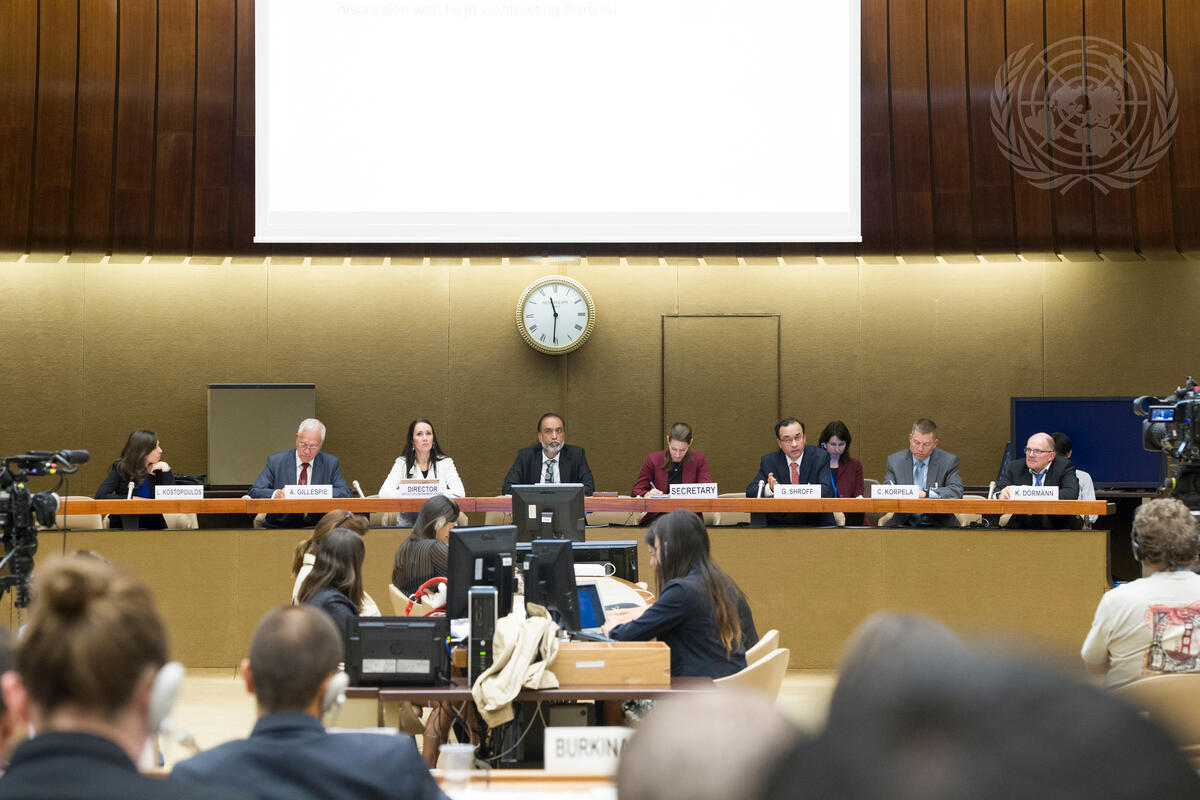
The argument opening in Geneva this week is no longer about science fiction. It is about whether a machine may be permitted to identify a human target, select it and use lethal force without a person making the final decision. The Seventh Review Conference of the Convention on Certain Conventional Weapons runs from 16 to 20 November 2026, and autonomous weapons have become one of its defining questions.
Many states support movement toward a legally binding instrument. The United States, Russia and Israel have resisted a new treaty and argue that existing international humanitarian law can govern emerging systems. That disagreement matters because the countries with the greatest technological capacity are also among those most reluctant to accept new restrictions.
The military case for autonomy is obvious. Machines can react faster than soldiers, operate where communications are degraded and reduce risks to a state’s own forces. Speed, however, is also the danger. A defective classifier can repeat an error across many targets before a human commander understands what has happened. Responsibility becomes harder to assign when the lethal chain is divided among programmers, manufacturers, commanders and software.
The legal principle should remain simple. Technology may assist military judgement. It should not erase human accountability. Arms-control history suggests that restrictions are easiest to negotiate before a weapon becomes normal. Geneva may be one of the last opportunities to establish that boundary before autonomous targeting is embedded too deeply in modern arsenals.
The Middle East’s War Keeps Changing Shape
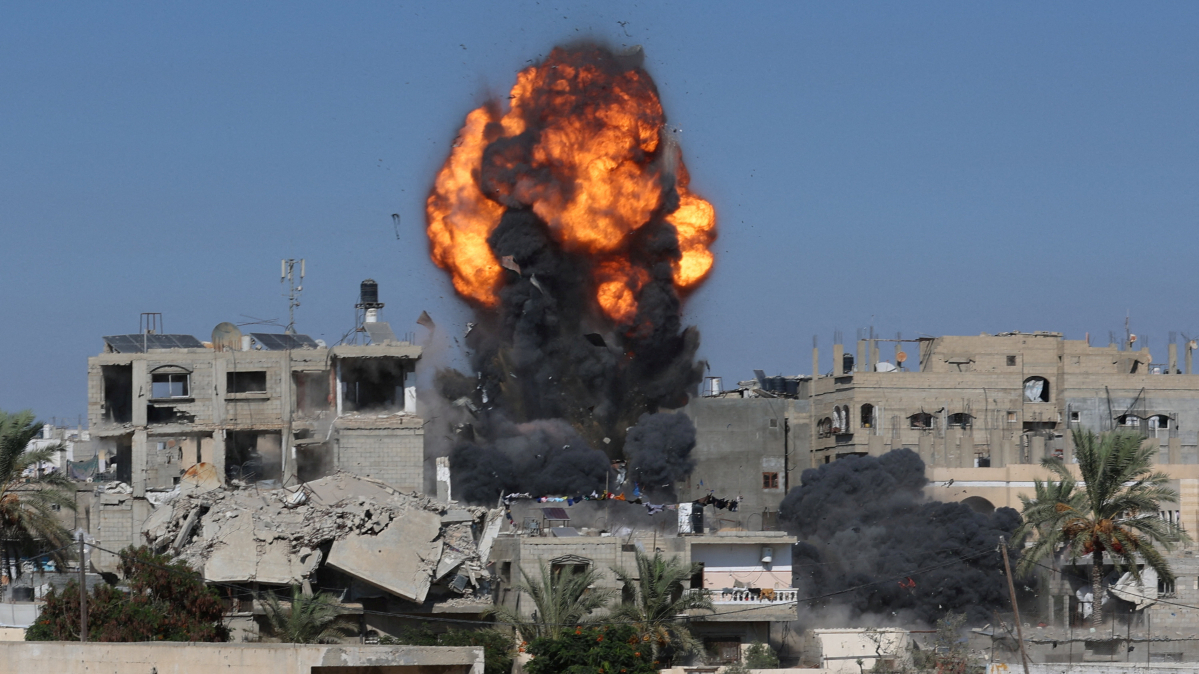
The Middle East enters another week with the geography of conflict widening rather than settling. Israeli forces said an overnight strike in southern Gaza killed a senior Hamas commander accused of planning attacks. Hamas confirmed his death. Elsewhere, Jordan has handed down death sentences in a church attack case while developments around Yemen and the Bab el-Mandeb Strait continue to affect regional security.
These are not one war. They are connected crises layered across Gaza, Jordan, Yemen, Iran and the Red Sea. Each has its own actors and history, yet escalation in one theatre changes calculations in another. Shipping, oil prices, airline routes, refugee flows and diplomacy all respond to that network of risk.
The deeper problem is political. Tactical victories can remove commanders or disrupt cells. They do not settle who governs Gaza, how borders are guaranteed, how armed groups are disarmed, or what political framework could survive the next military shock. The region remains caught between immediate security demands and the unresolved questions underneath them.
When a Name Disappears From the Voter List
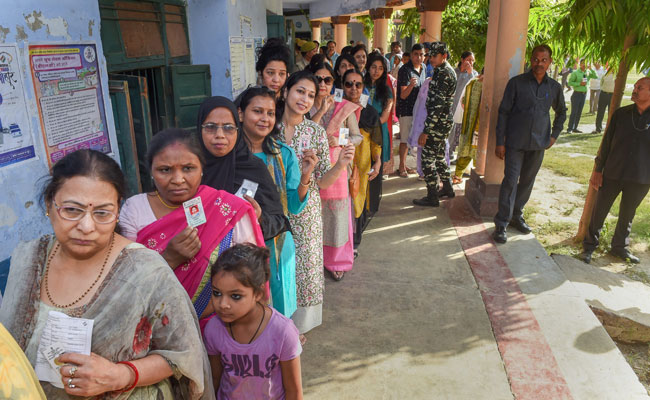
An electoral roll should answer one administrative question: who is entitled to vote in a constituency. In India that question is increasingly being discussed alongside a far more consequential one: who is entitled to belong. Reuters reporting on 16 November described cases in which people removed from voter lists later faced detention, citizenship scrutiny or deportation proceedings.
The distinction in law is essential. Removal from an electoral roll does not establish that a person is a foreign national. Electoral registration and citizenship determination are governed by different laws, evidence and procedures. A voter can disappear because of duplication, relocation, death, documentation problems or administrative error.
That distinction becomes especially important in a country where identity records are uneven. Older citizens may have inconsistent spellings, women often change addresses after marriage, migrant workers move frequently and poor households may not possess a continuous paper trail.
Clean voter rolls are necessary. So are transparent reasons, notice, appeal and a firm boundary between electoral housekeeping and punitive citizenship action. A democracy should know who its voters are. It must be even more careful before deciding who its citizens are not.
The Rupee at 94: India’s External Squeeze Returns
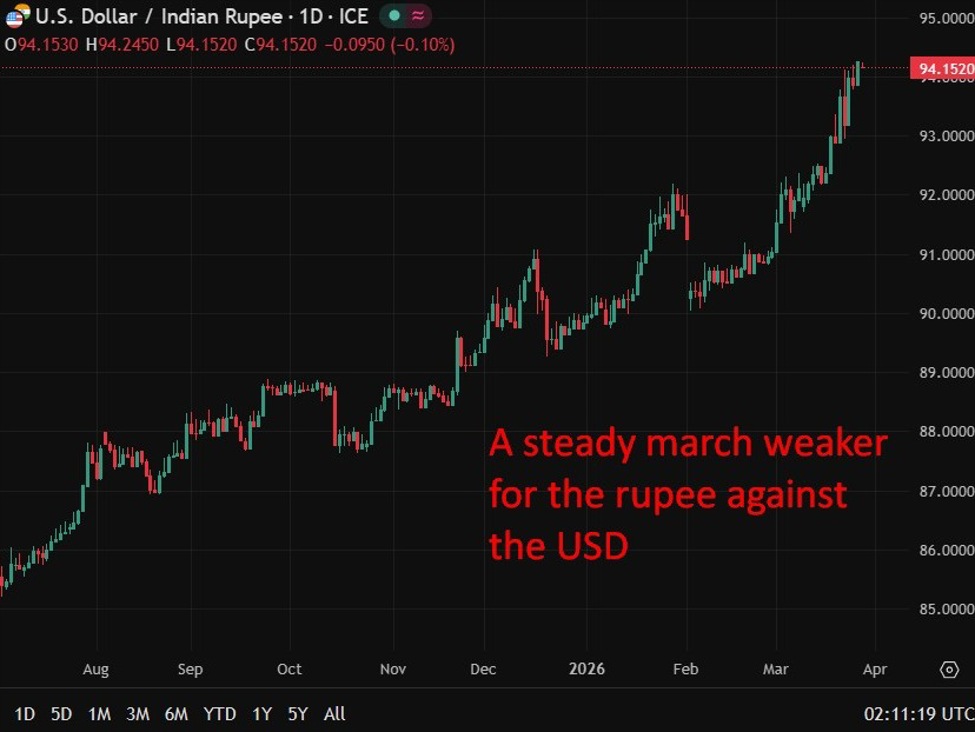
The Indian rupee begins the week near 94 to the US dollar, caught between higher American yields, a firm dollar, volatile oil prices and renewed foreign buying of Indian equities. The currency’s weakness is not an isolated market event. It reaches households through fuel, electronics, overseas education, travel and imported industrial inputs.
Oil remains the largest external variable because India imports most of the crude it consumes. Higher prices increase demand for dollars and can widen pressure on the current account. At the same time, expectations around US monetary policy can strengthen or weaken the dollar independently of India’s domestic fundamentals.
The Reserve Bank of India therefore faces the familiar three-way problem of inflation, growth and currency stability. A weaker rupee can support exporters, but persistent depreciation can also raise imported inflation and increase costs for companies with unhedged foreign liabilities.
The number 94 is less important than the direction and speed of movement. Currency markets are not referendums on national strength. But they are reminders that India’s domestic growth story remains connected to oil, global rates and international capital.
The Road That Could Rewire Jammu

Jammu has spent decades thinking about distance in hours. Delhi, Punjab, Katra, the airport, the railway station and outer districts are measured against bottlenecks and uncertain road time. The Delhi–Amritsar–Katra Expressway is beginning to alter that map.
Four major Phase-II packages inside Jammu and Kashmir have reached advanced stages of physical progress, with the Jakh–Kunjwani section among the furthest advanced. The target for Katra connectivity is 2027. For Jammu, however, the real consequence is economic geography.
A controlled-access corridor changes where warehouses are built, where hotels make sense, where residential colonies expand and how quickly goods move between Jammu, Punjab and the National Capital Region. Villages once considered peripheral can become logistics and property markets almost overnight.
The opportunity is substantial, but infrastructure does not automatically produce local prosperity. Jammu needs feeder roads, planned interchanges, public transport integration, freight facilities, road safety and protection against uncontrolled ribbon development. The real test will be whether the region captures the value created by the corridor rather than merely watching traffic pass through.
Jhiri Prepares for Lakhs
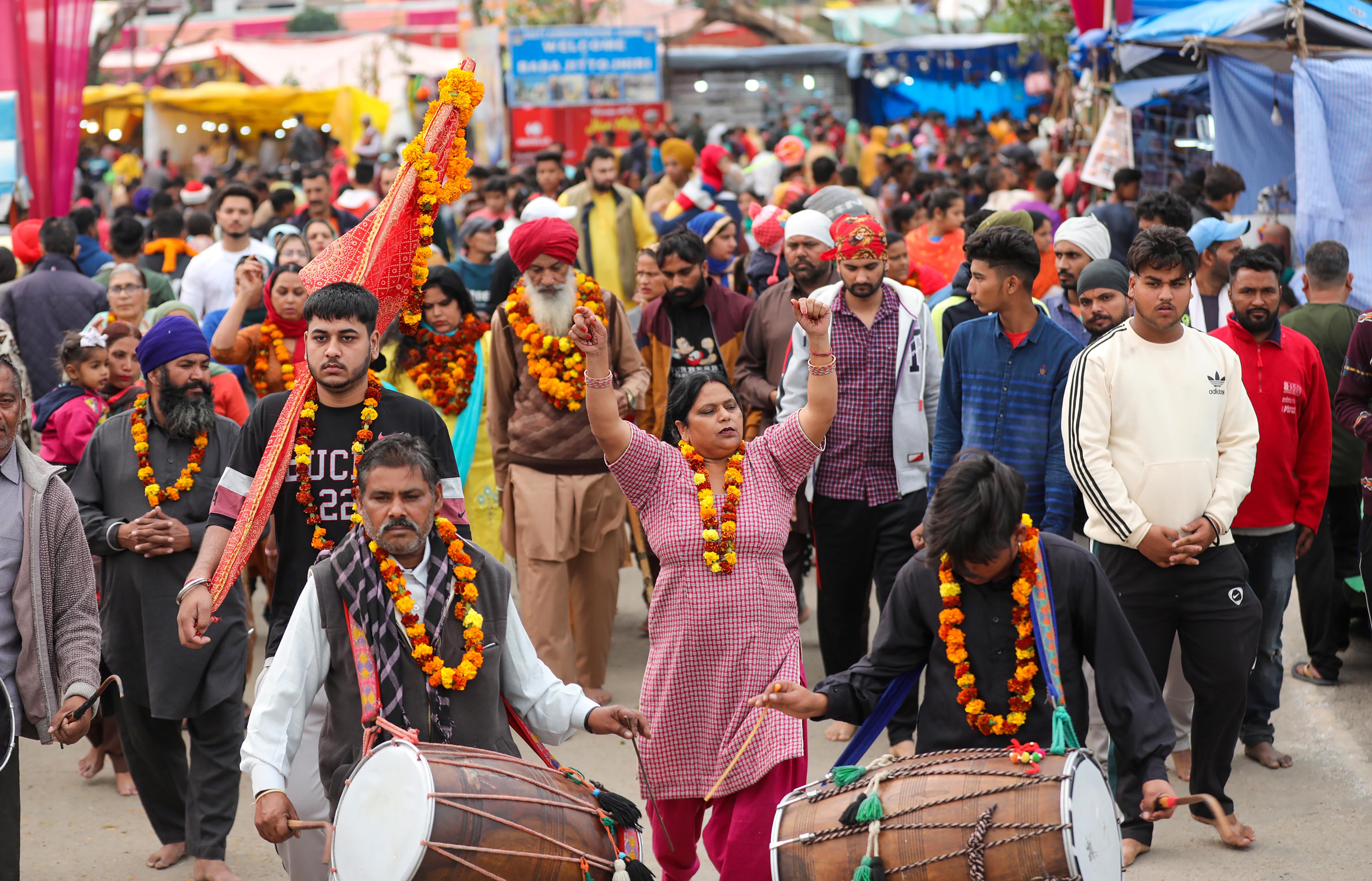
On 23 November, Jhiri village will again become one of Jammu’s great temporary cities. The annual Jhiri Mela, held in honour of Baba Jitto and Bua Kouri, will run for eleven days and is expected to draw lakhs of devotees from Jammu and Kashmir and neighbouring states.
Baba Jitto survives in Dogra folklore as a farmer who resisted oppressive demands by a landlord and sacrificed his life rather than surrender the produce of his labour. The fair endures because the story is devotional and social at the same time: faith wrapped around a memory of injustice.
This year the size of the gathering has put public safety at the centre of preparations. Officials have reviewed CCTV, public-address systems, traffic, sanitation, healthcare, security, lighting, parking, fire prevention and emergency response.
Jhiri is also an economic event. Temporary shops, food stalls, transport and local tourism generate income far beyond the shrine. A successful mela should therefore be judged not only by attendance but by whether culture, commerce and enormous crowds can coexist without compromising safety.
India Win the Series the Hard Way

India closed the one-day series in New Zealand with a victory that belonged more to discipline than dominance. Bowled out for 209 at Bay Oval, India appeared to have left too little on the board. New Zealand reached 64 for one and seemed to be controlling the chase.
Then the match changed. India’s seamers tightened their lines, New Zealand lost wickets in clusters and the hosts were dismissed for 187 in 48.1 overs. Arshdeep Singh finished with three for 30 and was named Player of the Match. Mohammed Siraj and Axar Patel took two wickets each.
India’s batting had been rescued by Axar Patel and Ishan Kishan, who made 46 apiece. The total was ordinary. The defence of it was not. On a tour where balance and selection have remained recurring questions, the final ODI offered the simplest possible answer: bowlers can still rescue a poor batting day.
The 22-run win gave India the series 3–1. More importantly, it showed the value of staying in a contest long after the scoreboard appears to have made the verdict.
Ramayana and the Return of the Big Indian Spectacle

Eleven days into its theatrical run, Ramayana has become more than a film release. Its reported second-Sunday performance has placed it among the largest recent Hindi-language theatrical events, reinforcing the industry’s belief that audiences will still leave streaming platforms for cinema when the experience feels sufficiently large.
The commercial formula is not mysterious. Mythology provides familiarity. Ranbir Kapoor and Yash provide star power. Large-format visual effects provide spectacle. Marketing converts the release into a national event rather than a routine weekend opening.
The more interesting question is what follows. Bollywood has spent years oscillating between intimate streaming dramas and enormous franchise pictures. Ramayana suggests that the theatrical middle is shrinking. Films designed for cinemas increasingly have to justify the trip to the cinema.
That pressure can produce technical ambition, but it can also encourage risk-averse dependence on mythology, sequels and known intellectual property. Ramayana’s success is therefore both a celebration of scale and a warning about the economics of modern mainstream cinema.
Science Fiction Finally Walks Through the Booker Door

M. John Harrison’s Booker Prize victory is important for reasons that go beyond one novel. The 81-year-old British writer won for The End of Everything, a short post-apocalyptic work that follows an ageing pair on the Kent coast after an unexplained catastrophe.
Harrison has spent six decades moving between literary fiction and speculative writing while resisting the idea that science fiction should occupy a lesser cultural shelf. His victory therefore carries symbolic weight. For years the Booker has widened the definition of what serious literary fiction may look like. In 2026 it widened it again.
The judges chose the novel unanimously. Its achievement lies in refusing the familiar machinery of the apocalypse. The catastrophe is less important than the human response to it: ageing, companionship, fear, absurdity and the possibility of continuing after systems collapse.
For publishers, the award may also matter commercially. Literary prizes create demand, but they also change categories. Once a science-fiction writer wins the Booker, booksellers and reviewers have less reason to keep genre and literary fiction in separate rooms.
Harmanpreet Kaur and the Long Road to Normality

Harmanpreet Kaur’s career belongs to the generation that had to make women’s cricket visible before it could become commercially valuable. Her greatest innings are easy to list. The harder achievement is cultural: she helped make the sight of an Indian woman leading a packed stadium feel ordinary.
That normality was not available to the generation before her. Women’s cricket in India spent decades outside the financial and broadcast machinery that made the men’s game enormous. Central contracts, a professional domestic structure and the Women’s Premier League have changed the economics, but those systems arrived after players such as Harmanpreet had already proved an audience existed.
Leadership in sport is often measured in trophies. It should also be measured in what becomes imaginable after a player has passed through. Today a girl holding a cricket bat in Moga, Jammu, Ranchi or Bengaluru can point to a professional pathway with coaches, franchises, contracts and international tournaments.
That is why Harmanpreet belongs in a daily newspaper’s profile space. Records eventually become numbers in an archive. Cultural permission lasts longer.
The Visa Racket and Jammu’s Market in Desperation

The Economic Offences Wing of the Crime Branch in Jammu has filed a chargesheet against five people in an alleged international visa-fraud racket involving unemployed youth. The accusation is familiar: promises of overseas employment, money collected in advance, and documents or opportunities that do not materialise.
Cases like this survive because the market they exploit is real. A government job remains intensely competitive, private-sector salaries are often low and Gulf employment continues to carry enormous economic attraction for families across north India.
The fraudster therefore sells more than a visa. He sells urgency, migration and the promise of a family’s financial transformation. Victims are often persuaded to move quickly because an offer is described as limited, confidential or dependent on an immediate payment.
Prosecution matters, but prevention requires more. Recruitment agents should be verifiable, contracts should be checked before money changes hands, and young applicants need a simple public mechanism for confirming whether an overseas employer and intermediary are legitimate. The most effective fraud protection is not suspicion. It is verification.
16 November 1945: When the World Tried to Build Peace in the Mind

On 16 November 1945, delegates in London adopted the Constitution of the United Nations Educational, Scientific and Cultural Organization. Europe had barely emerged from a second catastrophic war in a generation. The founders began from an idea that remains startlingly ambitious: political agreements are not enough to prevent conflict.
The Constitution argued that wars begin in human minds and that the defences of peace must therefore be constructed there as well. Education, science, culture and the exchange of knowledge were not treated as decorative activities. They were understood as instruments of international security.
UNESCO later helped build systems for World Heritage, scientific cooperation, education and cultural preservation. Like every large international institution, it has also faced political disputes, bureaucracy and questions about effectiveness.
But the founding proposition has aged remarkably well. In an era of algorithmic propaganda, manipulated media and renewed war between states, the question posed in 1945 has returned with force. If mistrust and ignorance can be industrialised, then education and shared knowledge are not luxuries. They are part of the architecture of peace.