Current Affairs
The developments that matter now, across India and the world. Politics, economy, conflict, technology, climate, science, aviation and public life, reported in context rather than reduced to headlines.
Trump, Xi and Putin Plan an Unprecedented APEC Meeting
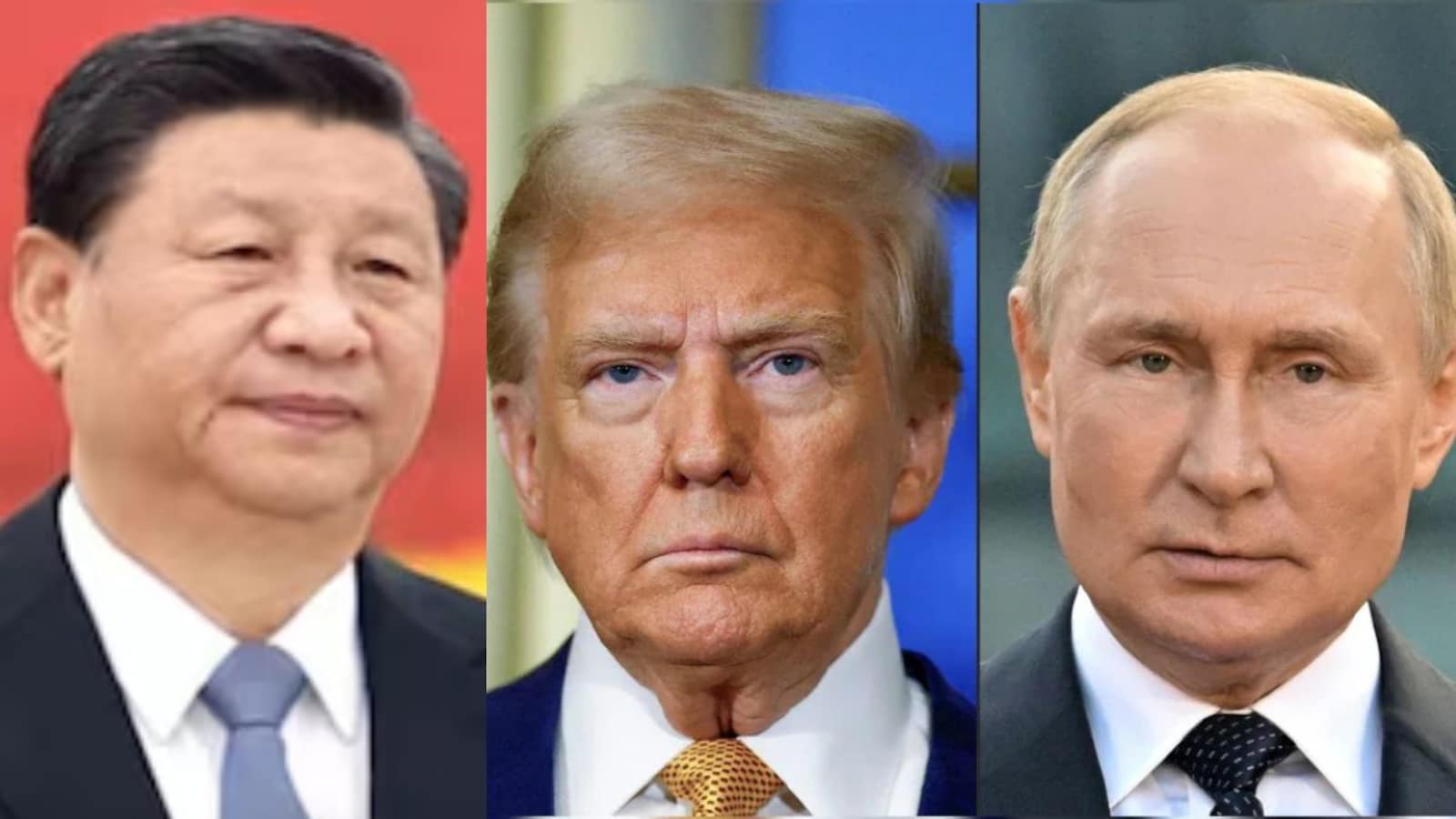
The White House says Donald Trump, Xi Jinping and Vladimir Putin are expected to meet together on the sidelines of the APEC summit in Shenzhen, an encounter without precedent among the sitting leaders of the United States, China and Russia. The meeting is scheduled for next week, with nuclear arms control expected to sit near the centre of the conversation. Washington has signalled that no major agreement should be expected at the first sitting, but the symbolism alone is considerable. The last bilateral nuclear architecture between Washington and Moscow has expired, China’s arsenal is expanding, and the three powers now confront one another across questions ranging from Iran and Ukraine to Taiwan, trade and technology.
The meeting could also become a test of whether APEC can remain primarily an economic forum when the strategic rivalries of the three largest nuclear powers are being carried directly into its corridors. For Beijing, the gathering offers an opportunity to display diplomatic weight on home soil. For Moscow, it offers a chance to appear at the table as an indispensable power. For Trump, it provides the theatre of personal diplomacy he has repeatedly favoured, although the underlying disagreements are too deep to be dissolved by a single photograph. What emerges may therefore matter less as an agreement than as an indication of whether the next phase of great-power competition will be managed through dialogue or through escalating pressure.
COP31 Reaches the Hard Part: Fossil Fuels, Finance and the 1.5°C Limit
COP31 in Antalya has entered the stage at which speeches give way to negotiation. UN Secretary-General António Guterres has called for immediate and drastic emissions cuts, warning that current policies still place the world on a path well above the Paris Agreement’s 1.5°C ambition. Negotiators are divided over how directly the final text should address oil, gas and coal, how quickly electricity should replace fossil fuels in transport and industry, and how much financial support richer states should provide to countries already absorbing the costs of a warming climate.
The dispute is not simply environmental. It is economic and geopolitical. Developing countries, including India, argue that any transition must recognise different levels of responsibility and development, while vulnerable island states say delay is already consuming coastlines, budgets and livelihoods. The summit is also debating a global electrification push and the financing required for grids, storage and adaptation. The first week has therefore exposed the central contradiction of modern climate diplomacy: governments increasingly accept the science, yet remain unwilling to surrender the energy systems, fiscal interests and political bargains built around fossil fuels.

America’s Nationwide Flight Shutdown Exposed a Fragile System
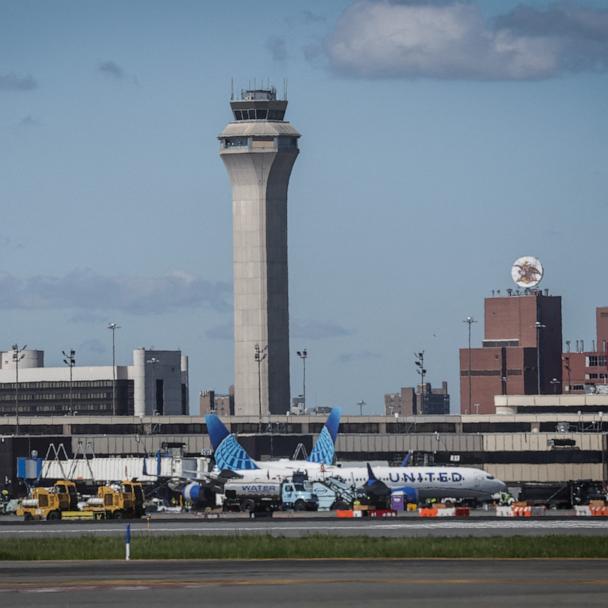
A communications failure forced the Federal Aviation Administration to impose a nationwide ground stop across the United States before the restriction was lifted hours later. The episode caused widespread delays and cancellations and immediately revived questions about the resilience of the aviation infrastructure on which one of the world’s largest air-transport systems depends. A nationwide halt is an extraordinary measure because it prevents departures across the country rather than isolating one airport or region, and the scale of the disruption showed how rapidly a technical failure can propagate through tightly scheduled airline networks.
The incident will be scrutinised beyond the immediate inconvenience to passengers. US aviation has spent years confronting ageing systems, staffing pressures, capacity constraints and repeated technology failures at major hubs. The key question now is whether the communications breakdown was an isolated malfunction or another warning that the underlying architecture requires faster modernisation. For airlines, even a short national interruption can distort aircraft rotations and crew schedules long after operations technically resume.
Starship Flight 15 Pushes SpaceX Toward a Full Reusable Round Trip
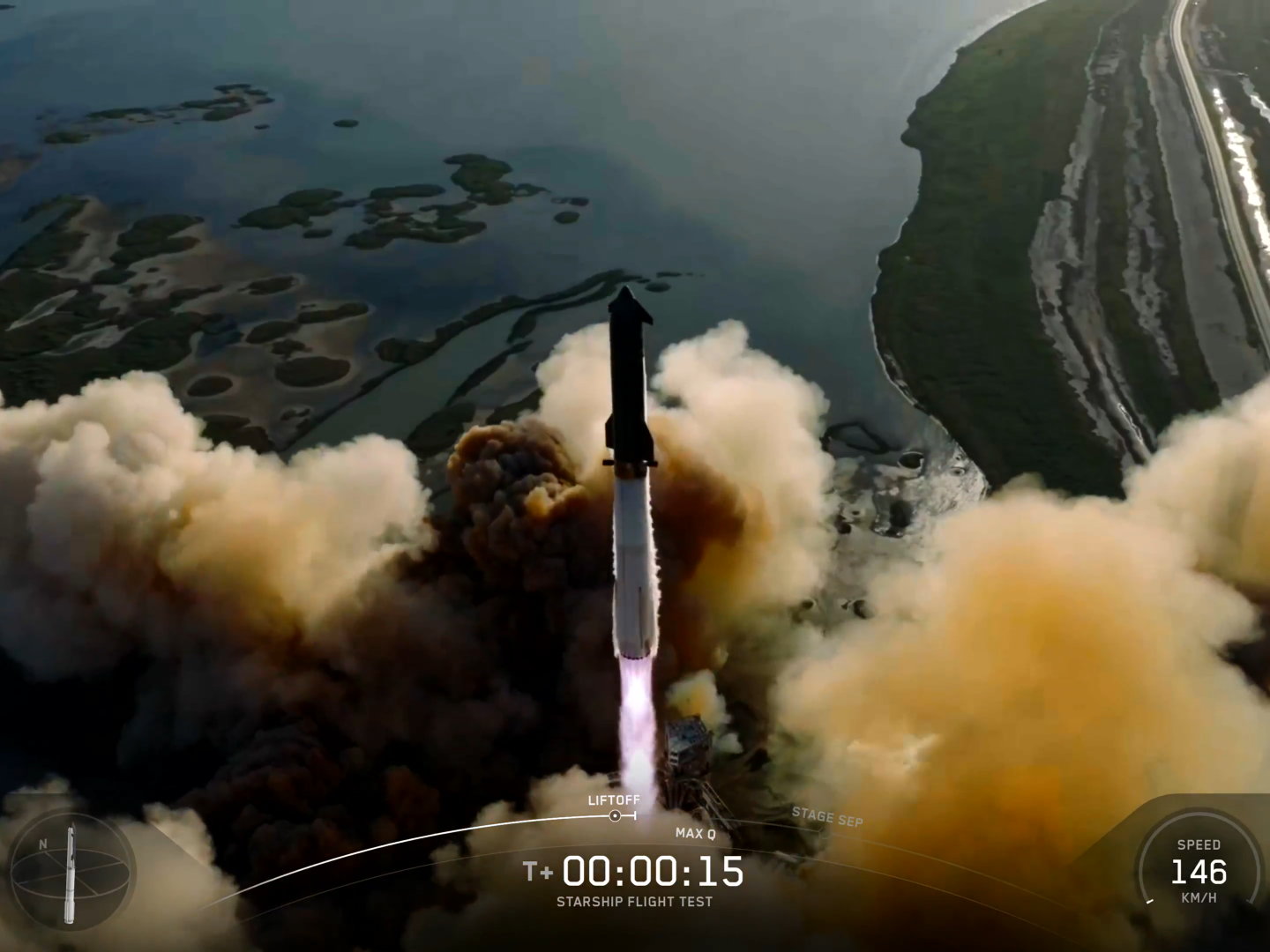
SpaceX launched the fifteenth test flight of Starship from Texas with one of the programme’s most ambitious objectives yet: demonstrating a more complete cycle of recovery for both the Super Heavy booster and the Starship spacecraft. The vehicle is central to Elon Musk’s long-term Mars ambitions, but it is also tied closely to NASA’s lunar plans, making every flight a test not merely of engineering spectacle but of whether the system can mature into a dependable transport platform.
The programme has advanced through an unusually public sequence of failures, partial successes and rapid redesigns. That method has allowed SpaceX to learn quickly, but it has also made each launch a referendum on whether the company can convert experimental progress into operational reliability. The fifteenth flight is particularly important because full reusability is the economic proposition at the heart of Starship. If the booster and spacecraft can eventually be recovered, refurbished and flown again on a short cycle, the cost structure of heavy spaceflight could change dramatically.
India’s 900-GW Clean-Energy Ambition Now Confronts the Grid
India is seeking to push non-fossil electricity capacity towards 900 gigawatts by 2035, nearly three times today’s level, while committing large sums to transmission and storage. The target is an industrial project as much as an environmental one. It would reduce dependence on imported fuel, expand domestic solar and wind manufacturing, and potentially restrain electricity costs in an economy whose power demand is still rising rapidly.
The difficulty is that capacity on paper is not the same as electricity delivered to homes and factories. Solar generation has already been curtailed in some areas because transmission networks could not absorb it. Storage remains expensive, and coal still provides the majority of actual generation. India’s energy transition will therefore be decided less by the number of panels and turbines installed than by the speed at which grids, batteries, financing and market rules are modernised. The 900-GW ambition is enormous, but so is the infrastructure required to make it useful.

Centre Extends Ban on Zakir Naik’s Islamic Research Foundation
The Union government has extended the ban on Zakir Naik’s Islamic Research Foundation for another five years under India’s unlawful-activities law. The organisation has been prohibited since 2016, and the latest notification continues the government’s position that its activities pose a threat to public order and national security. Naik, who has lived outside India for years, has repeatedly rejected allegations of promoting terrorism and has said his speeches are misrepresented.
The renewed ban raises the familiar legal question that accompanies every long-running prohibition: how the state balances national-security claims with the need for evidence, judicial scrutiny and freedom of expression. The extension keeps the organisation outside lawful operation in India and will continue to affect its finances, public activities and institutional presence. It also ensures that Naik remains a recurring point of tension in India’s debates over radicalisation, religious speech and the reach of security legislation.

SpiceJet Cancels Dubai Flights After Check-In Services Are Halted
SpiceJet cancelled four Dubai services after airport check-in services were halted over unpaid dues, according to reporting from India. Only two flights were permitted to depart, leaving the airline to manage affected passengers and a fresh round of questions about its financial and operational resilience. For an airline, the loss of airport services is more than an accounting dispute because it can immediately strand passengers, disrupt rotations and erode confidence among suppliers.
The episode comes against a background of repeated financial pressure across parts of India’s aviation sector, where low fares, high fuel costs, aircraft leasing obligations and intense competition leave little margin for prolonged disruption. What matters now is whether SpiceJet can settle the dispute quickly and prevent similar interruptions at other overseas stations. The Dubai route is commercially important, particularly for labour and family travel between India and the Gulf, so reliability on the sector has consequences beyond the airline’s balance sheet.

India Seeks Consular Access for Seafarer Stranded at Karachi Port
India has made a consular request to Pakistan concerning an Indian seafarer reported stranded at Karachi port. The External Affairs Ministry has described the matter primarily as a commercial dispute between the shipping company and its employees, but the presence of an Indian national in Pakistan gives the case a diplomatic dimension that an ordinary employment dispute would not carry.
Consular access between India and Pakistan is inevitably sensitive because even routine cases can become entangled in the wider political relationship. The immediate issue is practical: establishing the seafarer’s welfare, legal status and ability to leave. The broader significance lies in whether both governments can keep a narrowly humanitarian and commercial matter insulated from bilateral tensions. Such cases rarely dominate headlines for long, yet for the individual and family involved, consular procedure can determine whether a labour dispute becomes a prolonged detention abroad.

Delhi’s Air Returns to the Severe Zone
Delhi entered another day under a heavy pollution blanket after monitoring around AIIMS recorded an Air Quality Index above 400, in the severe category, while several other stations remained at very poor or severe levels. The episode renews the annual argument over emergency restrictions, construction dust, transport emissions, industrial pollution, crop-residue burning and the meteorological conditions that trap pollutants over the capital.
The deeper problem is that emergency measures arrive after the air has already deteriorated. School restrictions, construction bans and traffic controls may reduce exposure at the margin, but Delhi’s pollution crisis is regional and structural. It crosses state borders and implicates transport planning, energy, agriculture and urban growth. The city therefore continues to oscillate between emergency response and temporary relief without resolving the conditions that make severe pollution predictable every winter.
