The Machine That Decides Who Dies
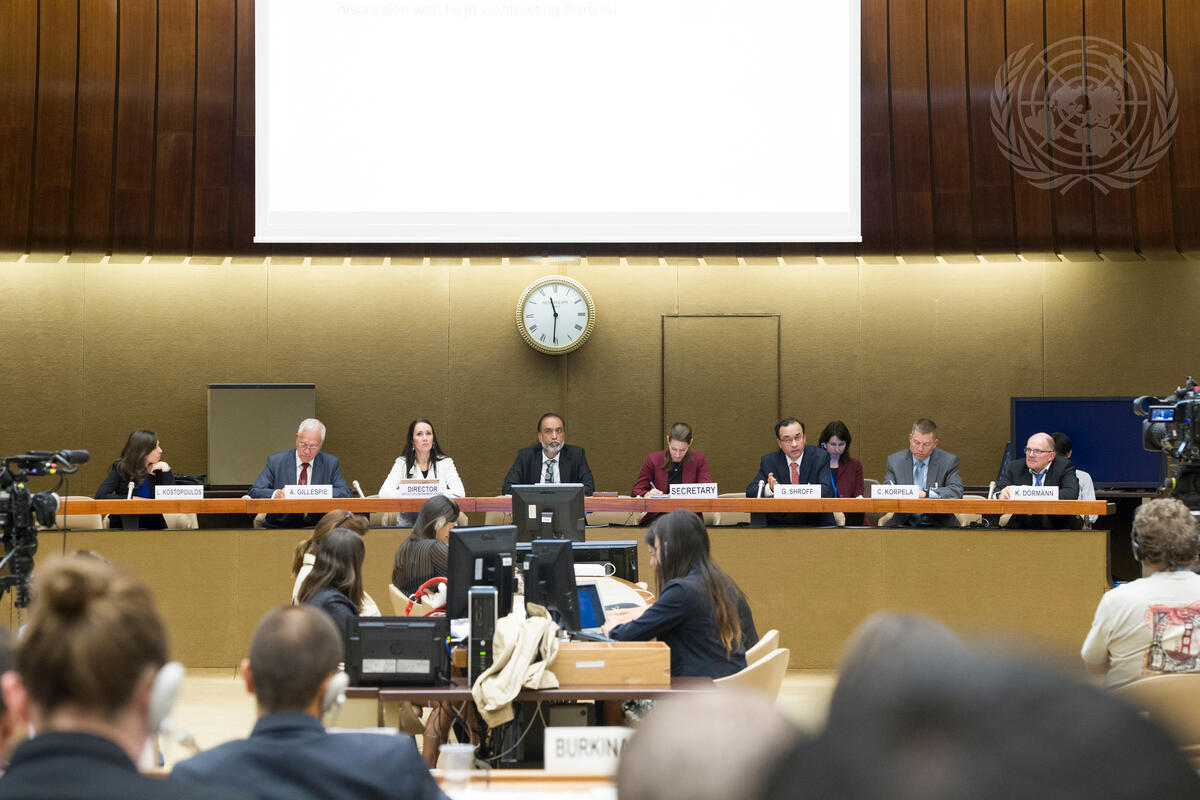
The argument opening in Geneva today is not about science fiction. It is about whether a machine may be permitted to identify a human target, select it and use lethal force without a person making the final decision. The Seventh Review Conference of the Convention on Certain Conventional Weapons runs from 16 to 20 November 2026, and autonomous weapons have become its defining question. The United Nations says more than 120 states and other stakeholders are gathering as military artificial intelligence advances faster than the rules intended to govern it.
Most parties to the convention support movement toward a legally binding instrument. The United States, Russia and Israel oppose that course, arguing that existing international humanitarian law is capable of governing new systems. Washington has favoured non-binding guidelines and a longer work programme. Moscow has consistently resisted a binding treaty. The divide matters because the states most capable of developing autonomous weapons are also among those least willing to accept a new prohibition.
The technical debate can sound bloodless. Its moral content is not. A weapon becomes autonomous when its functions allow it to identify, select and engage a target without a human operator intervening in those steps. That does not make every drone an autonomous weapon. Many drones remain remotely piloted. The concern is the movement toward systems in which software increasingly determines whom or what to strike, how to classify behaviour and when to fire.
UN Secretary-General António Guterres and the International Committee of the Red Cross have urged states to prohibit systems that operate beyond meaningful human judgement and to regulate other autonomous weapons tightly. UN human-rights chief Volker Türk has put the issue more starkly: a machine must never be given the power to decide whether a human being lives or dies.
The military case for autonomy is obvious. Machines can react faster than soldiers, function in communications-denied environments and reduce risks to a state’s own troops. But speed is also the danger. An algorithm can repeat an error across dozens of targets before a human understands what has happened. A classifier trained on one battlefield can fail on another. Responsibility becomes harder to assign when a lethal decision is spread across commanders, programmers, manufacturers and software.
The Geneva conference therefore carries a significance larger than one treaty meeting. The world may be approaching the last moment at which law can be written before the technology becomes too deeply embedded in arsenals to constrain. The central question is brutally simple: if killing becomes faster, cheaper and more automated, will states become more willing to use force?
TCN’s view is that the burden of proof should rest with the machine, not the civilian. Technology may assist defence. It should not dissolve accountability. The history of arms control shows that restrictions are easiest to negotiate before weapons become ordinary. Geneva now has that chance.