The Mother Who Shot Her Daughter’s Killer
When grief entered a German courtroom: revisiting Annas Mutter, Heiko Gebhardt’s account of Marianne Bachmeier and a case that divided a nation.
Justice, grief and the limits of revenge
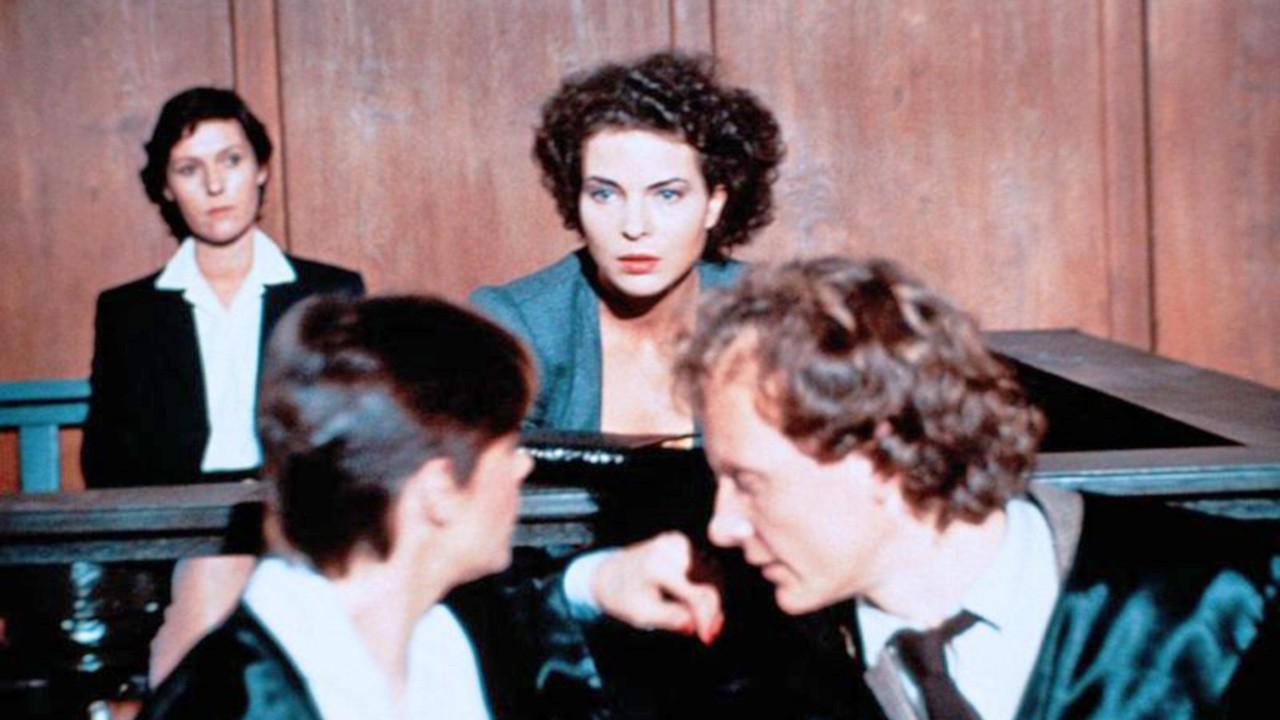
On 6 March 1981, Marianne Bachmeier entered a courtroom in Lübeck, West Germany, carrying a pistol. Her seven-year-old daughter, Anna, had been murdered the previous year. Klaus Grabowski, the man on trial for the killing, was in court when Marianne approached him and fired repeatedly. He died there. The mother who had come to witness the proceedings became the subject of another criminal case.
The shooting drew intense public attention. Some people regarded Marianne as a mother driven beyond endurance. Others feared the implications of treating personal suffering as a justification for killing. The law had to consider what she had done, while the public struggled to separate that act from the death of her daughter.
Heiko Gebhardt’s Annas Mutter, meaning Anna’s Mother, is rooted in that painful history. It offers a starting point for examining a life made public through tragedy, a courtroom killing and the competing judgments that followed. This editorial appreciation considers the documented case and its adaptations; it does not purport to quote or closely analyse an edition of the full German text.
A child’s death and a mother under scrutiny
Anna Bachmeier was killed on 5 May 1980. Grabowski, a neighbour with a history of sexual offences against children, was accused of taking her into his apartment and strangling her. Whether Anna had also been sexually assaulted was not conclusively established. That distinction matters, particularly in a case whose emotional force has sometimes encouraged accounts to move beyond what was proved.
The trial placed Anna’s killing before a court, but it also exposed Marianne’s private life to the wider public. Her childhood, relationships and conduct as a parent became subjects of discussion. Some details were relevant to understanding her circumstances. Others raised a more uncomfortable question about the treatment of a bereaved woman whose grief had become a national spectacle.
Marianne’s life story appeared in the German magazine Stern through the work of journalist Heiko Gebhardt and was published in book form. It is important to approach such a narrative with sympathy and caution in equal measure. A compelling personal account can help readers understand a person without settling every question about that person’s actions.
What makes the story difficult
The moral conflict at the centre of Annas Mutter cannot be resolved by a simple declaration of sympathy. Marianne killed a man who was already standing trial. Her act ended the proceedings before a judicial verdict could be delivered. Yet the circumstances of Anna’s death made it difficult for many observers to regard the courtroom shooting as an ordinary homicide.
Understanding is not the same as approval. That distinction gives this story its enduring importance. The reader must consider whether a legal system can recognise profound suffering while still insisting that criminal guilt be determined in court. The question becomes more difficult when public anger is directed not only towards the accused killer but also towards institutions believed to have failed a child.
From the page to the screen
The story was adapted for the screen in the 1984 German film Annas Mutter, directed by Burkhard Driest and starring Gudrun Landgrebe. Another 1984 production, Der Fall Bachmeier – Keine Zeit für Tränen, also dealt with the case. These adaptations brought Marianne’s story to audiences beyond the readership of the original reportage and book.
Film and literature face a particular responsibility with a story of this kind. The courtroom shooting is dramatic, but the spectacle of revenge can easily overwhelm the loss that preceded it. Anna was a child of seven whose life ended in violence. Her mother’s later notoriety should never make Anna a secondary figure in her own story.
A literary reconstruction: The morning in Lübeck
Editorial disclosure. The following is original dramatic prose written for The Continental News. It is a fictionalised reconstruction based on the historical event, not an excerpt from Gebhardt’s book, a film script or a verbatim court record. Descriptions of private thoughts and small actions are imaginative.
Marianne had been inside the courtroom before. She knew where the accused would sit and where the judges would enter. She knew that people would discuss her daughter in front of strangers and that she would have to listen. On this morning, she had brought a pistol concealed beneath her coat. Nobody stopped her at the entrance, and she took her place among those waiting for the proceedings to begin.
Klaus Grabowski was brought into the courtroom. He had admitted killing Anna, although the court had not yet delivered its judgment. Marianne watched him take his place. The people around her had come to observe a trial, and there was nothing in the ordinary business of the courtroom to suggest that another death was about to occur.
She rose from her seat and approached him from behind. When she took out the pistol, the people nearest her had little time to react. She fired several times. Grabowski collapsed, and the courtroom was thrown into confusion. The proceedings for which everyone had assembled could no longer continue. The man accused of killing Anna was dead, and Marianne was taken into custody.
What happened afterwards would be argued over for years. Some would speak of revenge, others of grief, and still others of a failure of the institutions that had been entrusted with protecting children. None of those arguments could return Anna to her mother. The shooting had changed Marianne’s life again, but it had not undone the event that brought her into the courtroom.
The verdict that did not end the argument
In March 1983, Marianne Bachmeier was convicted of manslaughter and unlawful possession of a firearm and sentenced to six years in prison. She was released after serving approximately three years. The sentence did not settle the wider debate. Some considered it severe in light of her suffering, while others regarded it as lenient for a deliberate courtroom killing.
Marianne died in 1996 and was buried beside Anna in Lübeck. Their story continues to raise questions about grief, punishment and the public desire for retribution. What does justice owe a bereaved parent? How can a court recognise exceptional suffering without allowing private violence to replace the rule of law? And how should writers tell such stories without turning the people involved into symbols?
Annas Mutter remains worth revisiting as part of the literature surrounding real crime and public conscience. Its subject resists a comfortable conclusion. The murder of Anna was a terrible crime. The killing of Grabowski was another. Marianne Bachmeier’s life became inseparable from both, and that is why the case continues to trouble readers and viewers decades later.
This is a historical and literary appreciation of the book and its subject, not a close textual review of the full original German edition. The dramatic reconstruction is original TCN writing and should not be attributed to Heiko Gebhardt.
Further reading
NDR: Historical account of Marianne Bachmeier
Film reference: Annas Mutter (1984)