DOHA / RIYADH / ABU DHABI, 5 NOVEMBER 2026 — The American midterm elections have produced a political earthquake in Washington, but the tremors are being felt most uneasily thousands of miles away, along the shores of the Arabian Gulf. The Democrats have captured both chambers of Congress, depriving President Donald Trump of the legislative support upon which his administration has relied during eight months of confrontation with Iran. The result has weakened the American president at home without removing a single aircraft carrier, missile battery or military installation from his command.
It is this dangerous imbalance that now troubles the Gulf. An American president confronted by a hostile Congress retains enormous military authority. Iran, meanwhile, believes that the election has exposed the exhaustion of the American public and the political vulnerability of the administration responsible for the war. Between these competing assessments stand the Gulf Cooperation Council states, whose prosperity, infrastructure and security are exposed to decisions made in capitals over which they exercise limited influence.
From Doha to Muscat, from Riyadh to Abu Dhabi, there is little comfort in the argument that the election represents a victory for peace. The defeat of the Republicans has undoubtedly complicated the political position of the White House. It has not resolved the war, restored unrestricted passage through the Strait of Hormuz or produced a settlement acceptable to Washington and Tehran.
Indeed, the immediate danger may have increased. A government weakened by public opinion can become more cautious. It can also become more determined to demonstrate that its authority remains intact. The Gulf must now prepare for both possibilities.
An American Defeat With Gulf Consequences
The scale of the Democratic victory has transformed the political environment in which the Iran war is being conducted. President Trump has acknowledged that the conflict contributed to Republican losses. Senior figures within his own administration have also recognised the political damage inflicted by a war whose strategic conclusion remains uncertain.
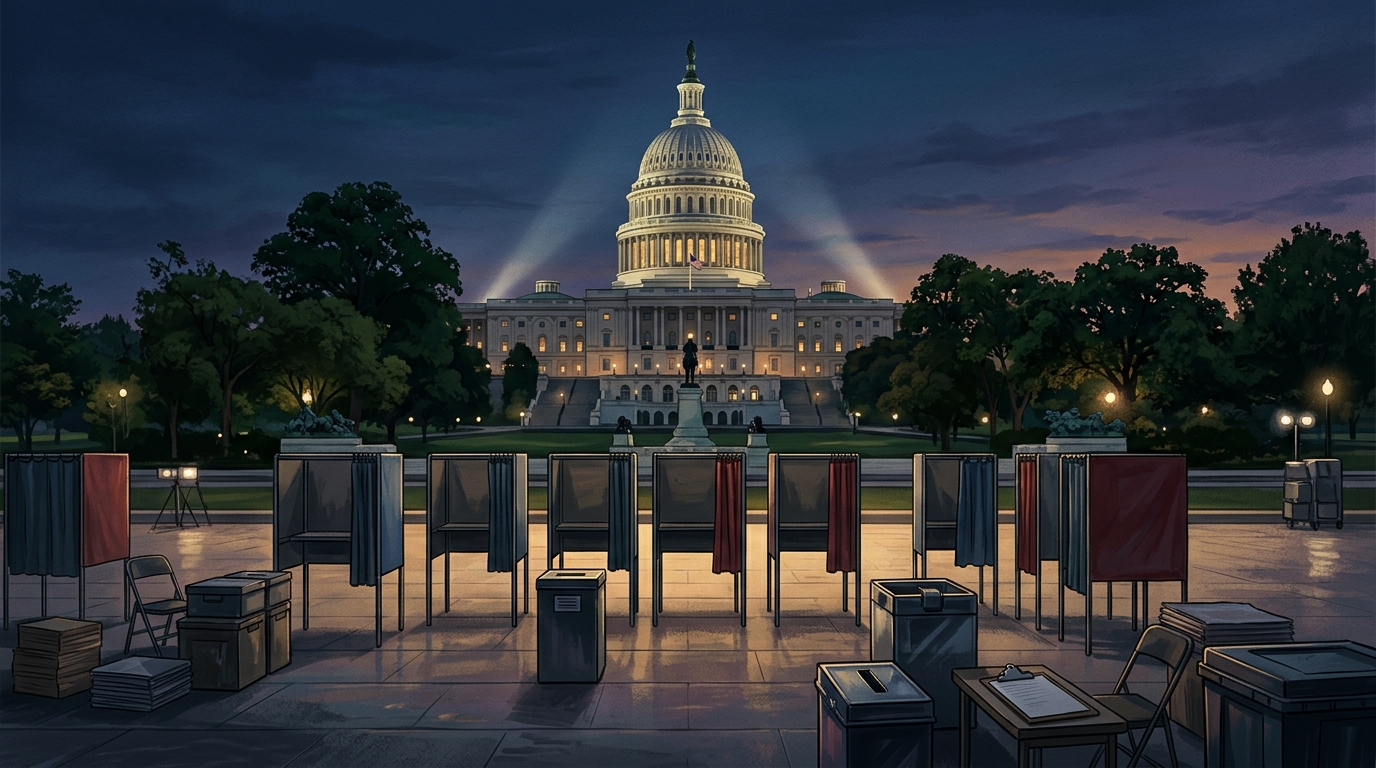
American voters were concerned about the price of fuel, the rising cost of essential goods, government conduct and the consequences of prolonged military engagement. Those domestic pressures converged in an election that left the Republican Party facing a Democratic majority in both the House of Representatives and the Senate.
Yet the consequences of the vote will not be immediate. The incoming Congress will assume office in January 2027. Until then, President Trump retains his existing executive authority, while the outgoing Republican majorities remain in place for the final weeks of their legislative term.
For the Gulf, this interval is particularly sensitive. There is time for diplomacy, but there is also time for a president who believes his leadership has been challenged to undertake further military action. The election has changed the political calculations surrounding the war without removing the machinery through which the war is fought.
Washington may possess the greatest concentration of military power in the world, but political power is another matter. The president can command forces stationed across the region. He cannot command the judgement of an electorate that has just delivered a punishing verdict upon his party.
Tehran Sees an Opening, but May Be Reading Too Much
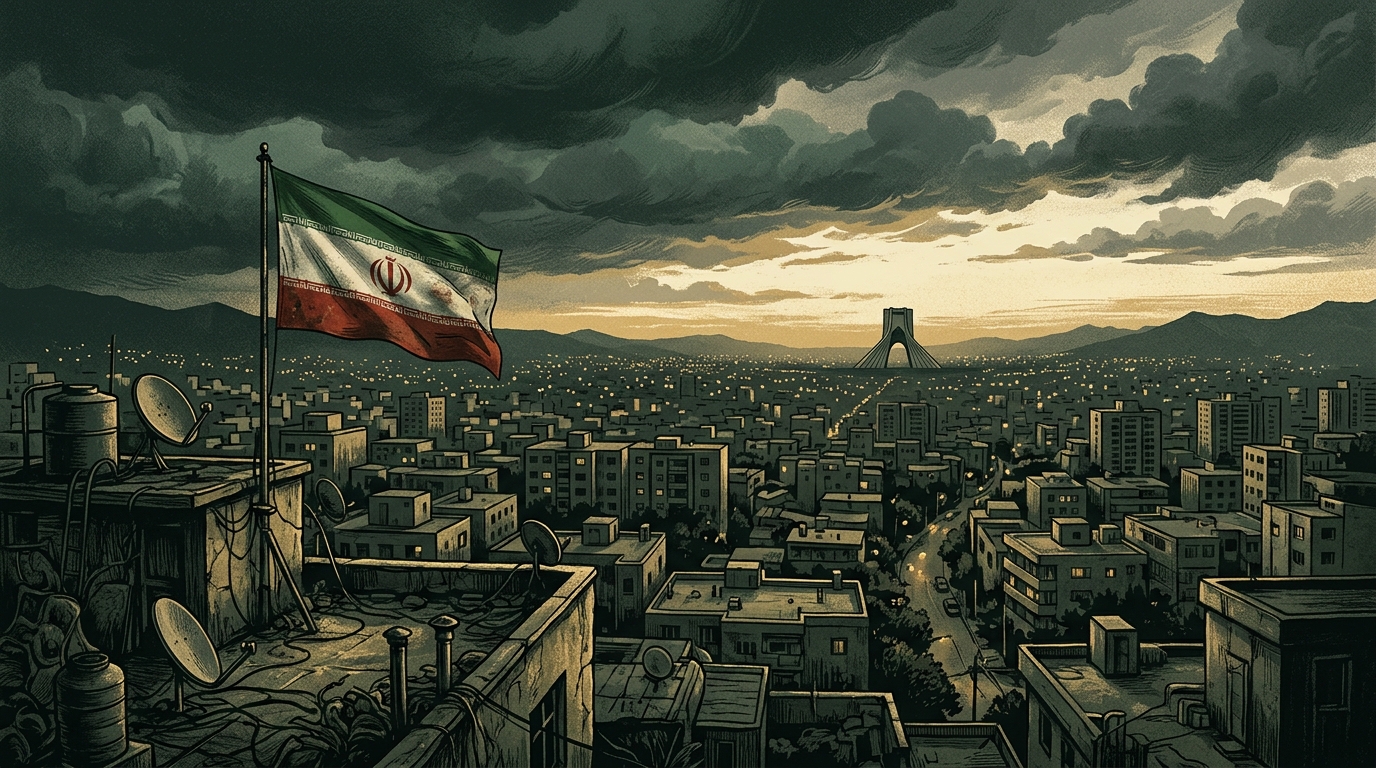
In Tehran, the American election has been received as a political opportunity. Mohammad Bagher Qalibaf, Iran's parliament speaker and a leading figure in negotiations with Washington, has characterised the results as evidence that American voters have rejected the war. The declaration is understandable as political messaging. It is less persuasive as an interpretation of the entire American electorate.
Americans did not vote to endorse the Islamic Republic. They voted in an election shaped by domestic economic pressures, political grievances and deep dissatisfaction with the conduct of their government. Opposition to the cost and duration of the Iran war cannot automatically be interpreted as support for Tehran's demands.
Iran nevertheless possesses an opportunity to improve its diplomatic position. Its leaders know that an American administration confronting two years of divided government may find it harder to secure additional military expenditure and sustain public support for an open-ended conflict.
The danger lies in Tehran mistaking political pressure for strategic helplessness. The United States remains capable of conducting devastating military operations regardless of the composition of Congress. A miscalculation by Iranian leaders could invite precisely the escalation that the election has made politically contentious.
Iran must also confront its own responsibilities. Threats to maritime navigation, attacks affecting Gulf infrastructure and the continued use of regional pressure as a bargaining instrument undermine the very diplomacy that Tehran claims to support.
The Iranian government may celebrate the political embarrassment of Donald Trump. It should not imagine that American electoral discontent grants it unrestricted authority over the waters and security of its neighbours.
Qatar Is Carrying a Diplomatic Burden That Washington Cannot Ignore
Among the Gulf states, Qatar has assumed a particularly demanding diplomatic role. Doha has maintained channels between Washington and Tehran, conveying proposals and attempting to reduce differences that have repeatedly threatened to produce another round of military confrontation.
Qatari officials confirmed this week that mediation efforts were continuing and that proposals were being examined by the parties. A Qatari delegation had travelled to Tehran for extended discussions before returning to Doha. The exchanges have involved efforts to establish an interim arrangement capable of building confidence ahead of a wider settlement.
These diplomatic exchanges deserve considerably greater attention than the theatrical declarations coming from the capitals engaged in the conflict. There is nothing glamorous about negotiating the movement of commercial vessels, the lifting of restrictions, the sequencing of concessions and guarantees against renewed attacks. Yet these practical matters may determine whether the Gulf returns to stability.
Qatar's position is not without its own vulnerability. The reported attack involving the Qatari liquefied natural gas carrier Al Mayeda demonstrated that diplomatic engagement does not protect commercial vessels from the dangers of an unsettled maritime confrontation.
Doha has condemned threats to shipping and reiterated that freedom of navigation through the Strait of Hormuz and the Arabian Gulf cannot be treated as a negotiable privilege.
The principle should command wider support. The waters of the Gulf are indispensable to international trade. Their security cannot be surrendered to the tactical calculations of governments seeking advantage in an unresolved military confrontation.
Saudi Arabia, the Emirates and Oman Cannot Afford Another Reckoning
The economic consequences of the war extend well beyond Iran and the United States. Saudi Arabia, the United Arab Emirates, Qatar, Kuwait, Bahrain and Oman have invested enormous resources in energy production, transport infrastructure, international trade, aviation, tourism and long-term economic diversification.
Such investments depend upon confidence that the region will remain accessible and commercially secure. A prolonged confrontation in the Gulf threatens precisely that confidence.
For Saudi Arabia, regional security is inseparable from the stability required for its ambitious economic transformation. The Emirates have developed an international commercial position dependent upon reliable shipping, air transport and financial links. Qatar's liquefied natural gas industry depends upon maritime access. Oman occupies a particularly sensitive position near the approaches to the Strait of Hormuz, where disruptions can acquire immediate strategic significance.
These countries do not share identical foreign policies. Their relationships with Washington and Tehran differ. Their security arrangements and economic interests are not interchangeable. Yet they possess an overwhelming common interest in preventing the conflict from consuming the wider Gulf.
The United States has long presented itself as a guarantor of regional security. That position carries obligations extending beyond the deployment of military forces. A security partner must consider whether its own conduct is contributing to the insecurity of the countries it has undertaken to protect.
Likewise, Tehran cannot demand regional respect while permitting the threat of military retaliation to hang over its neighbours.
The Strait of Hormuz Is Becoming a Test of Political Judgement
International attention has understandably focused on the military importance of the Strait of Hormuz. Yet the waterway has become an equally important test of political judgement.
The movement of commercial vessels through a narrow maritime passage should never become a permanent instrument of political blackmail. Nevertheless, restrictions, blockades and threats have placed the strait at the centre of the confrontation between Washington and Tehran.
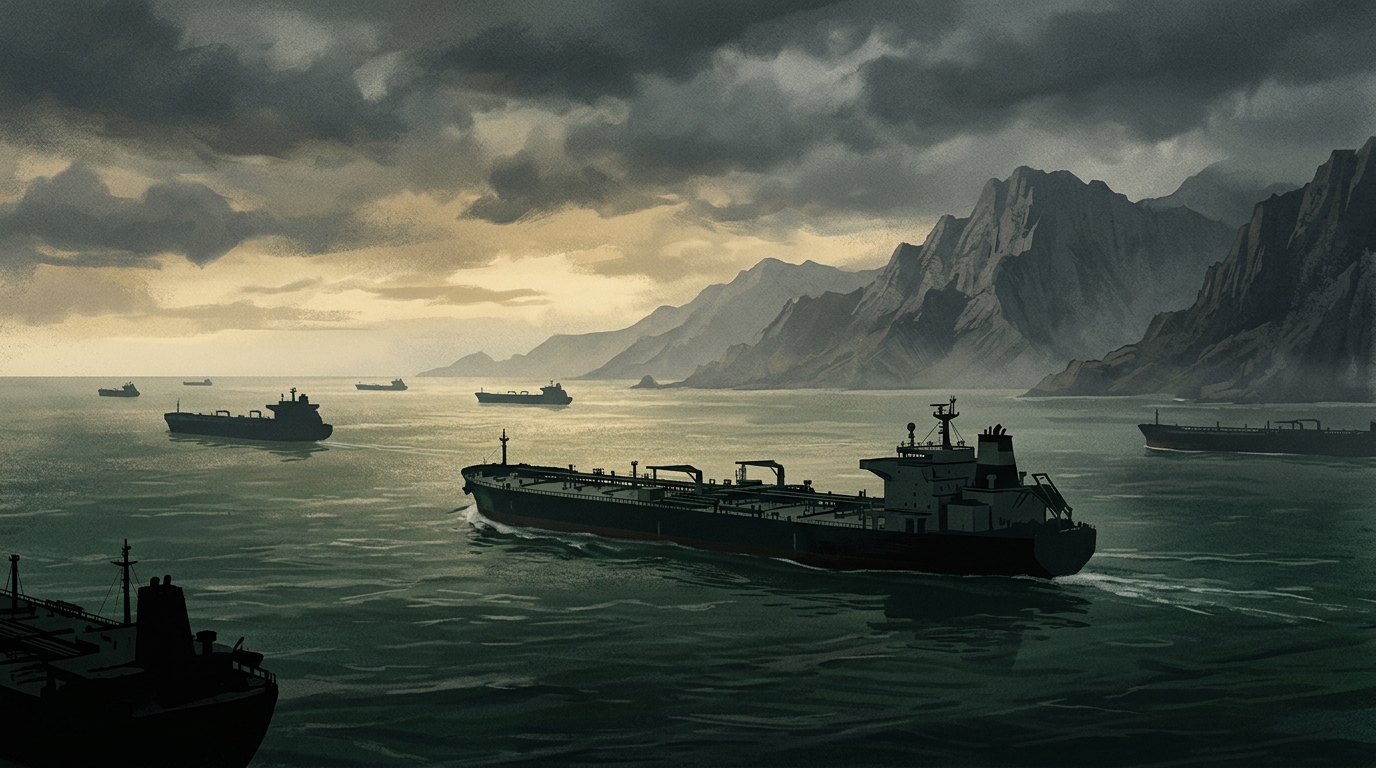
Reports on 4 November that several tankers had caught fire after striking mines further illustrated the danger. Iran's military claimed that vessels attempting to pass through a restricted section had been damaged. The full circumstances require independent verification, but the wider security problem is undeniable.
A vessel travelling through these waters carries more than cargo. It carries the financial exposure of shipowners, insurers, charterers and the companies dependent upon its arrival. Its journey can affect supply chains thousands of miles beyond the Gulf.
The political leadership in both Washington and Tehran must therefore understand that the maritime consequences of their confrontation are neither secondary nor temporary.
Even when the guns fall quiet, confidence in the safety of commercial navigation will require time and credible guarantees to recover.
Will Trump Seek Peace or Another Demonstration of Strength?
For the moment, the most consequential question concerns the intentions of President Trump.
His administration has maintained that the war was justified and has continued to threaten additional military action even while diplomatic exchanges remain underway.
The election introduces a new political complication. An administration that has lost control of Congress may seek a negotiated conclusion before its opponents acquire greater powers of investigation and control over future expenditure.
That would be the more constructive interpretation of the electoral verdict. Yet the opposite calculation is possible. The White House may decide that compromise would be interpreted as political surrender, encouraging a renewed demonstration of military strength.
The Gulf has every reason to fear such a decision. A strike intended to restore political authority in Washington could produce consequences far beyond the American electoral arena.
Iran could respond against military positions, maritime traffic or other regional targets. Israel could find itself drawn into another round of confrontation. Gulf governments would be forced to manage the security consequences of decisions in which their interests had not been decisive.
There is no guarantee that another military operation would produce the political concessions its architects expect.
Indeed, eight months of war have demonstrated the limitations of assuming that superior firepower will inevitably produce an acceptable settlement.
The Gulf Should Not Become the Battlefield of American Domestic Politics
The American electorate has delivered its verdict through the constitutional process. The consequences must now be addressed within the American political system. They should not be transferred to the Gulf through further military escalation.
Equally, Iran must resist the temptation to treat the president's domestic weakness as an invitation to intensify pressure upon neighbouring countries. The political defeat of one American party does not give Tehran the right to endanger regional commerce and civilian security.
The Gulf Cooperation Council states are entitled to demand a greater place in decisions affecting their security and economic future. They cannot be expected indefinitely to provide the territory, infrastructure and political accommodation required by international security arrangements while remaining exposed to their most dangerous consequences.
For Doha, the immediate task remains the pursuit of a workable diplomatic agreement. For Riyadh, Abu Dhabi, Muscat and the other Gulf capitals, the priority must be preventing the confrontation from expanding into another regional emergency.
The American election may ultimately create the political pressure required to bring the war toward a negotiated conclusion. It may also introduce an interval of dangerous uncertainty during which the competing parties attempt to improve their bargaining positions through force.
Neither outcome is inevitable. Both depend upon decisions that have yet to be taken.
The Most Dangerous Hour
The familiar assumption that military strength produces political control has been tested repeatedly during the history of conflict in the Middle East. The latest American election offers another reminder of its limitations.
Donald Trump remains commander-in-chief of the world's most powerful military. Yet his party has lost the confidence required to retain control of Congress. Iran sees an opportunity to claim that the American public has rejected the war. The Gulf states see something more immediate.
They see a conflict whose political management has become less predictable at precisely the moment when regional security requires exceptional restraint.
Washington must decide whether to accept the limits of coercive power. Tehran must decide whether to negotiate seriously rather than confuse an American political setback with a strategic victory.
The governments of the Gulf have already paid heavily for decisions taken elsewhere. Their people have every right to expect that the next chapter will be written through diplomacy rather than another exchange of missiles.
The Democrats have won Congress. Iran believes the tide has turned. But the Gulf has won nothing yet. Its most dangerous political hour may only now be beginning.