THE CONTINENTAL

Doha Holds the Line as Iran and Washington Weigh the Cost of Another Strike
With negotiations continuing and the American midterms approaching, Gulf diplomacy confronts another consequential test.
Global Edition · 2 November 2026
Doha Holds the Line as Iran and Washington Weigh the Cost of Another Strike
Diplomacy in Doha has entered a consequential phase. Iranian representatives and Qatari mediators continued discussions on Sunday, the third successive day of talks intended to find a route out of the US-Israeli war with Iran. There was no announced agreement at the end of the latest reported round, and neither side has committed publicly to a settlement.
The urgency is unmistakable. The American midterm elections take place on Tuesday, 3 November. President Donald Trump has indicated that the United States will not launch fresh strikes before the vote, while declining to exclude military action afterwards. Secretary of State Marco Rubio has said the president prefers a diplomatic resolution but has made no final decision on further attacks. For Gulf capitals, this leaves a narrow window in which diplomacy may prevent another escalation.
Qatar's role is more than that of a convenient meeting place. The country has maintained communication channels that allow messages to pass between adversaries who cannot easily negotiate face to face. Reuters reported that the Doha talks followed meetings in Tehran and were coordinated through regular contact with Washington. Iran's Foreign Minister Abbas Araqchi described the consultations as continuing, while making clear that Tehran was preparing for both diplomacy and defence.
The Strait of Hormuz is central to the discussions. Disruption to the waterway has unsettled energy supplies and increased economic pressure well beyond the Gulf. Reports have suggested that reopening the strait could form part of a possible agreement, although the details and conditions remain unconfirmed. A proposal discussed by negotiators is not the same as an agreed reopening.
The military danger has not disappeared. Iran has warned that another attack could provoke retaliation against American and Israeli interests in neighbouring countries. Such warnings increase the stakes for governments that host foreign forces and for civilians whose livelihoods depend on a stable Gulf economy. They also show why an arrangement limited to a temporary pause in attacks may be insufficient.
The immediate test is whether the parties can move from exchanging proposals to accepting enforceable commitments. A settlement would need to address security guarantees, the status of the waterway and the risk that either side resumes hostilities. Until those questions are answered, optimism about the talks should remain qualified.
Doha has not delivered peace. It has, for the moment, preserved a channel through which peace might still be negotiated. With the American election approaching, that distinction matters.
Source and reference: https://www.reuters.com/world/middle-east/iranian-negotiators-doha-continue-talks-end-us-iran-war-official-says-2026-11-01/. Analysis and interpretation are The Continental’s own; verify changing facts before publication.
↑ Back to front pageAmerica Votes Tomorrow: The Midterms and the Test of Presidential Power

The United States approaches its 3 November midterm elections with the balance of power in Congress at stake. Midterm contests are frequently described as verdicts on the president, but voters are also choosing local representatives whose decisions will determine legislation, oversight and public spending for the next two years.
The political significance of the vote extends beyond party arithmetic. Congressional committees can investigate executive decisions, demand documents and scrutinise the use of public money. The composition of the House and Senate also affects judicial appointments, foreign policy funding and the ability of a president to advance domestic priorities.
The continuing confrontation with Iran gives foreign policy unusual prominence. Yet the election will also be fought over familiar concerns, including household costs, employment, immigration and public confidence in political institutions. None of those questions can be reduced to a single national verdict before ballots are counted.
The Continental will distinguish confirmed election results from projections and claims made by candidates. Until official counts and credible reporting establish outcomes, any assertion about which party has won control of Congress would be premature.
Source and reference: https://www.usa.gov/midterm-elections. Analysis and interpretation are The Continental’s own; verify changing facts before publication.
↑ Back to front pageWhy the Strait of Hormuz Matters Far Beyond the Gulf

The Strait of Hormuz is a narrow maritime passage connecting the Persian Gulf with the Gulf of Oman and the wider Indian Ocean. Its importance comes from the volume of energy shipments that normally pass through it and the limited number of practical alternatives for some exporters.
When ships face danger or restrictions, the cost can spread through oil prices, marine insurance, freight contracts and supply planning. Import-dependent economies can feel the consequences through fuel bills, transport costs and pressure on their trade balances.
The current Doha negotiations therefore concern more than the governments directly involved in the war. A possible arrangement to reopen the waterway would matter to refiners, shipping companies and households far from the Middle East. But diplomatic discussion of reopening is not confirmation that safe passage has been restored.
The crucial indicators will be official navigation notices, actual vessel movements, insurers’ assessments and the durability of any political agreement. Markets can react to promises before the underlying risk has changed.
Source and reference: https://www.eia.gov/international/analysis/special-topics/World_Oil_Transit_Chokepoints. Analysis and interpretation are The Continental’s own; verify changing facts before publication.
↑ Back to front pageWar in the Gulf and the Civilian Cost of Uncertainty

War is measured in territory, aircraft and diplomatic communiqués. Civilians experience it through more ordinary calculations: whether a flight will depart, whether wages will arrive, whether a child can travel to school and whether family members across borders remain safe.
The Gulf is home to large communities of expatriate workers whose livelihoods depend on functioning airports, ports, construction sites, shops and public services. Regional instability can therefore become a personal financial crisis for families thousands of kilometres away.
Governments carry a responsibility to communicate risks without creating unnecessary panic. Employers, too, must consider emergency contact procedures, pay continuity and access to reliable information. These are practical obligations rather than abstract gestures of solidarity.
As diplomacy continues in Doha, the question for ordinary residents is whether a political arrangement can deliver predictable daily life. Any agreement should be judged partly by the safety and stability it provides to people who have little influence over the decisions that threaten them.
Source and reference: https://www.unocha.org/. Analysis and interpretation are The Continental’s own; verify changing facts before publication.
↑ Back to front pageIndia Edition · 2 November 2026
The Fight Over India's Voter Rolls Reaches Ramlila Maidan

The dispute over who appears on India's electoral rolls moved into the centre of Delhi's political life on Sunday, when a large opposition rally at Ramlila Maidan demanded the resignation of Chief Election Commissioner Gyanesh Kumar. The protest turned a technical argument about voter-list revisions into a direct challenge over public trust in the country's election machinery.
Opposition leaders, including Rahul Gandhi, accused the authorities of removing legitimate voters and compromising the integrity of the electoral process. The Election Commission and the government maintain that revisions are intended to identify duplicate, ineligible and otherwise inaccurate entries. The existence of a disputed deletion does not, by itself, establish deliberate political manipulation. Equally, the formal purpose of a verification exercise does not settle whether eligible citizens have been wrongly excluded.
That is the question which deserves rigorous scrutiny. Electoral registers must be accurate, but accuracy has two sides. Ineligible names should not remain on the rolls, and eligible voters must not disappear from them without notice and a meaningful opportunity to correct errors. For a citizen whose name is removed, the procedural safeguards are not an administrative footnote. They determine whether the right to vote can actually be exercised.
Associated Press reported that the opposition INDIA bloc organised the demonstration and that police and paramilitary personnel were deployed around the venue. Protesters framed the revisions as a threat to democracy. BJP representatives rejected the opposition's account. Both positions are politically consequential, but neither replaces the need for independently examinable records.
The most useful evidence will come from constituency-level data: the number of names deleted, the reasons recorded, the notices served, the appeals submitted and the outcomes of those appeals. Transparent publication of such information would permit voters, courts, journalists and political parties to test competing claims rather than merely repeat them.
There is also a responsibility on opposition parties. Allegations of systemic wrongdoing should be supported with verifiable examples and defensible comparisons, rather than rhetorical certainty. Public confidence is not strengthened by claims that cannot be tested.
The protest has made the electoral-roll controversy impossible to dismiss as a specialist debate. The next stage should be less about competing slogans and more about evidence, access to remedies and the treatment of individual voters. India's democratic institutions are judged not only by their formal independence but by their willingness to explain decisions that affect fundamental political rights.
Source and reference: https://apnews.com/article/cb532b4811eea64c51f61cd4199fb64e. Analysis and interpretation are The Continental’s own; verify changing facts before publication.
↑ Back to front pageWhen a Voter Must Prove That He Belongs on the Roll

The argument over electoral rolls has become one of the most serious tests of confidence in Indian democratic administration. A register that contains inaccurate entries cannot be trusted. Neither can a system that makes lawful voters struggle to demonstrate their eligibility after their names have been removed.
The Election Commission has a legitimate responsibility to maintain accurate rolls. Opposition parties have an equally legitimate right to question the procedures used. Neither institutional authority nor political accusation should settle the matter without evidence.
The necessary questions are specific. Was a voter informed? Was the reason for deletion recorded? Could the voter challenge the decision before the election? Did the appeal process operate within a meaningful time? Were the same standards applied to comparable cases?
A democracy cannot ask citizens to trust a process while withholding the information required to evaluate it. Transparent, auditable procedures would protect the Commission as well as the voter. They would also expose allegations that are exaggerated or unsupported.
The right to vote is exercised one person at a time. That is why a single wrongful deletion deserves a remedy, even when a large statistical exercise is said to be successful. The test of institutional integrity is whether the system can correct its own mistakes.
Source and reference: https://www.eci.gov.in/. Analysis and interpretation are The Continental’s own; verify changing facts before publication.
↑ Back to front pageOil, the Rupee and the Price Indian Households May Pay

India imports much of the crude oil it consumes. That dependence means a prolonged disruption to Gulf shipping can reach the Indian economy through fuel costs, transport expenses and the foreign-exchange market.
A rise in international oil prices does not translate instantly or uniformly into the price paid at every petrol pump. Taxes, marketing decisions, inventories and exchange rates all influence the final outcome. Nevertheless, sustained higher import costs create pressure somewhere in the system.
The rupee is another channel. Importers require foreign currency to pay suppliers, while investors react to changes in global risk. Currency movements can make imported goods more expensive even without a comparable rise in their international prices.
For households, the important distinction is between a market warning and a confirmed price change. Responsible economic coverage should explain the exposure without claiming that a particular increase has already occurred.
The practical policy challenge is to protect supply, maintain fiscal discipline and communicate honestly about the costs that a distant war can impose on Indian consumers.
Source and reference: https://www.rbi.org.in/. Analysis and interpretation are The Continental’s own; verify changing facts before publication.
↑ Back to front pageIndia and New Zealand: Why a Series Tells More Than Its Final Match

A cricket series is remembered by its final scoreline, but its competitive character is often revealed by the adjustments teams make between matches. Batting orders, bowling plans, fielding standards and the ability to perform under pressure are tested repeatedly.
New Zealand’s cricketing reputation rests partly on discipline and adaptability. India, with its depth of talent and expectations, is judged not merely by individual brilliance but by the consistency of its combinations.
For readers following the latest Twenty20 series, the most useful analysis is not a collection of superlatives. It is an examination of how conditions changed, which partnerships mattered and where bowlers gained control of the innings.
This desk will publish confirmed scorecards and individual statistics only after matching them against an authoritative match record. No unverified final-match figures are presented in this edition.
Source and reference: https://www.icc-cricket.com/. Analysis and interpretation are The Continental’s own; verify changing facts before publication.
↑ Back to front pageJammu & Kashmir Edition · 2 November 2026
The Darbar Returns to Jammu. Now the Winter Capital Will Judge What It Brings.
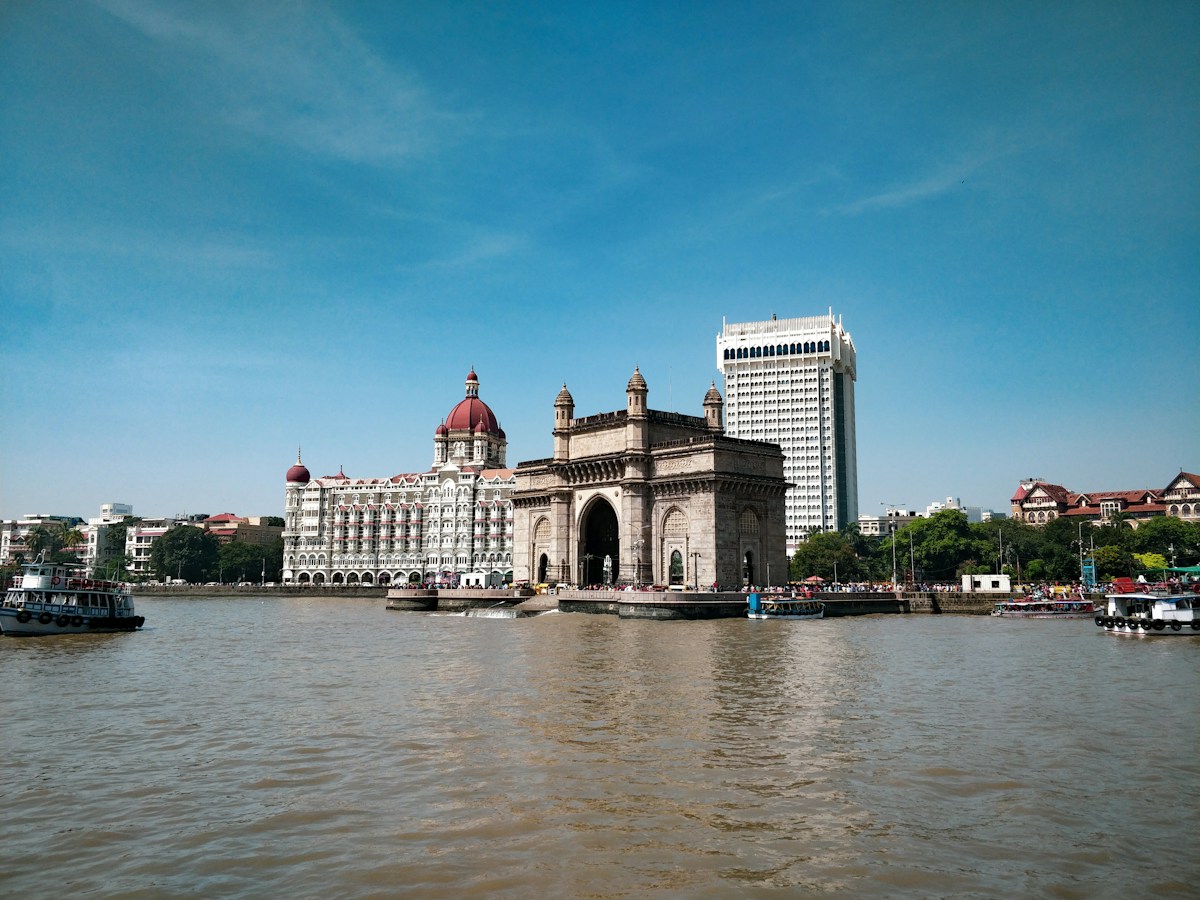
Jammu begins Monday with the return of the government's winter administration. The Civil Secretariat and designated departments are scheduled to reopen in the city on 2 November after the seasonal transfer from Srinagar, renewing a tradition that is simultaneously administrative, political and economic.
The move is governed by an October order of Jammu and Kashmir's General Administration Department. Offices following a five-day week closed in Srinagar on 30 October, while those operating six days closed on 31 October. Some departments are moving in full and others with reduced staff. A winter secretariat is to remain operational in Srinagar so that the transfer does not entirely remove access to government from the Valley.
The arrangements extend beyond files and office furniture. The administration has coordinated transport, accommodation, security and essential supplies for moving employees. Eligible personnel have been assigned a special travel allowance of Rs 25,000. Roads and public areas in Jammu have received attention ahead of the reopening, while the movement of official convoys has affected traffic on the national highway.
The Darbar Move carries a history stretching back to the Dogra period. It was discontinued in 2021 amid arguments about expense and the growing capacity of digital administration, before being restored by the elected government. Supporters of the return point to Jammu's winter economy, its historic status and the practical benefits of having senior decision-makers physically present. Critics of the practice question the recurring expenditure and the disruption associated with shifting offices between cities.
Both arguments deserve more than ceremony. The value of the move cannot be established by the number of freshly painted road dividers or the prominence of the official welcome. It must be measured in the accessibility of ministers and departments, the continuity of public services, the costs borne by taxpayers and the effect on businesses that depend on the seasonal influx of employees and visitors.
The government should also be judged on what happens in Srinagar during winter. Residents of the Valley should not have to travel hundreds of kilometres for matters that can reasonably be handled locally or electronically. A functioning winter secretariat, responsive online services and clear departmental responsibilities will be important tests.
For Jammu, the return of the Darbar is both recognition and expectation. The city has regained the winter seat of government. What its residents will now want is the tangible advantage of that presence: decisions made, services delivered and a government accessible beyond official occasions.
Source and reference: https://www.tribuneindia.com/news/j-k/darbar-move-jk-government-offices-reopen-in-jammu-on-nov-2/amp/. Analysis and interpretation are The Continental’s own; verify changing facts before publication.
↑ Back to front pageA Winter Secretariat in Srinagar: The Other Half of the Darbar Move

The return of government offices to Jammu does not mean that public administration in Srinagar should become inaccessible. The official Darbar Move arrangements provide for a Winter Secretariat in Srinagar, intended to maintain a point of contact for people who cannot reasonably travel to the winter capital.
The order provides for designated personnel from departments to remain at the Srinagar secretariat. That detail matters because the practical value of a public office lies in whether it can receive applications, answer queries and move decisions forward.
For residents of the Valley, winter travel can be difficult and expensive. For residents of Jammu, the return of senior administration is expected to improve access. A balanced system should recognise both realities without treating one region’s convenience as another region’s loss.
The coming weeks will reveal whether the two-city arrangement works in practice. Citizens will judge it by waiting times, the availability of responsible officials and the ability to obtain decisions without repeated journeys.
Source and reference: https://newsonair.gov.in/jk-govt-orders-annual-darbar-move-of-offices-from-srinagar-to-jammu-for-winter-season-2026-27/. Analysis and interpretation are The Continental’s own; verify changing facts before publication.
↑ Back to front pageThe Economic Arithmetic Behind Jammu’s Winter Capital

The Darbar Move has always been more than a transfer of files and desks. When government employees and departments relocate, demand changes for housing, transport, food, retail services and local business activity.
That seasonal circulation of spending helps explain why the practice carries economic significance in Jammu. But the value of the movement should not be measured only by immediate commercial activity. Public money is also spent on travel, accommodation, security and maintenance.
The administration has provided a special travel allowance of ₹25,000 for eligible moving employees under the current arrangements. That is a documented cost component, not a complete estimate of the expenditure associated with the entire move.
An informed debate needs transparent figures for the total cost, the economic benefits and the service outcomes. Digital governance may reduce the need to move paper records, but it does not by itself settle where officials should be accessible to the public.
For Jammu, the strongest case for the winter capital is one that can be demonstrated in functioning public services and durable economic opportunities, rather than ceremony alone.
Source and reference: https://www.greaterkashmir.com/jammu/darbar-move-jk-govt-orders-offices-to-reopen-in-jammu-on-november-2-12691601. Analysis and interpretation are The Continental’s own; verify changing facts before publication.
↑ Back to front pageThe Day Kashmir Was Sold for 75 Lakh Rupees

A treaty remembered as a sale
Few phrases in Kashmir's political history carry the emotional force of the claim that the territory was sold for seventy-five lakh rupees. The expression refers to the Treaty of Amritsar, signed on 16 March 1846 between the British East India Company and Gulab Singh. It compresses a complex imperial settlement into a memorable accusation. To understand its force, the reader must begin with the text of the treaty and the circumstances of the First Anglo-Sikh War, rather than assume that every later retelling describes the transaction precisely. The archival record should be read alongside modern scholarship, with attention to differences between a contemporary official document and a later political interpretation. The former establishes what was formally agreed; the latter may explain how the agreement came to be remembered. Neither should be allowed to stand in for the other.
The war that changed the map
The First Anglo-Sikh War ended with the defeat of the Sikh kingdom's forces and a series of agreements that transformed the political order of north-western India. The Treaty of Lahore, concluded earlier in March 1846, imposed territorial and financial conditions on the Lahore state. The British East India Company emerged with expanded influence and the power to reorganise territories formerly under Sikh authority. Kashmir was caught in that reorganisation. Its inhabitants did not negotiate the settlement, and the decisions were made by military and political authorities whose interests lay elsewhere. Regional history is particularly vulnerable to selective emphasis. One narrative may focus on diplomatic strategy and the creation of a princely state, while another foregrounds dispossession and the absence of consent. A useful account does not require the reader to accept either perspective without examining the evidence.
Who was Gulab Singh?
Gulab Singh belonged to the Dogra ruling family that had risen to prominence within the Sikh kingdom. His political position was shaped by service, territorial ambition and negotiations with competing centres of power. His eventual recognition as Maharaja of Jammu and Kashmir was not an isolated act of generosity by the British. It emerged from a moment when the East India Company was trying to consolidate a difficult frontier after war. Understanding his role requires acknowledging both his agency and the unequal imperial circumstances in which the agreement was made. It is also necessary to distinguish the conduct of an individual ruler from the long-term consequences of a political structure. Decisions made over subsequent decades cannot all be attributed directly to the moment of its creation, even when that moment made later arrangements possible.
What the document actually provided
Under the Treaty of Amritsar, the British transferred to Gulab Singh specified mountainous territories, including Kashmir, subject to the treaty's boundaries and conditions. In return he undertook to pay seventy-five lakh Nanak Shahi rupees, with payments specified in the agreement. The treaty also defined relationships of allegiance and military assistance. It is historically defensible to describe the arrangement as a transfer of territory for a financial consideration. It is less precise to imagine that a single cheque purchased every modern political and cultural meaning of Kashmir, or that the treaty itself captured the consent of its population. The archival record should be read alongside modern scholarship, with attention to differences between a contemporary official document and a later political interpretation. The former establishes what was formally agreed; the latter may explain how the agreement came to be remembered. Neither should be allowed to stand in for the other.
The missing people
The most striking absence from the settlement is the political voice of ordinary inhabitants. Farmers, traders, artisans, religious communities and mountain populations were affected by a decision made above their heads. This was not unusual in nineteenth-century imperial diplomacy, but its familiarity does not remove its moral significance. The treaty belongs to a wider history in which sovereignty and revenue rights could be discussed between rulers without popular consultation. The consequences of such decisions could last for generations, even when the people subject to them had no practical means to object. Regional history is particularly vulnerable to selective emphasis. One narrative may focus on diplomatic strategy and the creation of a princely state, while another foregrounds dispossession and the absence of consent. A useful account does not require the reader to accept either perspective without examining the evidence.
Jammu and the making of a state
The new princely state brought together territories with different languages, landscapes, economic systems and political experiences. Jammu's Dogra ruling house became the centre of a state whose population extended across the Kashmir Valley and high mountain regions. The consolidation of authority was neither instantaneous nor free of resistance. The state's later history involved changing boundaries, administrative experiments and struggles over representation. Treating the treaty as the sole explanation for everything that followed risks obscuring the decisions made by later rulers and governments. It is also necessary to distinguish the conduct of an individual ruler from the long-term consequences of a political structure. Decisions made over subsequent decades cannot all be attributed directly to the moment of its creation, even when that moment made later arrangements possible.
The burden of taxation and rule
Accounts of nineteenth-century Kashmir frequently examine the demands placed on cultivators and workers under successive systems of government. Those experiences require careful use of contemporary reports, later histories and the limitations of each source. The treaty did not specify the everyday conditions of every village. It did, however, establish a political framework within which officials exercised authority over land, revenue and public life. A serious historical examination should ask how that framework affected households, and how experiences differed by period, class and region. The archival record should be read alongside modern scholarship, with attention to differences between a contemporary official document and a later political interpretation. The former establishes what was formally agreed; the latter may explain how the agreement came to be remembered. Neither should be allowed to stand in for the other.
Why the phrase survived
The idea that Kashmir was sold survives because it makes a complicated political grievance immediately intelligible. It evokes the indignity of people being treated as objects of negotiation. Yet a powerful phrase can also flatten history. The Treaty of Amritsar was part of a larger chain of military defeat, imperial expansion and dynastic state-building. Each link matters. Readers are entitled to the dramatic truth that money was central to the settlement, and also to the documentary truth that the agreement had several clauses and obligations. Regional history is particularly vulnerable to selective emphasis. One narrative may focus on diplomatic strategy and the creation of a princely state, while another foregrounds dispossession and the absence of consent. A useful account does not require the reader to accept either perspective without examining the evidence.
The view from Jammu
In Jammu, Gulab Singh and the Dogra dynasty occupy a different place in public history from the place they often occupy in accounts centred on the Kashmir Valley. For some, the dynasty represents state formation and regional political heritage. For others, its legacy raises questions about power, representation and the treatment of subjects. These perspectives cannot be reconciled by suppressing one of them. A regional newspaper should examine why the same historical figure can be remembered as a founder in one account and as a ruler imposed by an unequal bargain in another. It is also necessary to distinguish the conduct of an individual ruler from the long-term consequences of a political structure. Decisions made over subsequent decades cannot all be attributed directly to the moment of its creation, even when that moment made later arrangements possible.
Empire, law and legitimacy
The British East India Company relied on treaties as instruments of imperial power. Such documents had formal legal significance within the political order of their time, but their existence should not be confused with democratic legitimacy. The central question is not whether the agreement was signed. It was. The harder question is what authority the signatories claimed to exercise over populations who were not parties to the negotiations. That question links the treaty to broader debates about colonial rule and the meaning of political consent. The archival record should be read alongside modern scholarship, with attention to differences between a contemporary official document and a later political interpretation. The former establishes what was formally agreed; the latter may explain how the agreement came to be remembered. Neither should be allowed to stand in for the other.
The danger of reading backwards
The borders, institutions and political conflicts of the twentieth and twenty-first centuries should not be projected unchanged onto 1846. The princely state later experienced partition, war, accession, constitutional change and competing national claims. Those events deserve their own evidence and chronology. The treaty is a crucial beginning for one chapter of modern Kashmir's history, not a single explanation for every subsequent development. Historical writing becomes less reliable when it treats later outcomes as inevitable from the first day. Regional history is particularly vulnerable to selective emphasis. One narrative may focus on diplomatic strategy and the creation of a princely state, while another foregrounds dispossession and the absence of consent. A useful account does not require the reader to accept either perspective without examining the evidence.
What the price tells us
Seventy-five lakh rupees was a substantial sum in the political economy of the period. Its precise purchasing power cannot be conveyed responsibly by a casual conversion into today's currency. Historical money had different relationships to wages, commodities, state revenues and military expenditure. The amount is important primarily because it was an explicit financial condition of a transfer of political authority. The treaty's language reveals the assumptions of an era in which imperial governments could assign monetary terms to territorial arrangements. It is also necessary to distinguish the conduct of an individual ruler from the long-term consequences of a political structure. Decisions made over subsequent decades cannot all be attributed directly to the moment of its creation, even when that moment made later arrangements possible.
A document and a wound
The Treaty of Amritsar remains a historical document that can be read clause by clause. It is also a symbol carried into political argument, regional identity and collective remembrance. Both aspects deserve attention. The historian must resist romanticising the rulers, demonising every participant without evidence or turning the population into a passive backdrop. The people of Kashmir and Jammu were not merely the subject of a bargain; they continued to live, work, resist, adapt and shape the region long after the treaty was signed. The archival record should be read alongside modern scholarship, with attention to differences between a contemporary official document and a later political interpretation. The former establishes what was formally agreed; the latter may explain how the agreement came to be remembered. Neither should be allowed to stand in for the other.
The enduring lesson
The lasting significance of 1846 is not exhausted by the question of whether Kashmir was sold. The deeper issue is how power was transferred, who benefited, who bore its costs and whose consent was considered unnecessary. Those questions belong to history, but they remain relevant wherever governments make decisions that transform lives without meaningful public participation. The Continental's task is to recover the full complexity behind a famous phrase and to give readers enough evidence to form their own judgement. Regional history is particularly vulnerable to selective emphasis. One narrative may focus on diplomatic strategy and the creation of a princely state, while another foregrounds dispossession and the absence of consent. A useful account does not require the reader to accept either perspective without examining the evidence.
Source and reference: https://en.wikisource.org/wiki/Treaty_of_Amritsar. Analysis and interpretation are The Continental’s own; verify changing facts before publication.
↑ Back to front page